|
|
Domestic cats are obligate carnivores, requiring nutrients such as taurine and arachidonic acid found only in animal tissue; plant-based diets alone cannot sustain them without supplementation. |
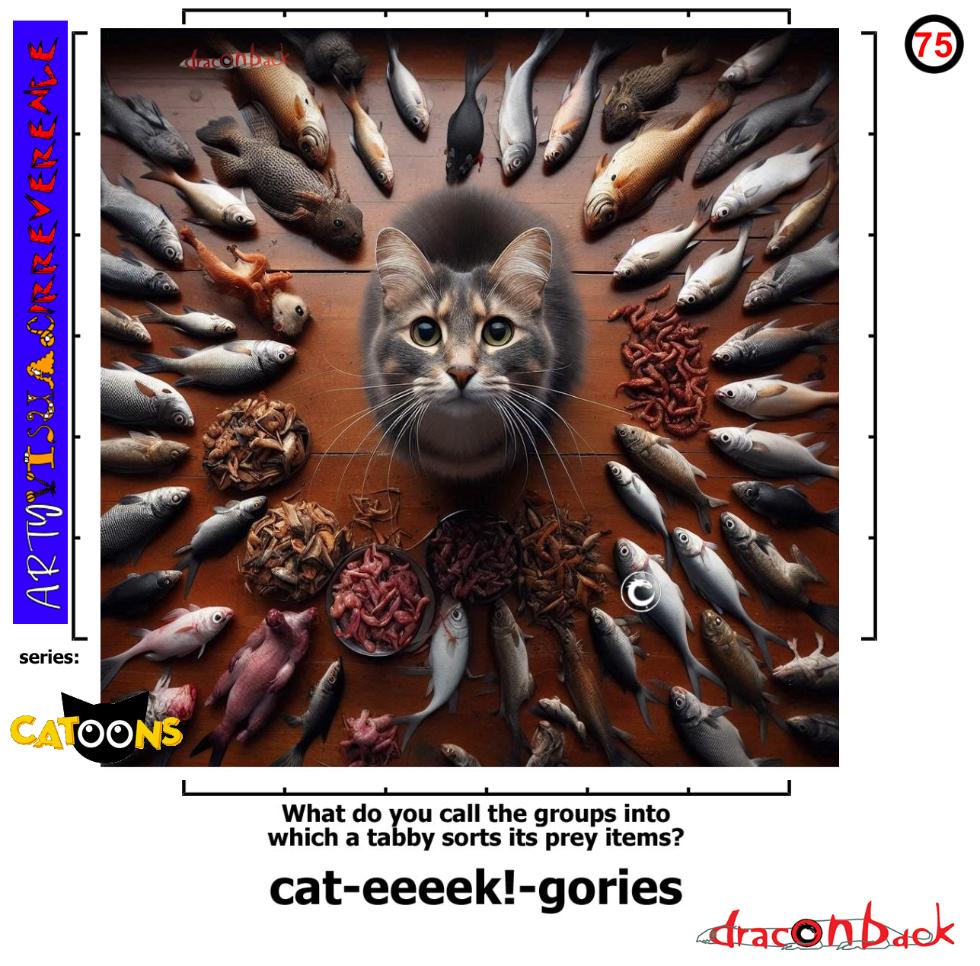 |
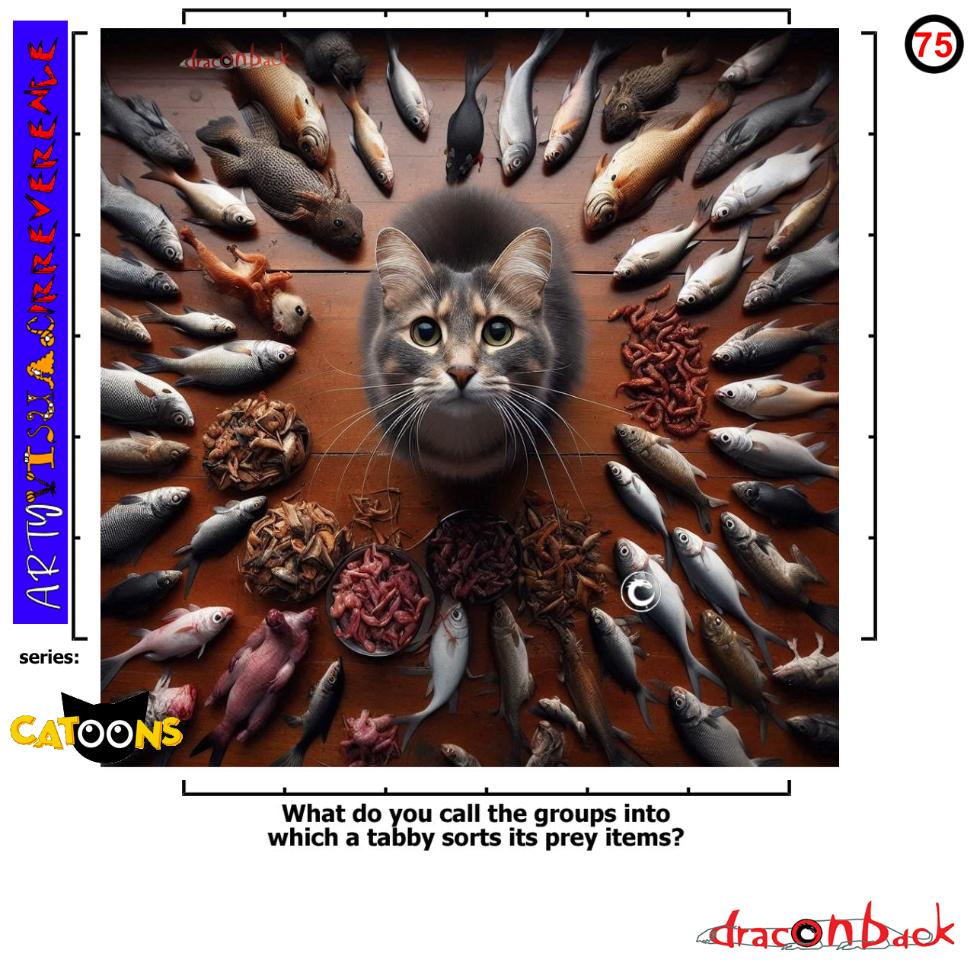
- Cats’ tendency to bring prey home is partly social bonding behavior: ethologists suggest it may be an attempt to share food with their human “colony” or to teach hunting skills, echoing maternal behavior toward kittens. However, a more important component of the drive is because their home represents their core territory where they feel safest to eat undisturbed or store food for later consumption, though the behavior is often misinterpreted by owners as acts of generosity or attempts to teach hunting skills.
|
 |
-
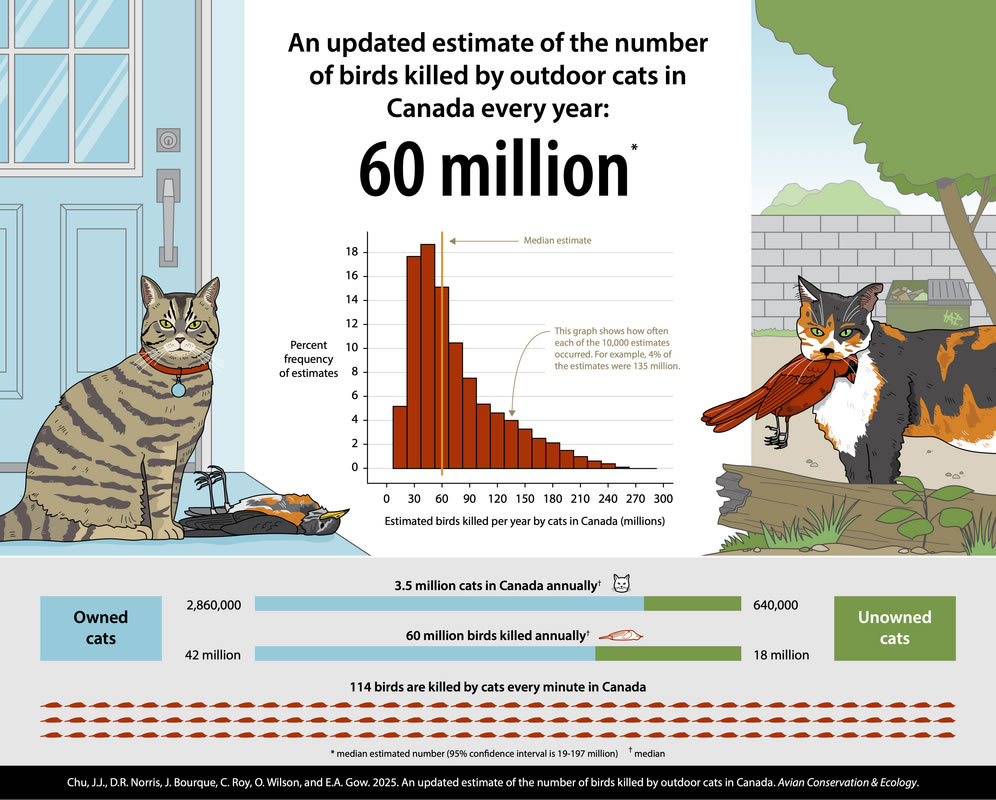
Studies show that cats often do not eat all the prey they catch; many kills are left uneaten, indicating that hunting is driven by instinct rather than hunger. In North America, free-ranging domestic cats kill an estimated 1.3–4 billion birds annually, making them one of the most significant human‑associated threats to avian populations. Cats’ hunting impact is magnified in island ecosystems; in places like the Florida Keys and Hawaiian archipelago, they have contributed to local extinctions of endemic bird species. Cats also kill 6–22 billion small mammals annually in the U.S., including native species such as chipmunks and voles, altering local food webs. Ground-nesting birds are especially vulnerable: species like the Piping Plover and California Least Tern face predation pressure from feral and outdoor cats, compounding habitat loss. A 2025 study revised estimates of cat-caused bird mortality in Canada to between 19 and 197 million birds annually (with a median of 60 million), which is 71% lower than a 2013 estimate, primarily due to more accurate field survey data on outdoor cat populations rather than any actual decline in predation rates.
|
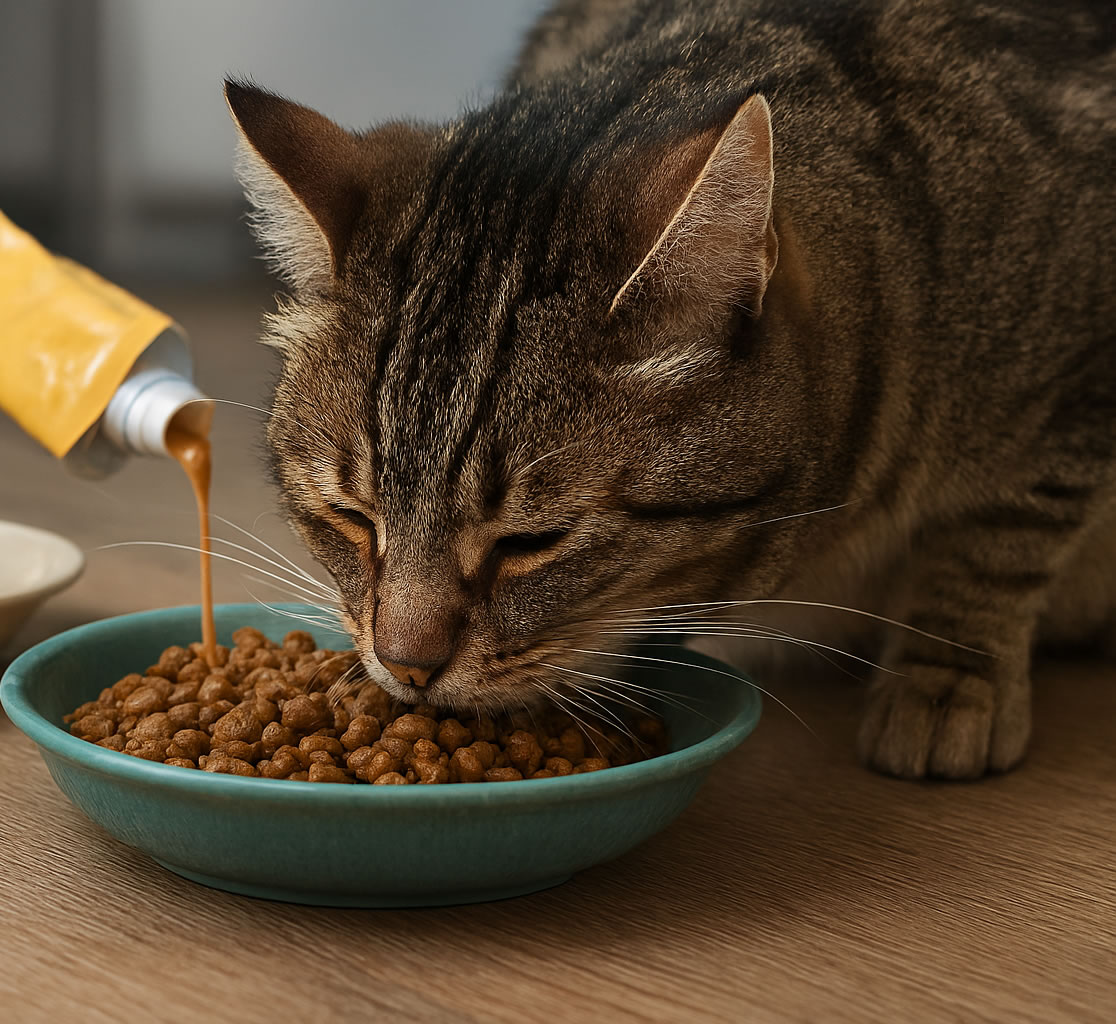 |
- Cats are attracted to foods with acidic taste profiles and prefer specific kibble shapes and sizes, with manufacturers using enzymatically digested protein called "liquid digest" sprayed on dry food to enhance both palatability and digestibility. While dogs will often eat until uncomfortably full, cats typically prefer to eat multiple small meals throughout the day, a behavior that mirrors their ancestral hunting pattern of catching and consuming several small prey animals rather than one large meal. Cats have remarkably sensitive whiskers that they use to measure whether their head will fit through openings, but these whiskers also create "whisker stress" when they touch the sides of food bowls—which is why many cats prefer to eat from shallow dishes or will pull food out onto the floor rather than eat from deep, narrow bowls.
|
|
|