|
|
When researchers attached magnets to cats in maze experiments, the cats' ability to navigate toward home was significantly impaired, providing evidence that magnetic geolocation plays a role in feline navigation, though cats also rely heavily on landmarks, memory, and scent trails left by sweat glands in their paws to find their way. |
 |
- Scientists theorize that cats create "olfactory maps"—mental maps built from scent—to navigate their territory, and evidence suggests cats may use Earth's geomagnetic fields combined with these scent cues as a kind of internal compass, though individual cats vary considerably in their navigational abilities.
|
- A GPS study of free-ranging cats on a Chinese university campus found that home range sizes varied dramatically from 0.56 to 19.83 hectares, with male cats tending to have larger ranges during breeding season than non-breeding season while female cats showed the opposite pattern, and cats averaged nearly 20,000 steps per day with peak activity at twilight. Even indoor cats exhibit territoriality: an apartment or house becomes their “domain,” and they may patrol rooms or mark furniture with scent glands, mirroring outdoor boundary behaviors. Cats’ tendency to wander is not random: they often follow predictable patrol routes, revisiting favored hunting spots, resting areas, and scent-marked boundaries, a behavior rooted in their ancestral need to monitor territory. Research tracking outdoor-access cats found that the average home range size is approximately 1.89 hectares with a 78-meter radius, though there's significant variation between sedentary and wandering cats, with some territories extending up to several miles depending on factors like food availability and breeding status.
|
 |
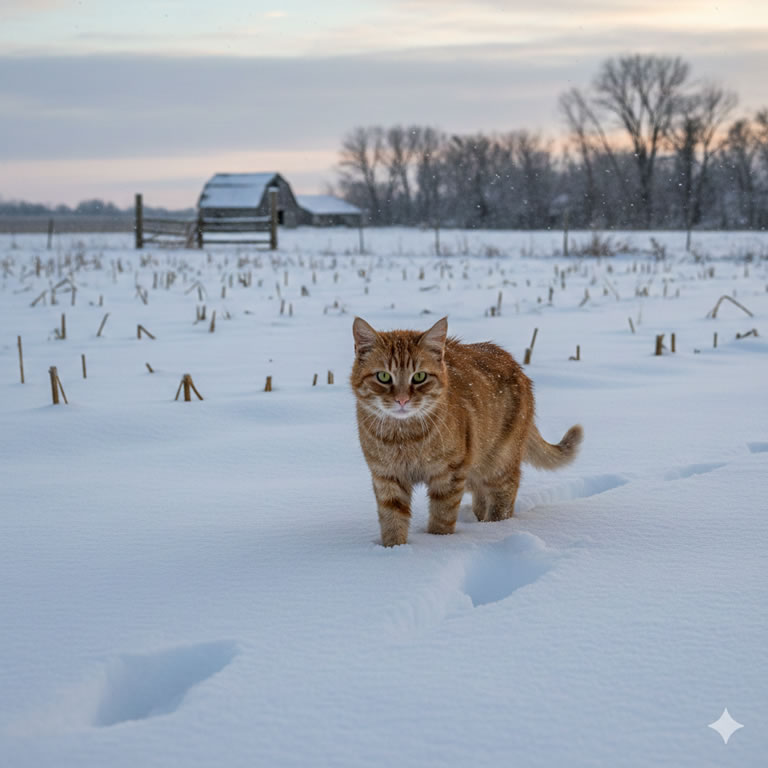 |
- Cats are solitary hunters by evolutionary design, which explains their strong territorial instincts; unlike pack animals, they defend individual ranges to secure food and minimize conflict. Domestic cats’ territory size varies widely: GPS studies show that while some stay within a 50-meter radius of home, others roam several kilometers, with males generally covering larger ranges than females. Research comparing owned outdoor cats to feral cats in rural Illinois found that while pet cats had mean home ranges under two hectares and were asleep or inactive 97 percent of the time, un-owned cats were highly active 14 percent of the time and ranged over much larger territories, particularly in winter when they had to search harder for food to generate body heat for survival.
|
-
Cats possess remarkable homing abilities: anecdotal and scientific accounts describe lost cats returning home from miles away, likely using a combination of scent trails, memory of landmarks, and sensitivity to geomagnetic cues. Wandering behavior is influenced by personality and environment: bold or curious cats roam farther, while shy cats stay close; urban cats often have smaller ranges than rural ones due to density of resources and risks. A 1954 German study by Precht and Lindenlaub placed cats at the center of a circular maze with six equally-spaced exits and found that 60 percent of the time, cats chose the exit nearest to their homes when their homes were within a 3.1-mile range, supporting the existence of a directional homing instinct.
- There are a number of accounts similar to that of Holly, a 4-year-old tortoiseshell cat, who, in November 2012, was frightened by fireworks at an RV park in Daytona Beach, Florida, broke free from her owners Jacob and Bonnie Richter, and disappeared into the area. About two months later on New Year's Eve, a neighbor found an emaciated cat near the Richters' home in West Palm Beach, and a microchip scan confirmed it was Holly, who had traveled over 200 miles in approximately 60 days. Time Holly's weight had dropped from 13½ pounds to just 7 pounds, and her paw pads were bleeding with her back claws worn down to nothing, providing strong physical evidence that she had walked much of the distance.
|
 |
|
|