|
|
Evidence from Viking burial sites, including the Oseberg ship burial in Norway, has confirmed the presence of cats among grave goods, suggesting their importance in both life and the afterlife for Norse seafarers. |
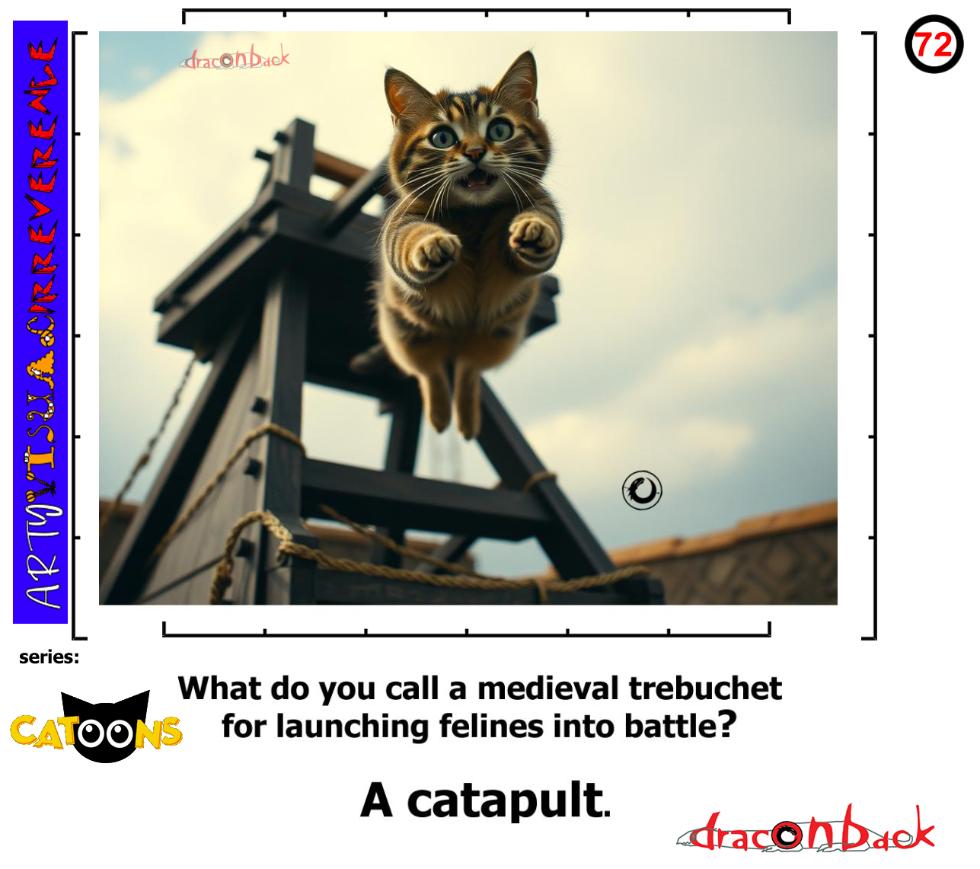 |
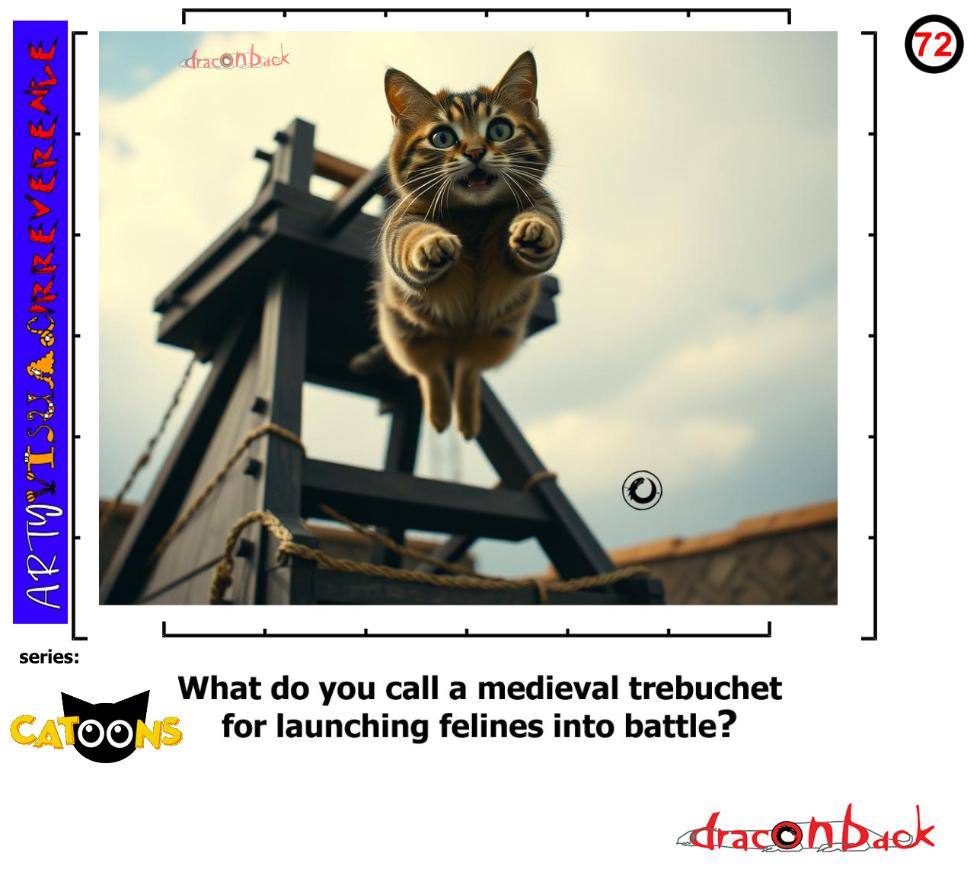
- During medieval sieges, there are documented accounts—though controversial and possibly exaggerated—of besieging armies attempting to use cats as incendiary weapons. The tactic allegedly involved tying combustible materials to cats and releasing them toward wooden fortifications, exploiting the animals' instinct to seek shelter. However, this method was notoriously unreliable and often backfired, as frightened cats would run in unpredictable directions, sometimes back toward the attackers' own positions. The practice was mentioned in some medieval military treatises more as a cautionary tale of failed tactical innovation than as a recommended strategy. This medieval tactic may have been inspired by the biblical account in Judges 15:4-5, where Samson is recounted to have caught three hundred foxes, tied torches to their tails in pairs, and released them into Philistine fields to destroy crops—a story well-known throughout Christendom-- and as equally "fire-fetched".
|
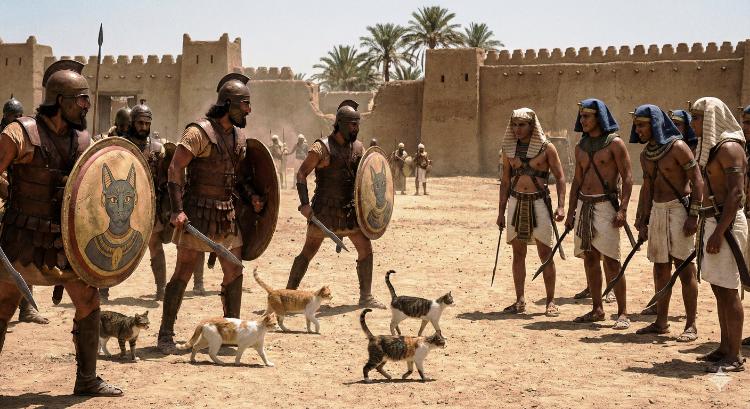
- In one of warfare's earliest uses of felines, Persian King Cambyses II exploited ancient Egyptian reverence for cats during the 525 BCE Battle of Pelusium by painting the image of the cat goddess Bastet on Persian shields and releasing live cats onto the battlefield, forcing the Egyptians—who could not lawfully harm cats—to surrender the city rather than risk killing the sacred animals.
|
 |
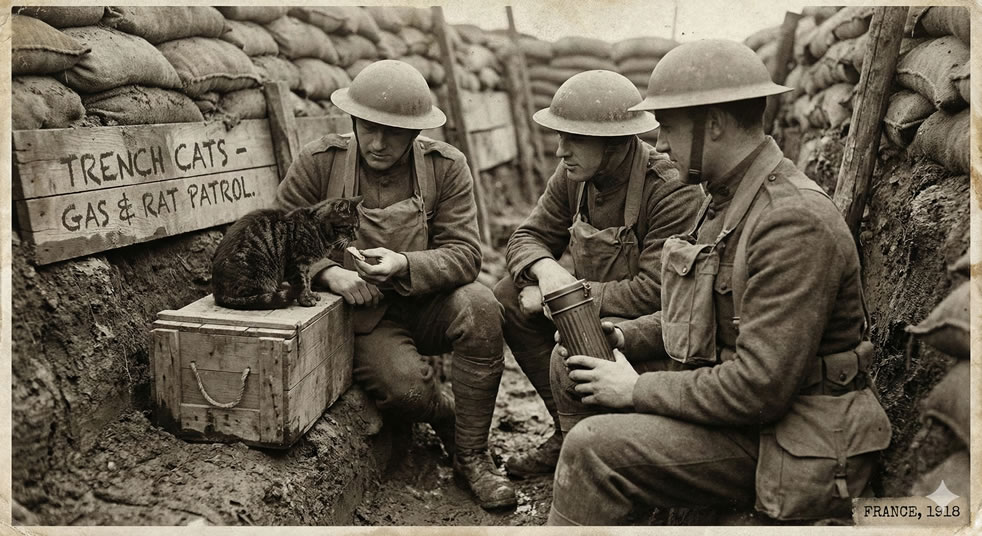 |
Cats were often adopted as regimental mascots, boosting morale in otherwise grim conditions. Their presence in barracks and battlefields offered psychological comfort to soldiers under stress. An estimated 500,000 cats were deployed to the trenches during World War I, where they served dual roles—controlling rodent populations that threatened food supplies and acting as early warning systems for mustard gas due to their heightened ability to detect chemical agents before humans could. In modern military history, cats have been recognized as part of the broader category of “animal veterans,” alongside dogs, pigeons, and horses—though their contributions were less formalized, they played a quiet but enduring role in sustaining troops. |
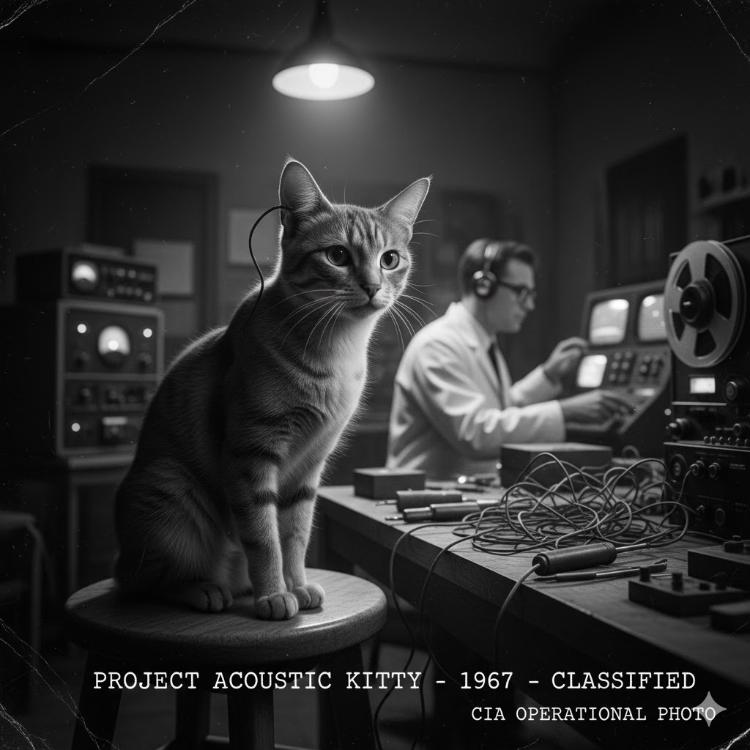
- During the 1960s Cold War, the CIA spent five years and an estimated $20 million on "Project Acoustic Kitty," surgically implanting a microphone in a cat's ear canal, a radio transmitter at the base of its skull, and weaving an antenna into its fur to create a mobile eavesdropping device targeting Soviet officials. The project was canceled in 1967 after concluding cats were impossible to control for intelligence purposes.
|
|
|
|