|
|
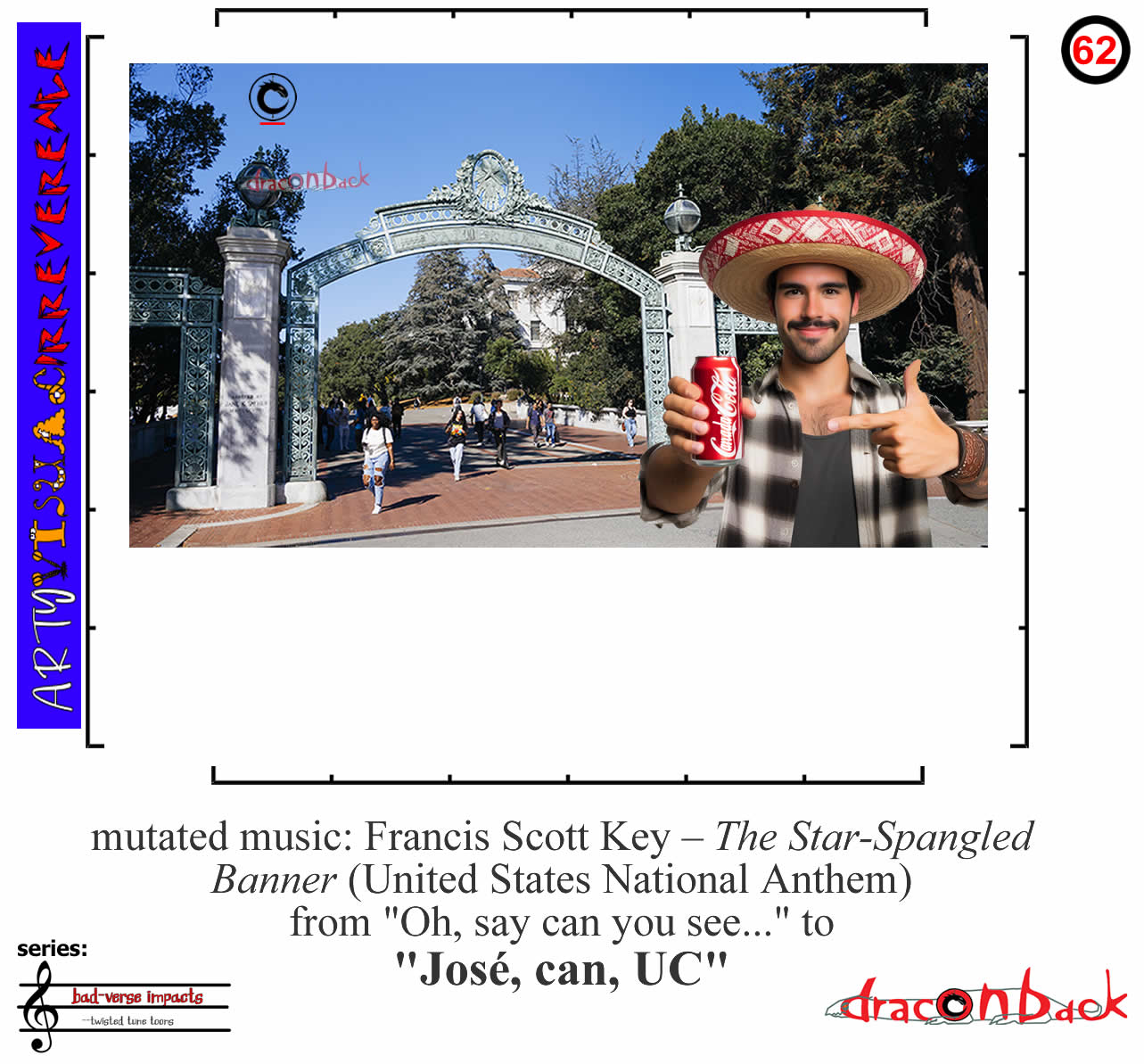
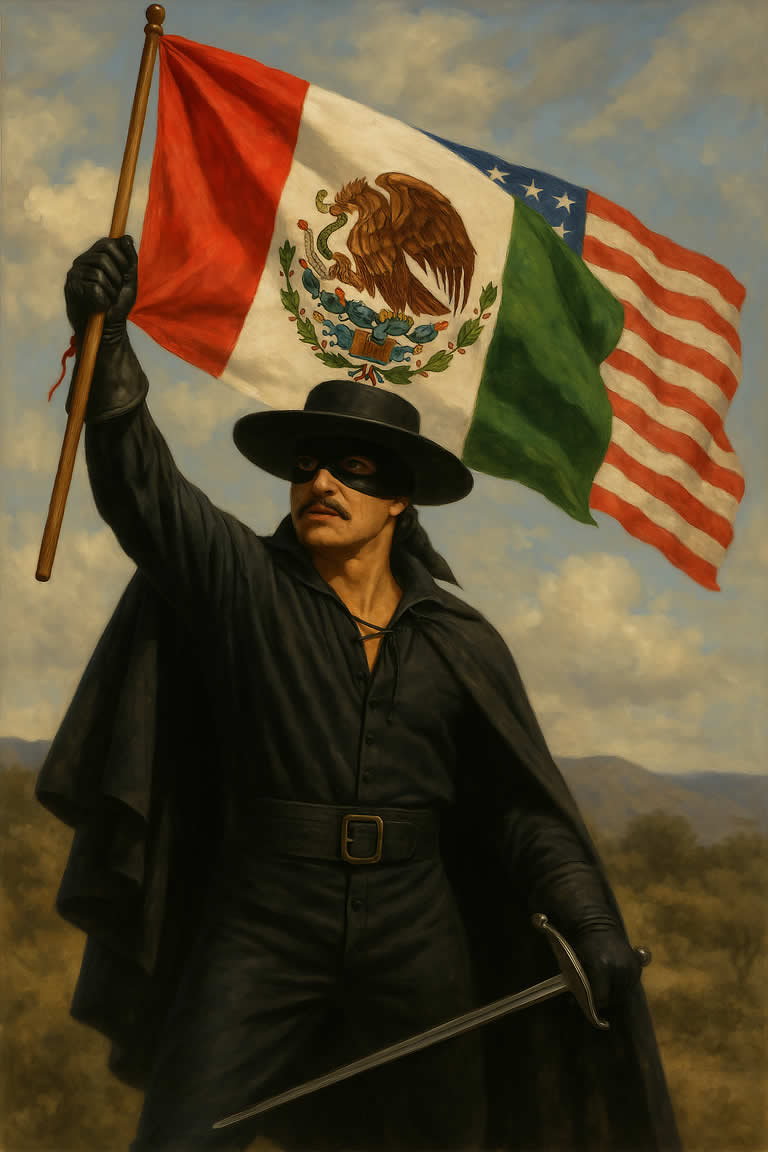
When "The Star-Spangled Banner" was written, Spain still controlled vast territories in what is now the American Southwest, including present-day California, Nevada, Utah, Arizona, New Mexico, and parts of Colorado and Texas.
|
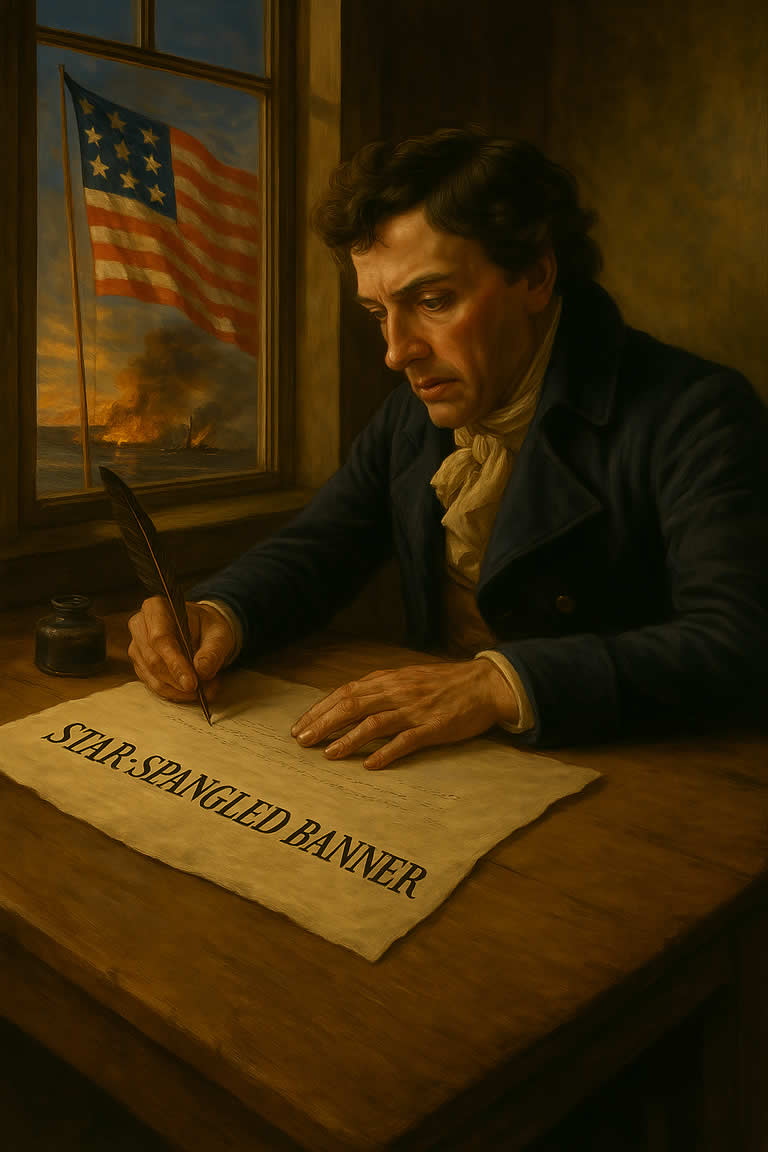 |
FRANCIS SCOTT KEY
- Francis Scott Key was actually a successful lawyer who represented slaves seeking freedom in court, despite being a slaveowner himself—this apparent contradiction reflected the complex attitudes toward slavery among some members of the educated elite in early 19th-century America.
- Though politically aligned with Jackson's Democratic party on many issues, Key was among those who criticized Jackson's Indian removal policies, showing his willingness to break with political allies on moral grounds.
- Key wrote the bulk of the poem that became the U.S. national anthem on the back of a letter and other scrap paper while detained on a British ship in Baltimore Harbor during the War of 1812, having been sent to negotiate the release of an American prisoner and forced to remain aboard until after the bombardment of Fort McHenry ended-- he completed the work in an inn after his release.
|
THE AMERICAN NATIONAL ANTHEM
- The Star-Spangled Banner" wasn't officially adopted as the national anthem until 1931, nearly 117 years after Francis Scott Key penned the lyrics during the War of 1812, with "Hail Columbia" and "My Country, 'Tis of Thee" serving as unofficial anthems for much of the 19th century
- The melody is borrowed from "To Anacreon in Heaven," an 18th-century British drinking song written for a London gentlemen's club, making America's patriotic anthem inadvertently based on a tune originally used for ribald entertainment.
- The song's notorious difficulty stems from its octave-and-a-half range and the climactic high note on "free," which has led to countless public performance mishaps and sparked ongoing debates about whether professional singers should modify the key or melody to make it more singable for average Americans.
|
 |
 |
HISTORY OF SPAIN AND SPANISH LANGUAGE IN THE AMERICAN SOUTHWEST
- Spanish colonization of the American Southwest predates English settlement on the East Coast, with Santa Fe founded in 1610 (ten years before the Mayflower landing) and Spanish missions, presidios, and ranches establishing a continuous presence that lasted over 250 years until the Mexican-American War.
- The Spanish colonial period created a unique mestizo culture that blended Indigenous, Spanish, and later Mexican influences, resulting in architectural styles, legal traditions, and agricultural practices that persist today, including the acequia irrigation systems still used in New Mexico and the Spanish land grant patterns that influenced property law across the region.
- Following the 1848 Treaty of Guadalupe Hidalgo, approximately 75,000 Spanish-speaking residents became American citizens overnight, with their linguistic and cultural rights theoretically protected by treaty, though subsequent territorial and state governments often ignored these provisions, leading to decades of legal battles over language use in schools, courts, and government that continue to influence Southwest politics today.
|
CANNED SOFT DRINKS
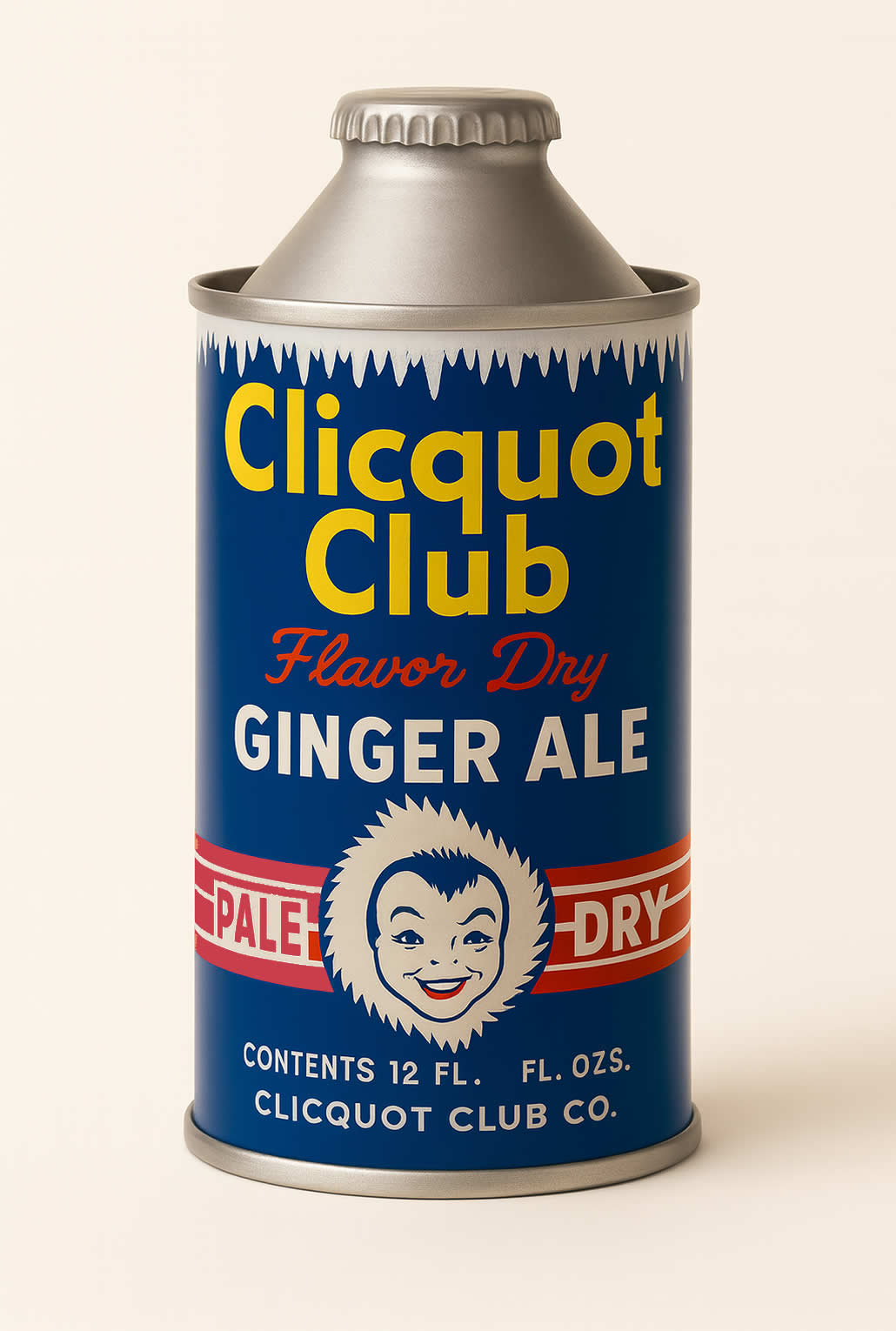
- The first canned soft drinks appeared in 1938 when Clicquot Club ginger ale was packaged in steel cans, but consumer acceptance was slow because early cans imparted a metallic taste and required separate can openers, with pull-tab technology not arriving until 1963.
- Aluminum cans revolutionized the industry in the 1960s because they were lighter, didn't rust, and could be recycled indefinitely, leading to the development of the modern beverage can that uses only 40% of the aluminum required in 1970s versions due to engineering advances in wall thickness and structural design.
- The carbonation pressure inside a sealed soda can reach approximately 30 pounds per square inch, which is why cans are designed with their distinctive dome-shaped tops and bottoms to distribute stress evenly, and this pressure differential explains why cans sometimes explode when frozen or overheated.
|
 |
 |
UNIVERSITY OF CALIFORNIA
- The UC system was established in 1868 with a unique "Master Plan" philosophy that guaranteed admission to the top 12.5% of California high school graduates, making it one of the first major public university systems designed explicitly for broad access rather than elite education.
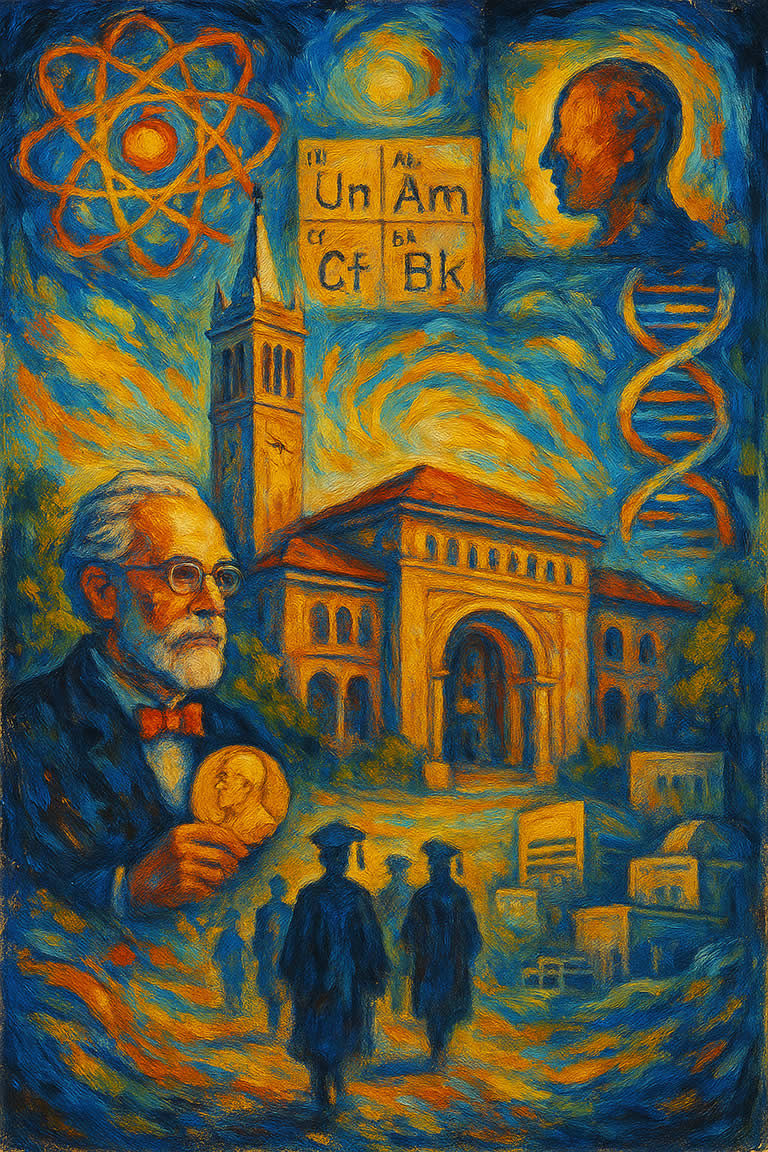
- UC researchers have been awarded more Nobel Prizes than any other public university system, with UC Berkeley alone claiming 25 Nobel laureates among its faculty and alumni, while the system as a whole has contributed to major scientific breakthroughs including the development of the atomic bomb, the discovery of numerous chemical elements, and pioneering research in computer science and biotechnology.
- The UC system operates three national laboratories for the U.S.Department of Energy (Lawrence Berkeley, Lawrence Livermore, and Los Alamos), making it unusual among university systems for managing major federal research facilities and giving UC students and faculty access to cutting-edge scientific equipment and classified research opportunities typically unavailable in academic settings.
|
|
|