|
|
Everyone knows that the beaver is officially Canada's national animal becoming an official symbol of Canada on March 24, 1975, when the National Symbol of Canada Act received royal assent-- although less well known is that it shares this distinction with the Canadian horse, which is also recognized as an official national animal. |
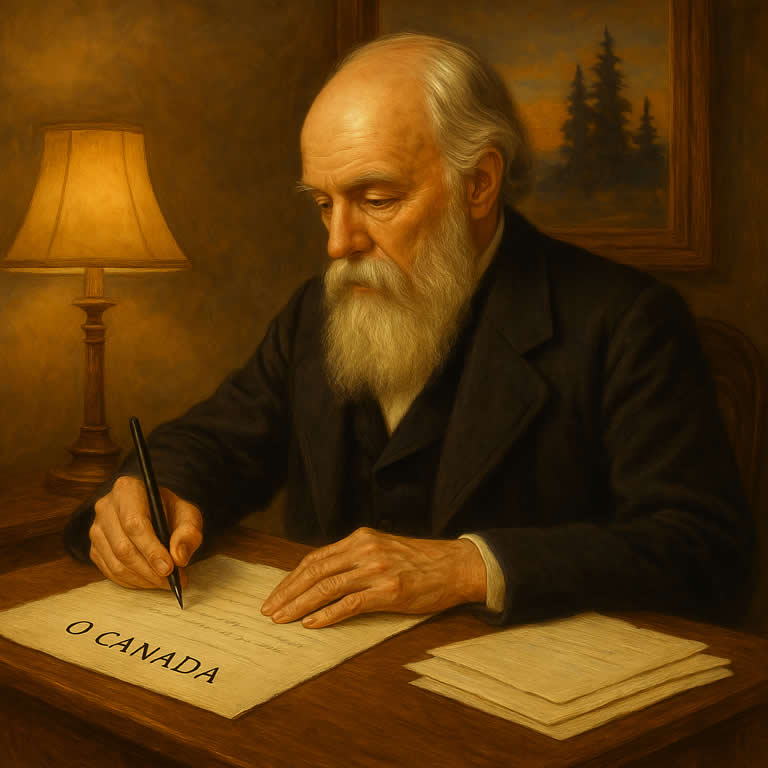 |
ADOLPHE-BASILE ROUTHIER
- Routhier wrote the French lyrics to O Canada in 1880 after being commissioned to create a patriotic song for Quebec's Saint-Jean-Baptiste Day celebrations, completing the text in just one afternoon.
- The song was performed publicly for the first time on June 24, 1880, at a banquet in Quebec City, with music composed by Calixa Lavallée, and it became an instant sensation among French Canadians.
- Beyond his famous anthem contribution, Routhier was a Renaissance man who served as a judge, authored numerous books, and was a skilled orator and lecturer.
- He wrote extensively on legal topics, Canadian history, and literature, and even penned a novel called À travers l'Europe based on his travels. His diverse intellectual pursuits made him one of Quebec's most prominent cultural figures in the late 19th century.
- Routhier's original French lyrics contained religious imagery and references that reflected 19th-century Catholic Quebec culture, including phrases about carrying the cross and protecting the faith.
- These elements remain in the official French version today, creating an interesting contrast with the more secular English version, and highlighting how each language version of the anthem reflects the cultural context of its respective linguistic community.
|
ROBERT STANLEY WEIR
- Robert Stanley Weir wrote the English lyrics to O Canada in 1908, but his version wasn't officially adopted until 1980 - meaning Canadians sang his words for over 70 years before they became the legal national anthem.
- Despite being immortalized as the lyricist of Canada's national anthem, Weir was actually a judge by profession and served on the Quebec Superior Court for over two decades.
- He was appointed to the bench in 1918 and was known for his legal scholarship, particularly in commercial law, making him one of the few national anthem writers who was primarily a jurist rather than a poet or musician.
|
 |
 |
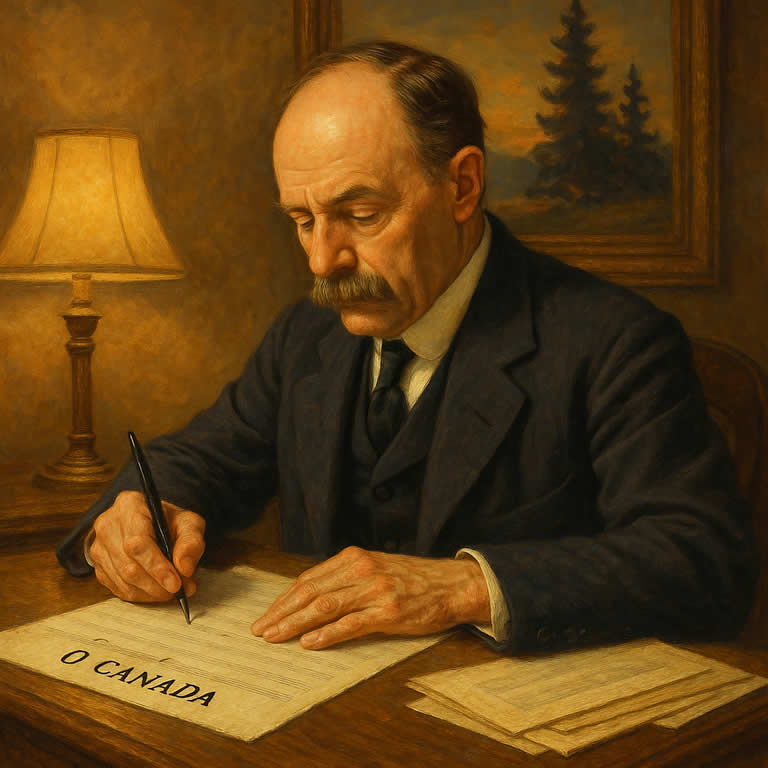
THE CANADIAN NATIONAL ANTHEM
- O Canada was originally written in French in 1880 by Judge Adolphe-Basile Routhier with music by Calixa Lavallée, but the English version wasn't officially translated until 1908 by Robert Stanley Weir, and the two versions tell slightly different stories—the French version is more religious and references "carrying the cross," while the English version emphasizes patriotism and standing on guard.
- The anthem wasn't officially adopted as Canada's national anthem until 1980, making it one of the most recently established national anthems among developed nations, as God Save the Queen served as the de facto national anthem for nearly a century after Confederation in 1867.
- The line "in all thy sons command" was changed to "in all of us command" in 2018 after decades of debate, making Canada one of the few countries to officially modify their national anthem for gender inclusivity, though the French version remained unchanged since it was already gender-neutral.
|
OAK TREES
-
A single mature oak tree can support over 500 species of insects, making them among the most biodiverse trees in temperate forests, with each species of oak-dependent insect often supporting multiple bird species, creating complex food webs that make oak trees keystone species in their ecosystems.
-
Oak trees can live for over 1,000 years and don't typically begin producing significant acorn crops until they're 50-100 years old, but once mature, a single tree can produce up to 10,000 acorns in a good year, though they follow "mast years" where abundant crops are followed by several lean years.
-
The tannins that make oak wood ideal for aging wine and whiskey serve as the tree's natural defense system against insects and fungi, but these same compounds make oak leaves toxic to horses and cattle if consumed in large quantities, particularly when the leaves are wilted, concentrating the tannins.
|
 |
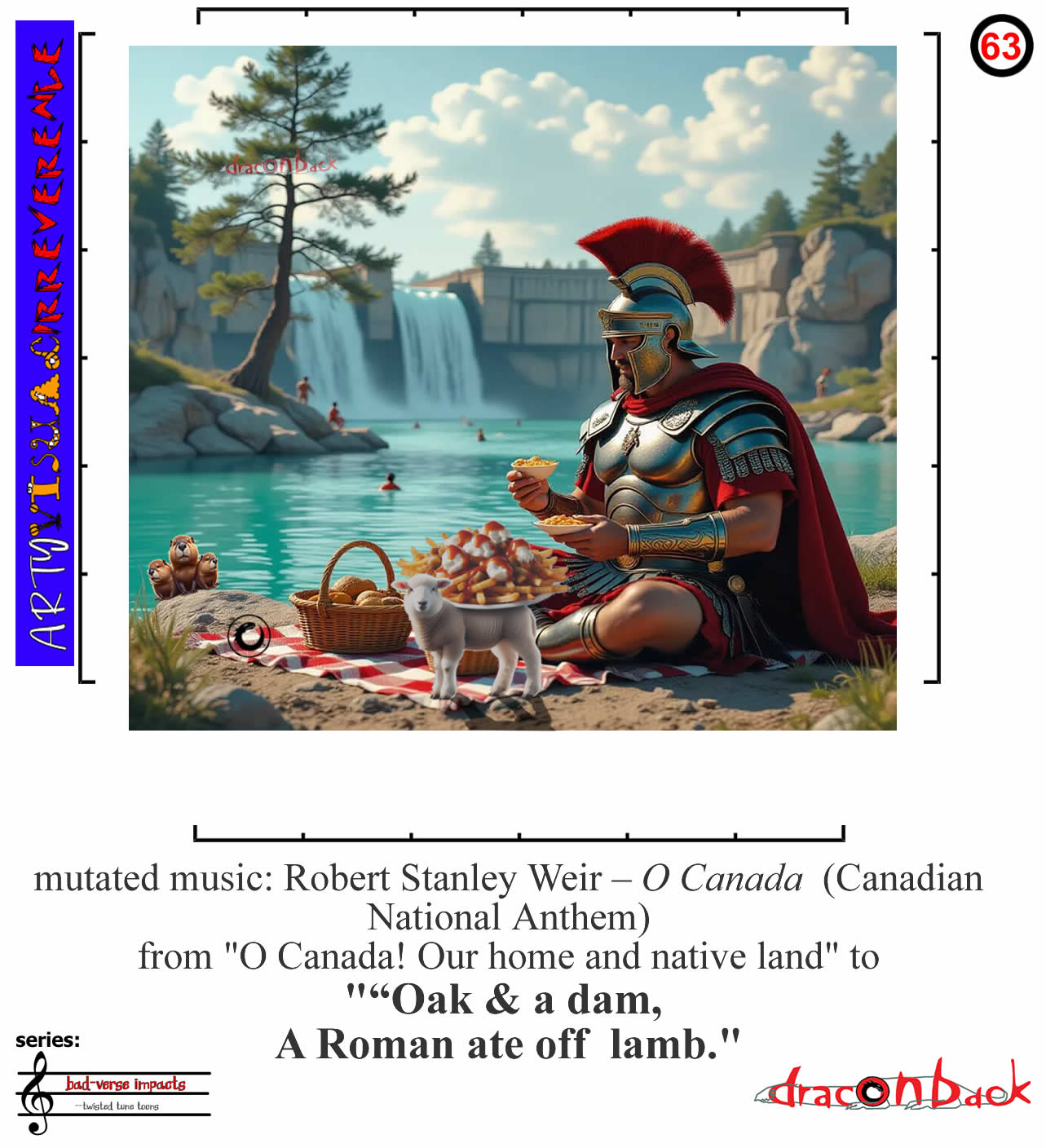
 (this was one of the first images I generated for this series-- at the time I misrembered the lyrics of O Canada as "My home and native land" rather than "Our home and native land"...) (this was one of the first images I generated for this series-- at the time I misrembered the lyrics of O Canada as "My home and native land" rather than "Our home and native land"...) |
BEAVER DAMS
-
The world's largest known beaver dam, located in Alberta, Canada, is over 2,790 feet long and can be seen from space, having been built over several decades by multiple generations of beavers and representing one of the largest structures built by any animal species other than humans.
-
Beaver dams create wetland ecosystems that can store up to 10 times more carbon per acre than forests, making them crucial for climate change mitigation, as the flooded areas behind dams trap organic matter that would otherwise decompose and release carbon dioxide into the atmosphere.
-
Beavers instinctively build dams in response to the sound of flowing water, which is why they'll sometimes build dams around drainage pipes or speakers playing water sounds—this behavior is so strong that even hand-raised beavers who have never seen a dam will begin construction when they hear water flowing.
|
|
|