|
|
In 1967, the Monkees outsold both the Beatles and the Rolling Stones combined in album sales.
|
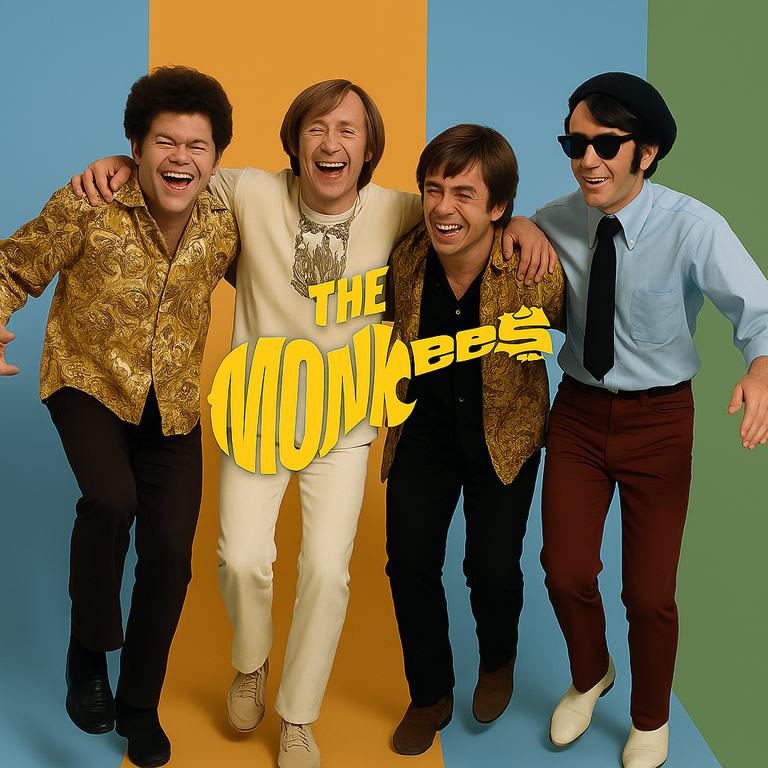 |
THE MONKEES
-
The Monkees were created specifically for television in 1966 through auditions that drew over 400 applicants, with the selected members initially having limited input on their music—session musicians known as "The Wrecking Crew" played most of the instruments on early recordings, leading to criticism that they were a "manufactured" band, though they later fought for and won creative control over their music.
-
Despite being dismissed by some critics as a "fake" band, The Monkees outsold both The Beatles and The Rolling Stones in 1967, and their television show won two Emmy Awards, proving that manufactured pop could achieve both commercial success and cultural impact while launching the careers of future serious musicians like Michael Nesmith, who became a country rock pioneer.
-
The show's innovative use of quick cuts, non-linear storytelling, and breaking the fourth wall directly influenced the development of music videos and MTV's aesthetic, making The Monkees inadvertent pioneers of visual music presentation decades before the medium became mainstream, with their techniques later adopted by directors like Richard Lester and the creators of "Saturday Night Live".
|
I'M A BELIEVER
-
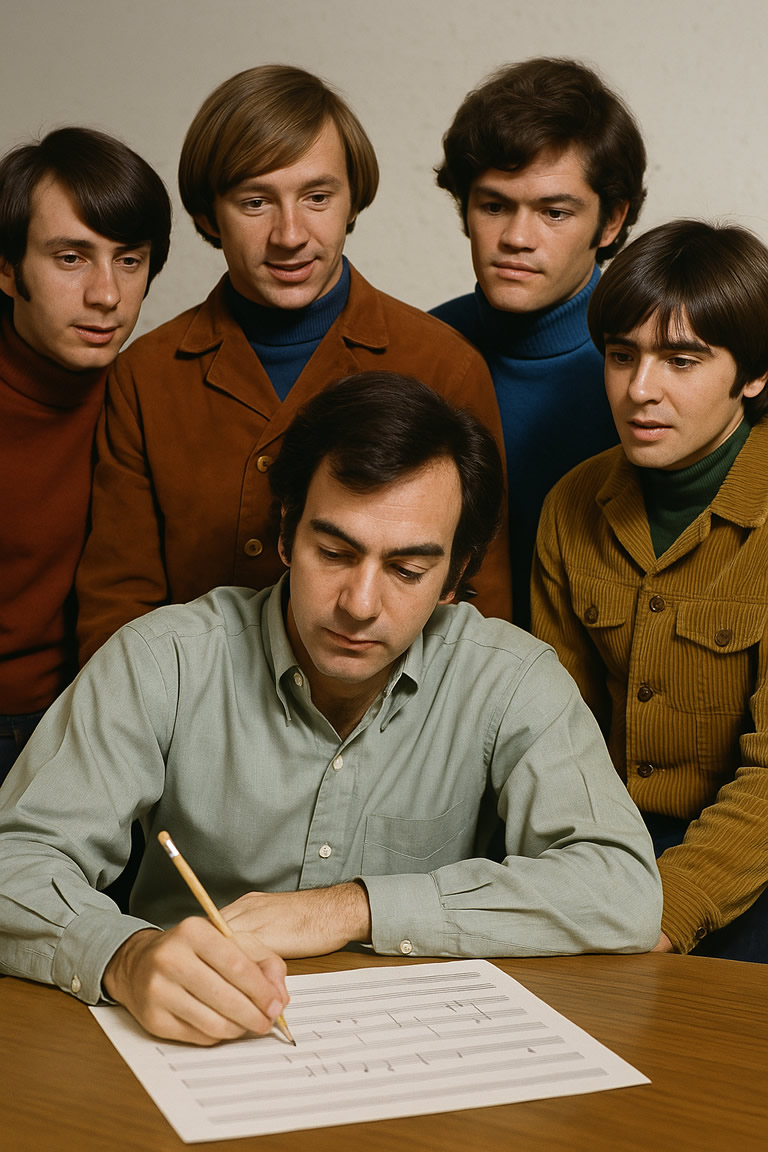
The song was written by Neil Diamond before he became a major recording artist himself, and he originally recorded his own version, but The Monkees' version became the bigger hit, reaching number one and becoming one of the best-selling singles of 1966, demonstrating Diamond's songwriting prowess even before his performing career took off.
-
The recording features a distinctive harpsichord-like sound that was actually created using a heavily processed electric piano, played by session musician Larry Knechtel (who later played piano on "Bridge Over Troubled Water"), showcasing the sophisticated studio techniques that made 1960s pop productions more complex than they initially appeared.
-
The song's success helped establish The Monkees as legitimate recording artists beyond their TV show, and its simple but effective structure—with a memorable hook and optimistic lyrics about love transforming skepticism—became a template for pop songwriting that influenced countless later artists, from power pop bands to modern pop producers.
|
 |
 |
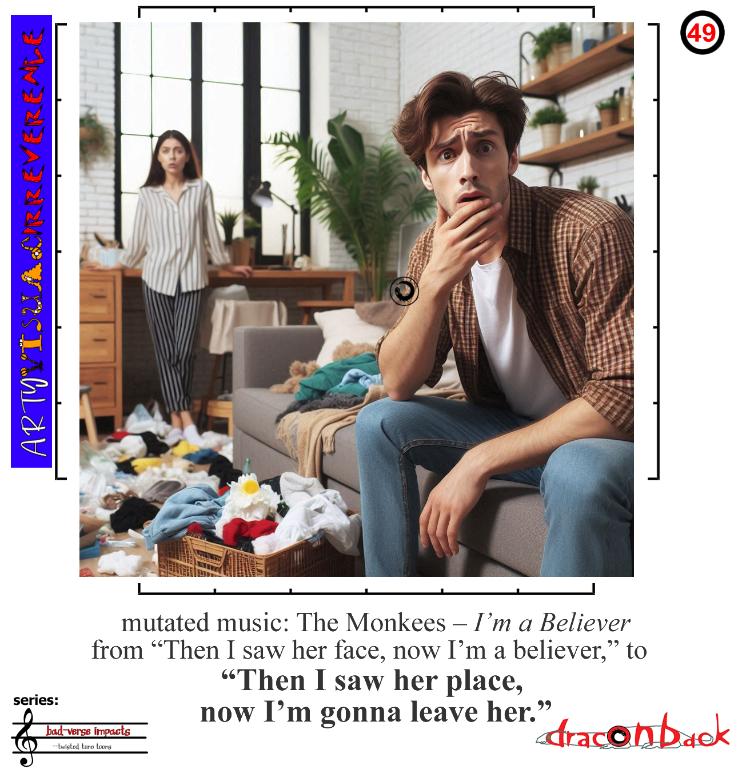
HOUSEWORK
-
The average American household spends approximately 55 minutes per day on housework, but this varies dramatically by gender—women still perform about 70% of household tasks despite increased workforce participation, a phenomenon sociologists call "the second shift," where working women effectively work two jobs: their paid employment and unpaid domestic labor.
-
Modern appliances have paradoxically increased housework standards rather than reducing time spent on chores—vacuum cleaners led to expectations of more frequent carpet cleaning, washing machines enabled daily laundry instead of weekly washing, and higher cleanliness standards offset technological efficiency gains.
|
-
The concept of "housework" is relatively modern, as pre-industrial households engaged in productive work like food preservation, textile production, and craftwork that contributed directly to family survival and income, while contemporary housework is largely maintenance-focused and economically invisible, representing a shift from productive domestic labor to reproductive/maintenance labor.
-
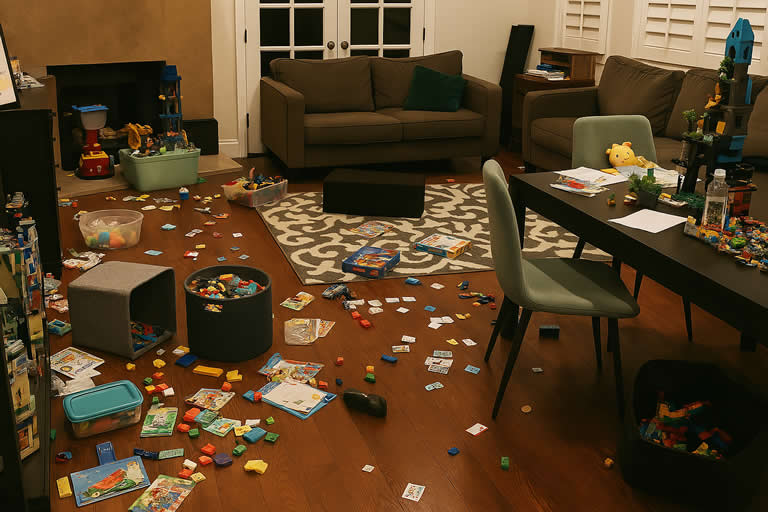
Psychological research suggests that people who live in cluttered environments show elevated cortisol levels throughout the day, while those in organized spaces see cortisol levels drop normally, indicating that physical disorder creates measurable physiological stress, though some individuals thrive in controlled chaos and report feeling more creative in slightly messy environments.
|
 |
 |
-
The rise of professional organizing as an industry reflects modern anxiety about domestic control and minimalism as a response to consumer culture, but anthropological studies show that "messy" is culturally relative—what Americans consider cluttered might be normal density living in other cultures with different spatial relationships.
-
Hoarding behavior affects an estimated 2-6% of the population and is now recognized as a distinct psychological condition separate from OCD, with research showing that people with hoarding disorder have different brain activation patterns when making decisions about discarding items, demonstrating that extreme messiness can reflect underlying neurological differences rather than simple laziness or lack of discipline.
|
|
|