|
|
One of the most celebrated songwriting duos in pop history, Carole King and her then-husband Gerry Goffin penned iconic hits like "Will You Love Me Tomorrow" for The Shirelles and "The Loco-Motion" for their babysitter, Little Eva, before King rose to fame as a solo artist.
|
 |
CAROLE KING
- King's album "Tapestry" spent 15 consecutive weeks at number one in 1971 and remained on the Billboard 200 for six years, making it one of the longest-charting albums in history and establishing the template for the singer-songwriter movement of the 1970s. Despite her massive commercial success,
- King initially suffered from severe stage fright and was reluctant to perform live, preferring to work behind the scenes as a songwriter and producer until James Taylor convinced her that audiences wanted to hear her perform her own songs.
- King either wrote or co-wrote 118 songs that charted on the Billboard Hot 100, making her one of the most successful songwriters in pop history.
|
BEAUTIFUL
- The song was written as an inspirational message during a period when King was struggling with self-doubt about her appearance and worthiness, making it both deeply personal and universally relatable, though it ironically became a hit at a time when she was gaining confidence as a performer.
- "Beautiful" features King's distinctive piano style that combines classical training with a more informal, emotional approach, creating the intimate sound that distinguished her from the more polished pop productions of the era.
- The track's simple, direct lyrics represented a departure from the more complex storytelling approach of many Tin Pan Alley songwriters, instead embracing a confessional style that influenced countless singer-songwriters and helped establish the more personal, introspective tone that dominated 1970s popular music.
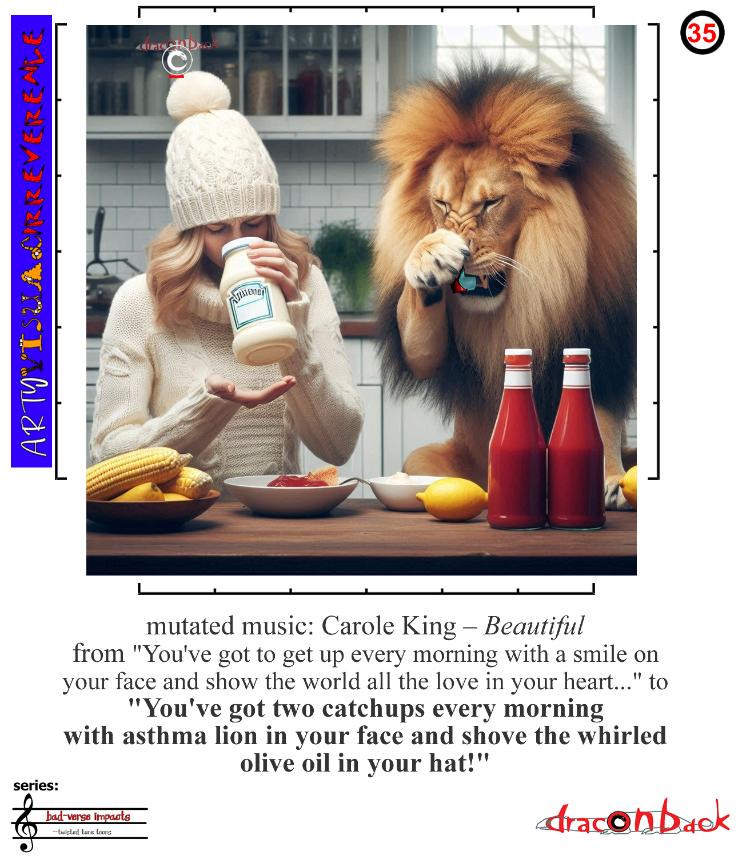
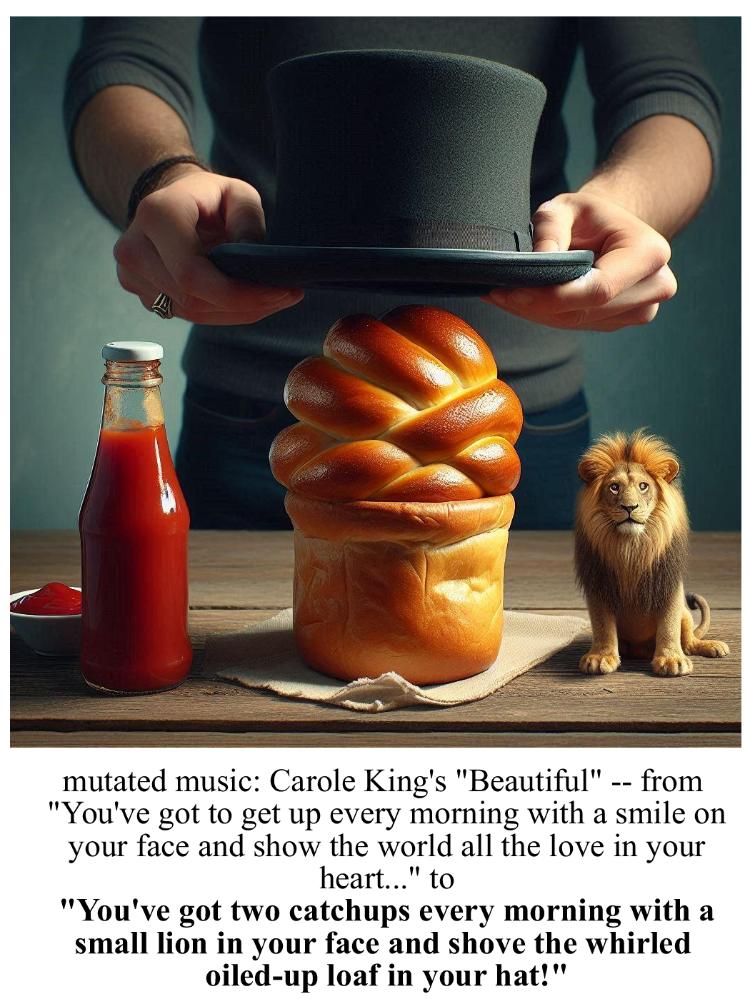
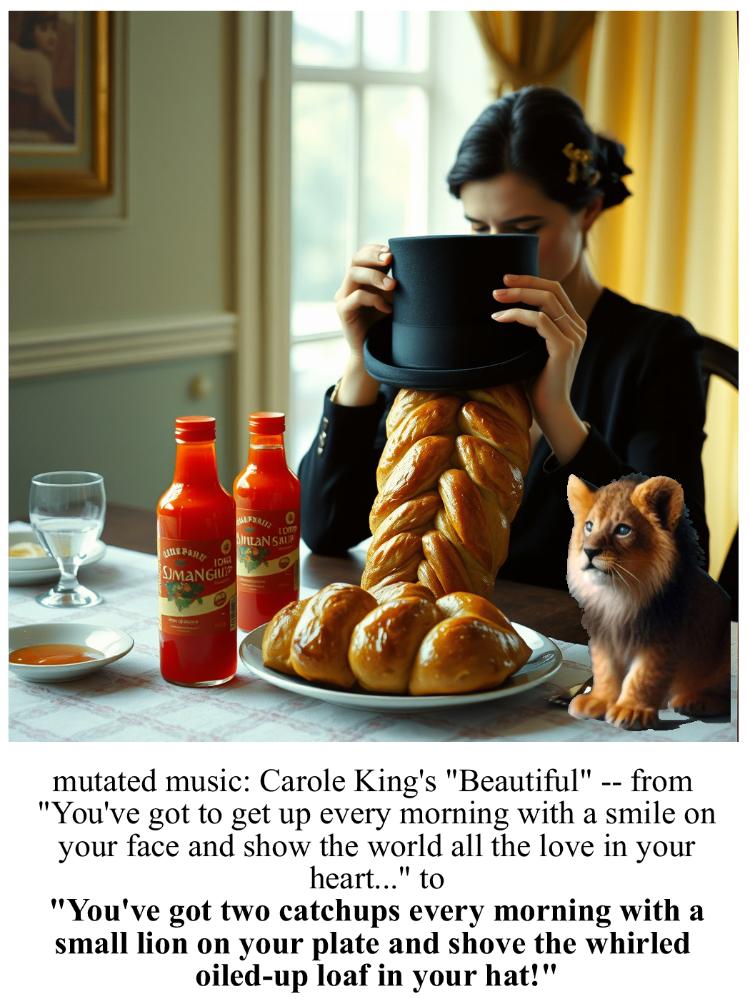
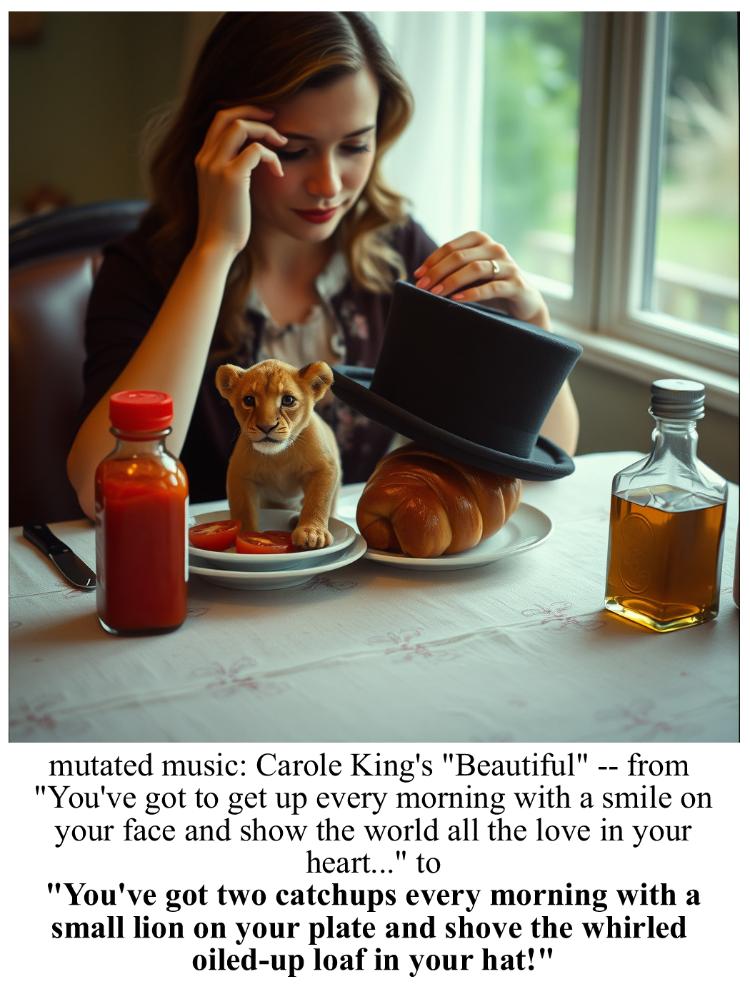
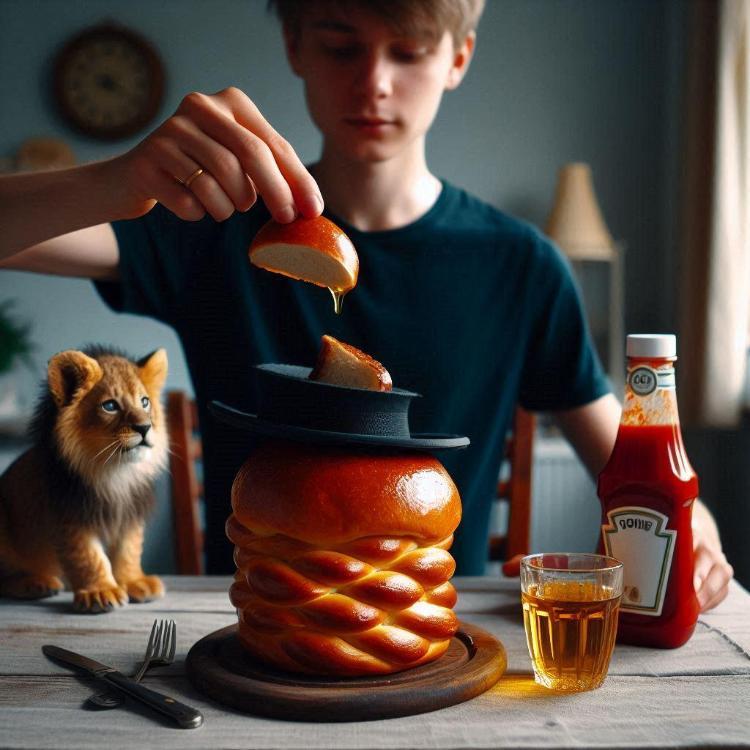
The lead image, and similar, are not based on a mondegreen, per se, but on alternate lyrics that I wrote-- which I thought mimicked the original... and I liked the weird imagery that the AI created from the description so I did several versions, tweaking the words a bit.
|
|
|
KETCHUP
-
The modern tomato-based ketchup didn't exist until the late 19th century - early American ketchup was typically made from mushrooms, walnuts, or fish, with tomato varieties only becoming popular after concerns about the safety of other ingredients led manufacturers to switch to the more stable tomato base.
-
Heinz's famous "57 Varieties" slogan had nothing to do with the actual number of products they made - H.J. Heinz chose the number because he liked the sound of it after seeing a shoe advertisement for "21 styles," though the company actually produced over 60 products at the time.
-
The thick consistency of modern ketchup is achieved through the natural pectin in tomatoes combined with careful cooking techniques, but this thickness creates the famous "ketchup bottle problem" where the condiment behaves as a non-Newtonian fluid, requiring a sharp tap to overcome its resistance to flow.
|
SMALLEST AND LARGEST LION SPECIES
- The smallest lion subspecies is the Asiatic lion found in India's Gir Forest, with males typically weighing 30-40 pounds less than their African counterparts and featuring a distinctive belly fold and less developed mane, though their population has recovered from near-extinction with only 20 individuals in 1913 to over 650 today.
- The largest lions historically were the Barbary lions of North Africa, which could reach up to 600 pounds and featured exceptionally full, dark manes that extended onto their bellies, though this subspecies was hunted to extinction in the wild by the 1960s, with some zoos claiming to house descendants of mixed lineage.
- Modern genetic research has revealed that the size differences between lion populations are largely environmental rather than subspecies-based, with lions in areas with abundant prey growing significantly larger than those in resource-scarce regions, explaining why some East African lions can rival the historical Barbary lions in size.
|
 |
 |
OILING DOUGH
- Oiling the surface of rising dough serves multiple purposes beyond preventing sticking - it creates a barrier that prevents the formation of a dry skin that could inhibit proper rising and create tough spots in the finished bread.
- The type of oil used can subtly influence flavor and texture, with neutral oils like vegetable oil providing just moisture protection, while olive oil adds flavor and creates a slightly different crust texture due to its lower smoke point and different fat composition.
- Professional bakers often use a light spray or brush application rather than pouring oil directly, as too much oil can actually inhibit gluten development and create greasy pockets in the dough, while too little allows surface drying that can create an uneven rise and tough exterior on the finished product.
|
|
|