|
|
Reflecting her age, Adele's fourth album, 30, continued the tradition of naming her albums after how old she was during their creation—19, 21, 25, and now 30—even though she’s usually a few years older by the time they’re released, in that case 33.
|
 |
ADELE
- During the economic recession, UK Prime Minister Gordon Brown wrote to Adele to thank her for lifting people’s spirits with her music—a rare bit of fan mail from 10 Downing Street.
- Despite her massive global success, Adele has cited severe stage fright as a career-long challenge, reportedly vomiting before performances and once considering quitting live performances entirely after experiencing panic attacks during her world tours.
- Adele's voice spans three octaves, but what makes her distinctive is her use of melisma—the technique of singing multiple notes on a single syllable—combined with her ability to convey raw emotion through controlled vocal rasp, a skill she developed partly by studying Etta James and Ella Fitzgerald recordings.
|
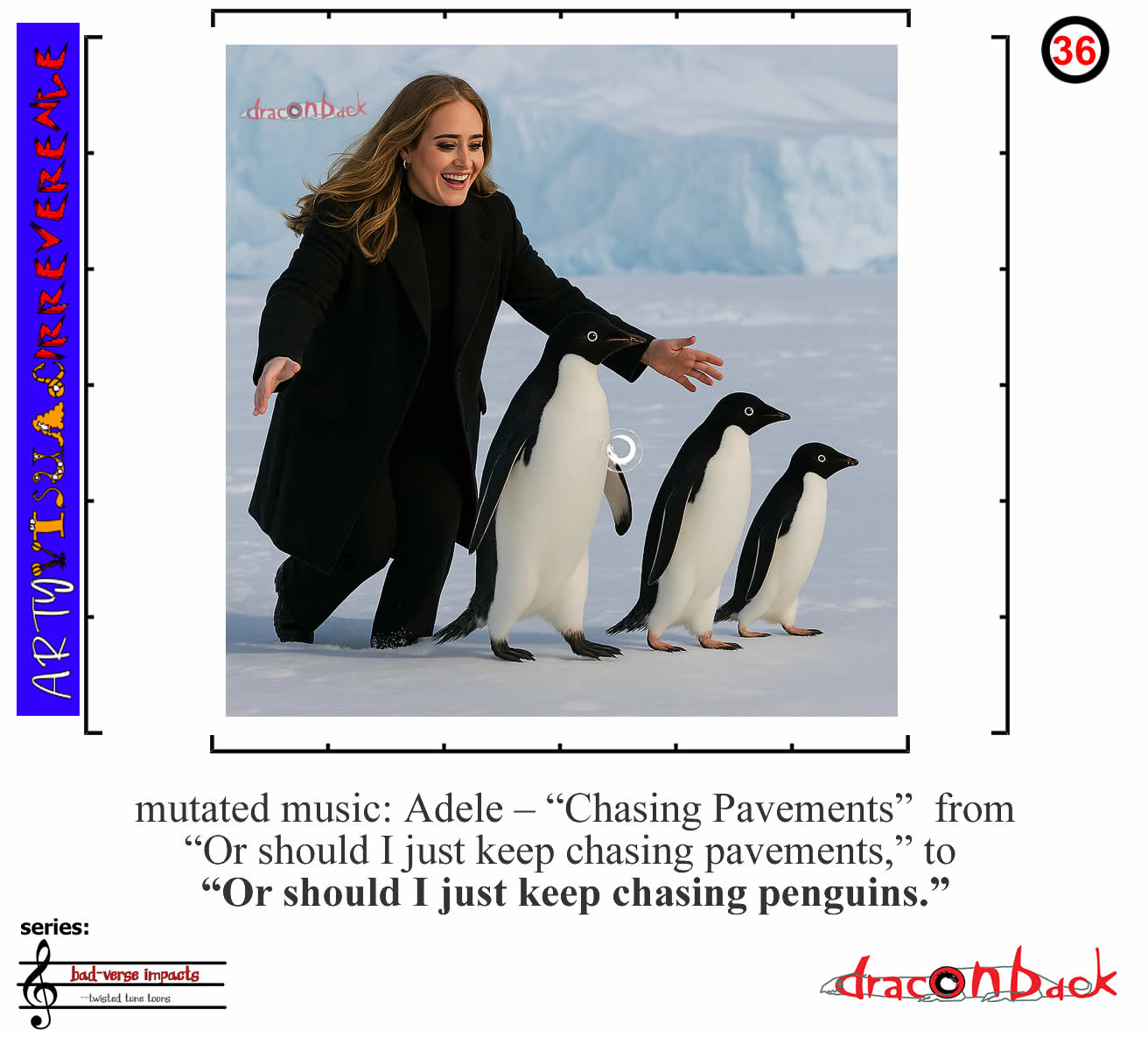
CHASING PAVEMENTS
- The song was written after Adele had a public confrontation with a cheating boyfriend in a bar, literally chasing him out onto the street, which inspired the metaphor of "chasing pavements" as pursuing something futile—making it one of pop music's most autobiographically direct breakup songs.
- Chasing Pavements" was initially rejected by several record labels who deemed it "too depressing" for commercial radio, but its success proved that audiences were hungry for more emotionally authentic pop music, helping usher in a trend toward more vulnerable songwriting in mainstream music.
- The song's distinctive chord progression uses a technique called "chromatic mediant relationships," where chords move by third intervals rather than the more common fourth and fifth movements, creating the haunting harmonic quality that became a signature element of Adele's ballad style.
|
|
| |
ADÉLIE PENGUINS
-
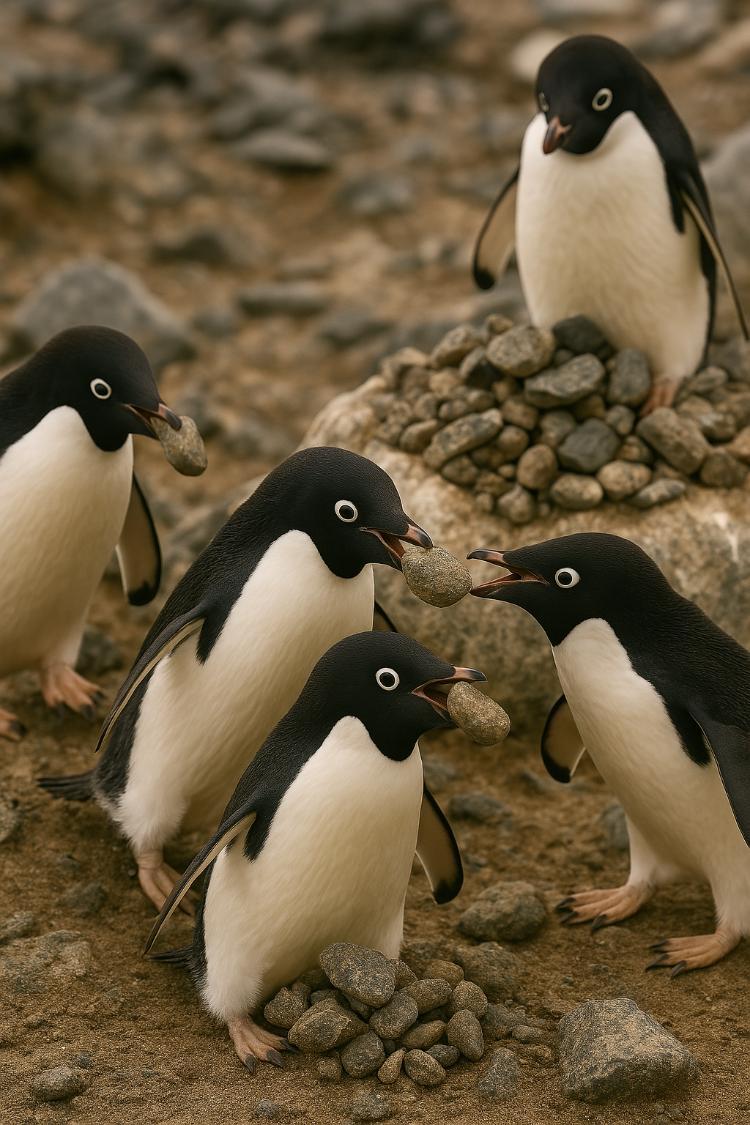
Adélie penguin males woo females by offering pebbles as gifts. These aren’t just romantic gestures—they’re essential for nest-building. The better the pebble, the better the chance of attracting a mate. They also engage in "stone stealing" behavior, where they pilfer rocks from neighboring nests to build up their own, sometimes leading to elaborate chains of theft throughout entire colonies as penguins repeatedly steal from each other.
-
Adélie penguins were named after Adélie Land in Antarctica, which French explorer Jules Dumont d'Urville discovered in 1840 and named after his wife, Adèle Dumont d'Urville, making these penguins one of the few species named after someone's spouse rather than the discoverer themselves.
-
These penguins are considered indicator species for climate change because they require very specific ice conditions for breeding—they need ice-free rocky shores for nesting but also stable sea ice nearby for feeding, making them particularly vulnerable to shifting Antarctic conditions.
-
Despite their small size, Adélie penguins are known to confront much larger predators like seals and seabirds—and even slap at researchers with their flippers if they feel threatened.
|
-
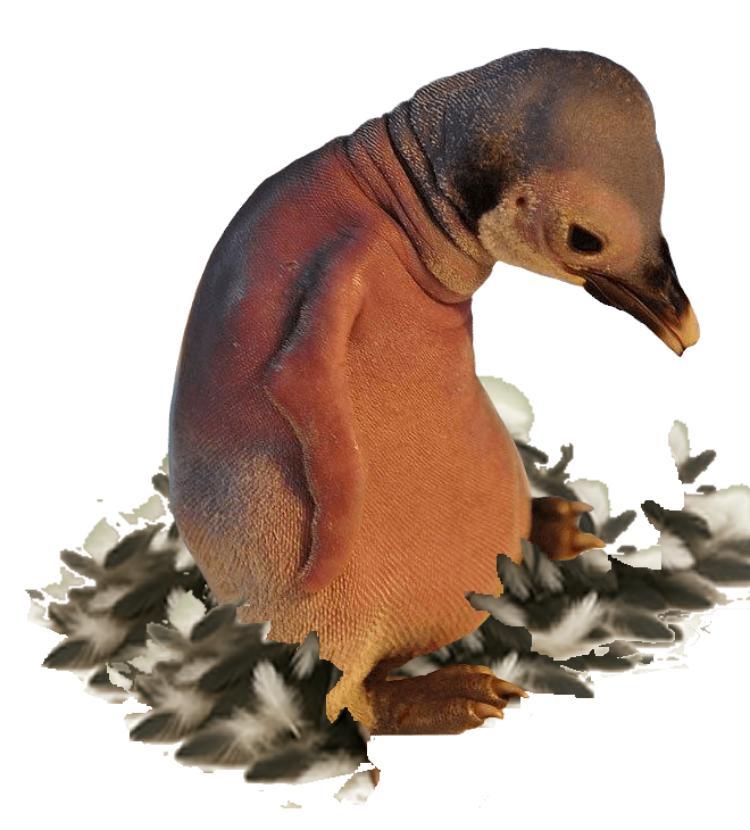
Adélie penguins have a unique molting process called "catastrophic molt," where they shed and replace all their feathers at once over a period of two to three weeks, during which they cannot enter the water and must fast entirely, losing up to 45% of their body weight.
-
These penguins demonstrate remarkable navigation abilities, using the sun, stars, and Earth's magnetic field to find their way back to the exact same nesting sites year after year, with some individuals returning to within a few meters of their previous year's nest after spending months at sea in the dark Antarctic winter.
-
During the Antarctic summer breeding season, Adélie penguin parents take turns making epic foraging journeys that can cover over 600 miles round-trip, with some individuals diving up to 575 feet deep and holding their breath for nearly six minutes while hunting for krill and fish.
-
On land, they waddle at about 1.5 mph, but in water they can reach speeds of up to 9.3 mph when fleeing predators like leopard seals.
|
|
|
|