|
|
_Sister Sledge was literally composed of four sisters—Debbie, Joni, Kim, and Kathy Sledge—from Philadelphia, who began performing together as children in their church choir and were discovered by producer Bert de Coster when the oldest sister Kathy was just 16, making them one of the few successful family groups where all members were biological siblings rather than adopted stage names.
|
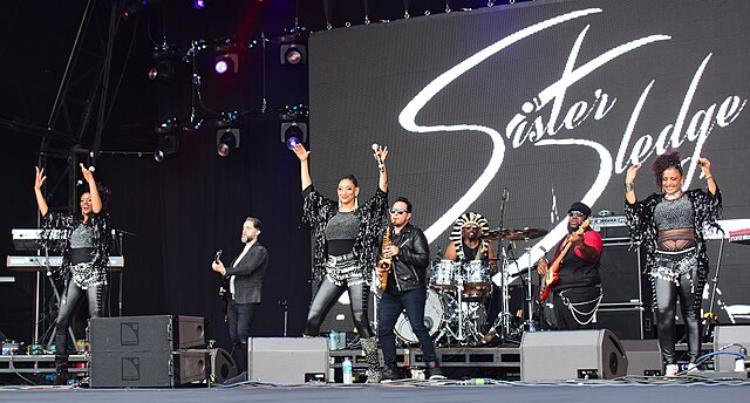 |
SISTER SLEDGE
- The group's biggest hits, including "We Are Family" and "He's the Greatest Dancer," were written and produced by Nile Rodgers and Bernard Edwards of Chic, who crafted Sister Sledge's sound during the height of the disco era, with Rodgers later describing their collaboration as one of his most satisfying because the sisters' gospel-trained harmonies perfectly complemented his sophisticated funk arrangements.
- Despite their association with disco, Sister Sledge continued recording and performing for decades after the genre's mainstream decline, with various combinations of the sisters maintaining the group through changing musical trends.
|
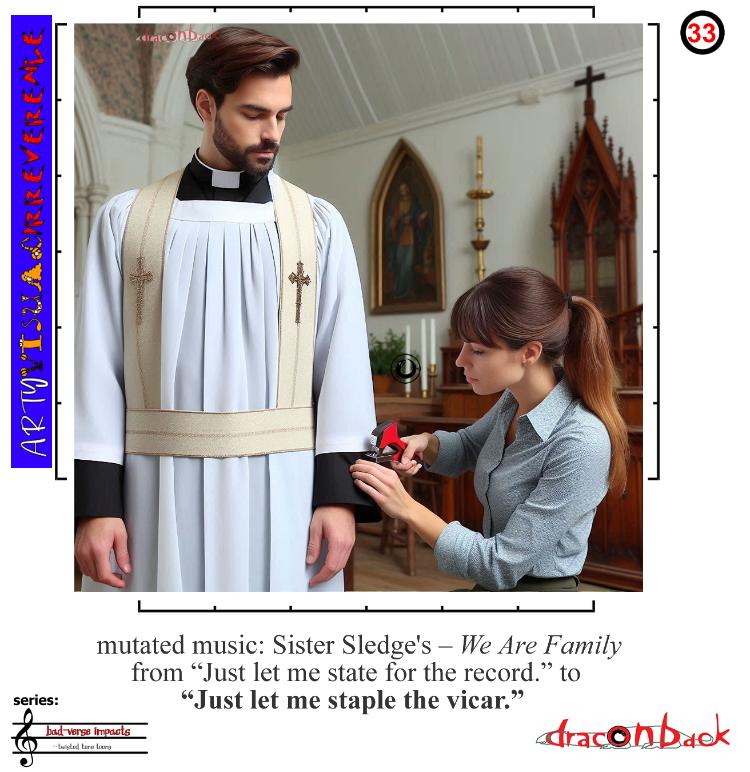
WE ARE FAMILY
-
The distinctive bass line that drives the song was played on a Music Man Stingray guitar, and the guitar parts feature Nile Rodgers' signature "chucking" technique - a rhythmic muting style that became a hallmark of the disco era. The recording session took place at the Power Station studio in New York, where the song was completed in just a few takes, capturing the spontaneous energy that made it so infectious.
-
The song was written and produced by Nile Rodgers and Bernard Edwards of Chic, who crafted it specifically for Sister Sledge after the group's record label asked them to work together.
- "We Are Family" became an unofficial anthem for the 1979 Pittsburgh Pirates baseball team during their World Series championship run. The team adopted the song as their rallying cry, and it played throughout Three Rivers Stadium during games. The connection became so strong that the Pirates were often referred to as "The Family" that season, and the song is still associated with Pittsburgh sports culture today.
|
|
 |
VICARS
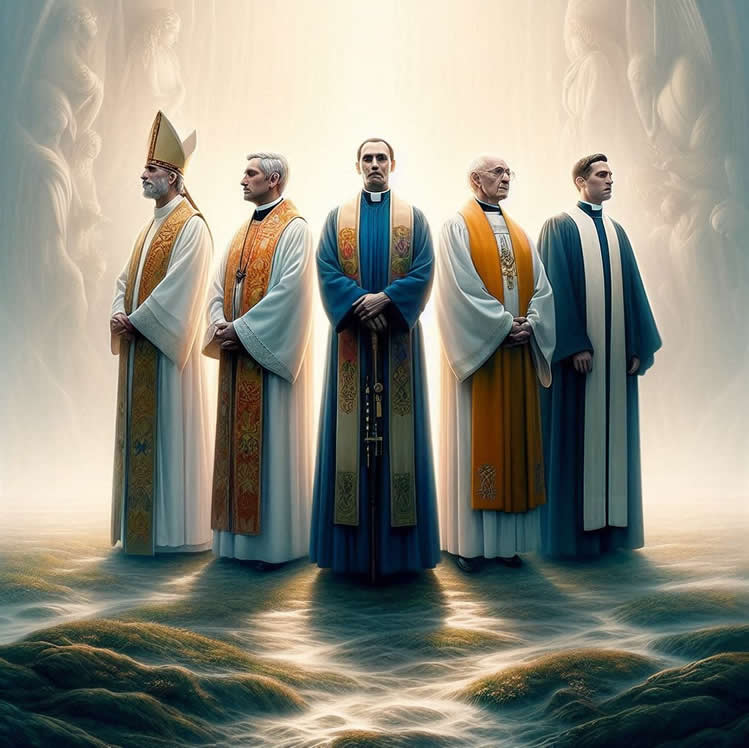
- A vicar is specifically an Anglican/Episcopal Church position where the clergyperson serves as a representative or deputy of a higher church authority (originally meaning "substitute"), while a priest in Catholic, Orthodox, or Anglican traditions has the sacramental authority to perform Mass, hear confessions, and administer most sacraments, making "vicar" more of an administrative designation and "priest" more about sacramental authority.
- The term "minister" is the broadest designation, used across Protestant denominations to describe anyone authorized to lead worship and pastoral care, regardless of their specific theological training or ordination status, while "priest" implies a more hierarchical, sacramental role and "vicar" suggests a specific relationship to church governance and property management.
- In the Church of England, a vicar typically serves a parish where the church property and income (historically called the "living") belongs to someone else (like a lay patron or institution), whereas a rector serves a parish where they control the church property and its income, making the distinction between vicar and rector more about ecclesiastical economics and land ownership than about spiritual authority or duties.
|
WICKER VICAR
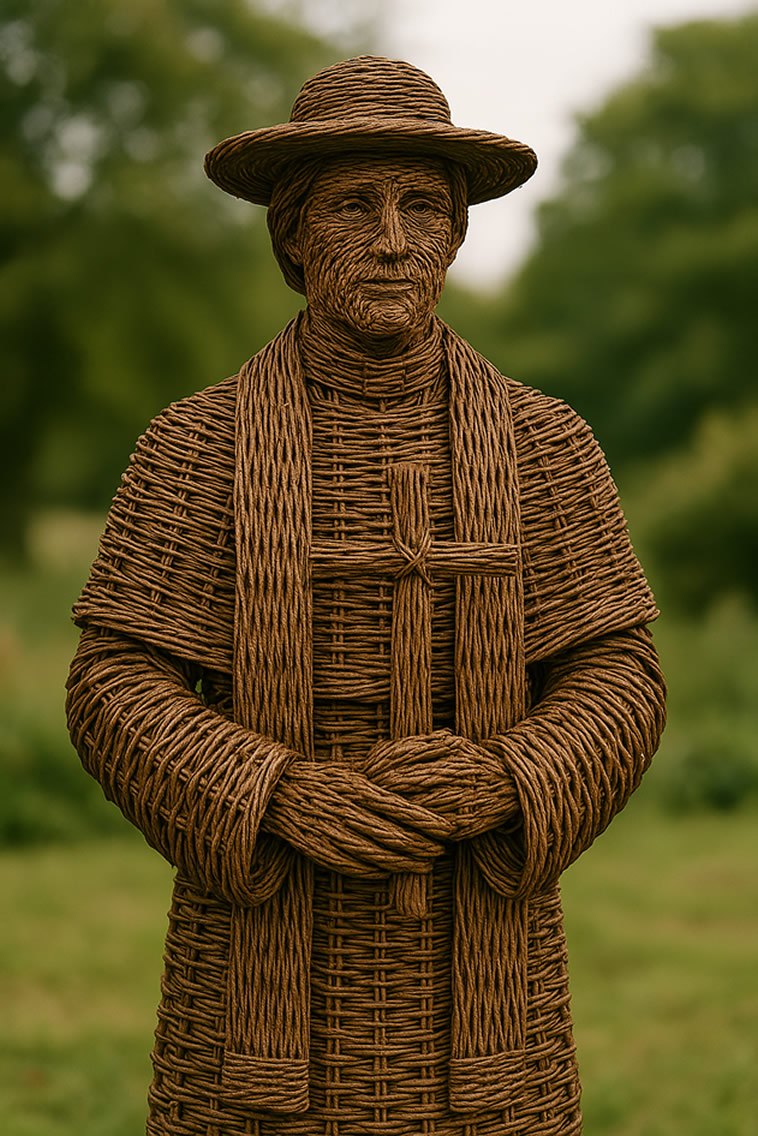
- Julius Caesar wrote about wicker man rituals in his "Commentarii de Bello Gallico" (Commentaries on the Gallic Wars), composed around 50-58 BCE. In Book VI, Caesar describes the druids of Gaul (ancient France) and their religious practices, including human sacrifice ceremonies where victims were burned alive inside large wicker effigies shaped like human figures. Archaeological evidence for such burnings in wicker structures is limited, though there is evidence of human sacrifice in Celtic cultures-- but I liked the AI image and it made for some alliterative filler here ;-).
- The 1973 film "The Wicker Man", directed by Robin Hardy and starring Christopher Lee, is widely regarded as a masterpiece of British horror cinema - a sophisticated psychological thriller about a devoutly Christian police sergeant investigating a missing child on a remote Scottish island inhabited by modern pagans.
- The 2006 remake, however, has become infamous for entirely different reasons. Nicolas Cage reportedly was a big fan of the first film and keenly interested in starring in a remake, but the result directed by Neil LaBute became a cult phenomenon for its unintentional comedy rather than horror.
|
|
|
|