|
|
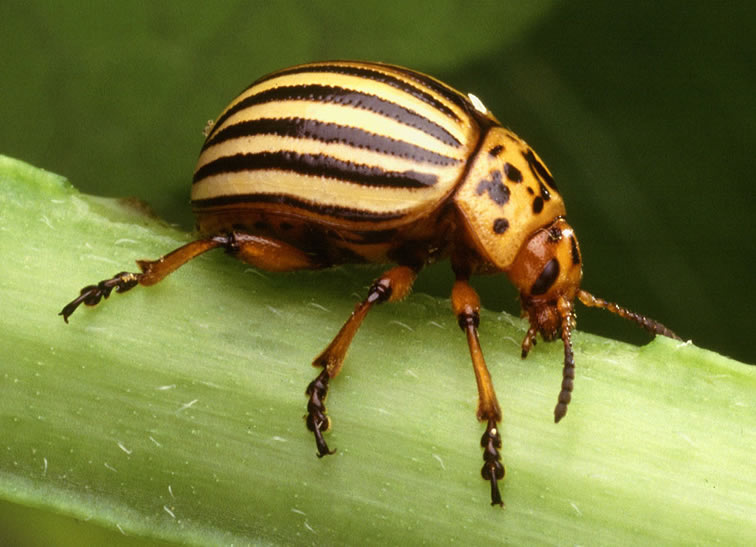
Potato bug" is a common name used to refer to the three very different arthropods pictured above-- none of which is a true bug (since, technically, the term "bug" is reserved by entomologists to refer to insects of the order Hemiptera). Sometimes the name 'potato bug' is used to refer to the insect at right, Leptinotarsa decemlineata, more properly called the Colorado potato beetle, since it is a member of the order Coleoptera. It is a serious pest of the leafy, above-ground portions of potato vines in many parts of the United States. It has evolved resistance to over 50 different insecticides, making it one of the most pesticide-resistant insects on Earth. Despite its common name, it's native to the Rocky Mountains where it fed on wild nightshades, only switching to potatoes when European settlers introduced the crop in the mid-1800s.
|
 |
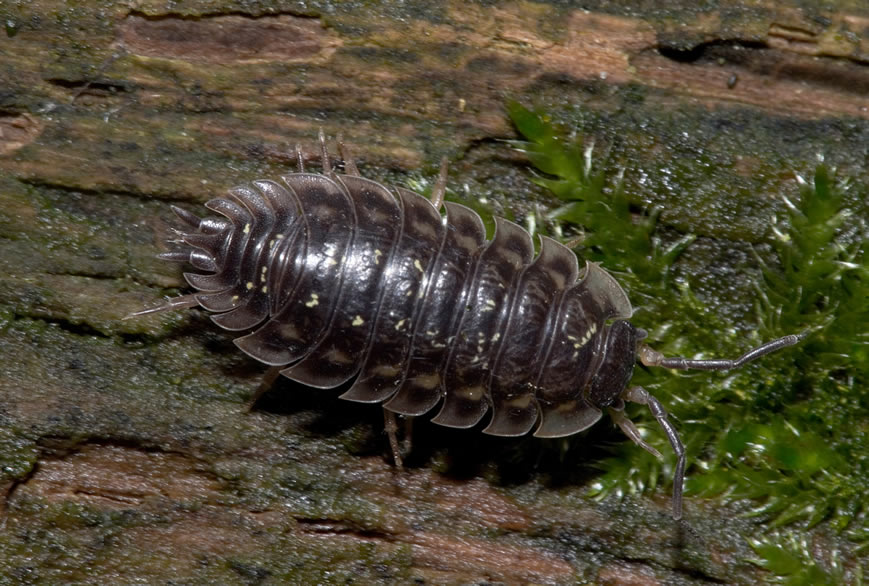 |
People also use the term 'potato bug' (or sowbug, pillbug or roly-poly) in connection with a creature that is not even an insect. Sowbugs, like Oniscus asllus, on the left, belong in the class Crustacea, in the order Isopoda, the same order as that of the common crawdad or crayfish. Sowbugs are the only living examples of completely terrestrial crustaceans, though they still breathe through modified gills and must keep them moist to survive. Oniscus asellus can drink through their rear end—they have specialized tube-like structures called uropods at their tail that can absorb water directly from moist surfaces, allowing them to hydrate without needing to find standing water. |
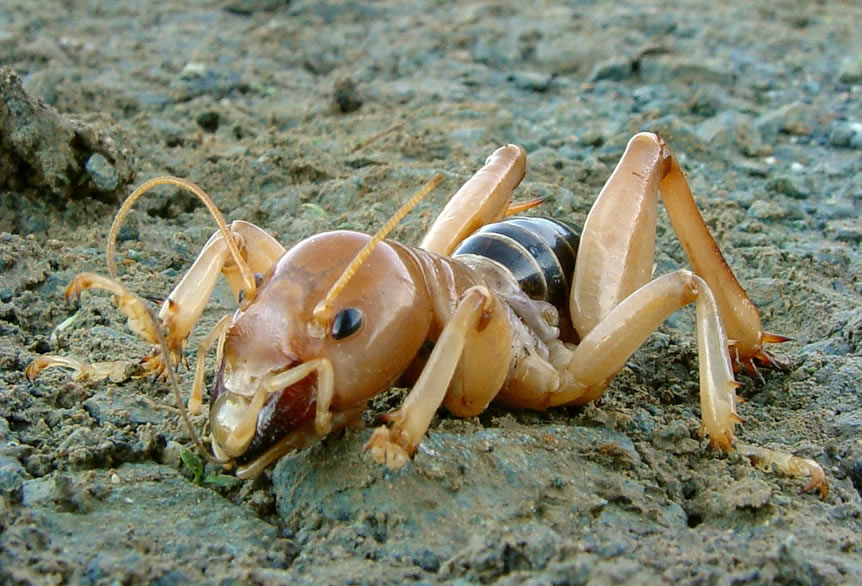
"Potato bug" is sometimes used to refer to yet a third animal, the Jerusalem cricket, Stenopelmatus fuscus. Jerusalem crickets are insects of the order Orthoptera, like other crickets, grasshoppers, locusts and katydids. The creatures are also sometimes called "children of the earth", presumably because their coloration and shinyness recalls that of newborn humans. Jerusalem crickets produce some of the most complex acoustic signals in the insect world, drumming elaborate rhythmic patterns on the ground with their hind legs that can travel through soil for several feet. These large, wingless crickets can live up to two years and are capable of delivering a painful bite with their powerful mandibles, although they are otherwise harmless to humans despite their intimidating appearance. |
 |
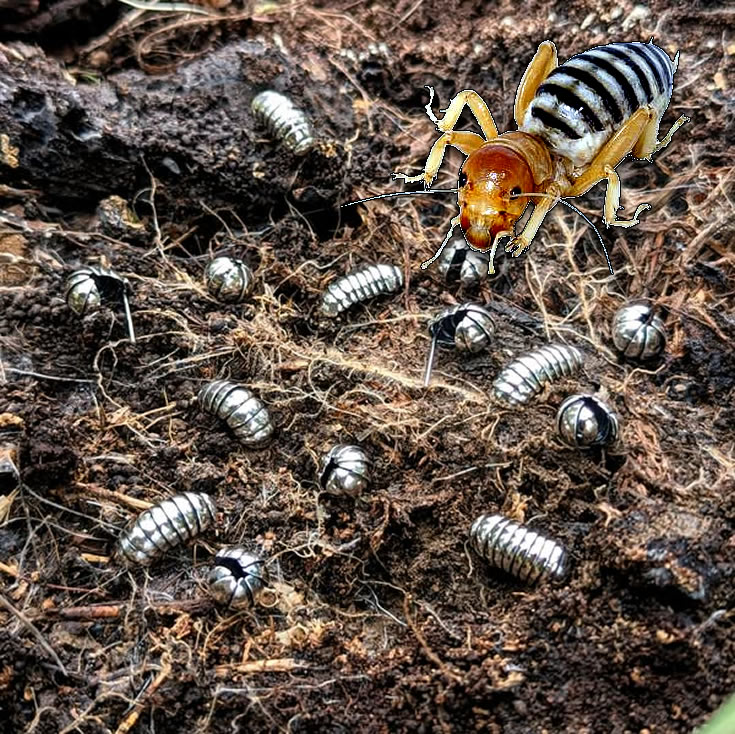 |
Both Jerusalem crickets and sowbugs live in damp, decaying material (like those old potatoes sitting in the bottom cupboard in your kitchen) and help to recycle organic material (although the Jerusalem crickets can be predaceous and sowbugs may sometimes become pests of young greenhouse plants). The name of the family to which roly-polies belong is Armadillidiidae, in reference to their ability to roll into a tight ball when threatened, like armadillos, a behavior called conglobation. Jerusalem crickets earned their biblical name from early Mormon settlers in the American West who encountered these large, alien-looking insects during their westward migration. The settlers were reminded of the locusts that plagued ancient Egypt in the Book of Exodus, and since they were traveling to what they considered their "promised land," they dubbed them "Jerusalem crickets." The name stuck despite the fact that these insects are neither crickets nor have any connection to Jerusalem—they're actually more closely related to wetas from New Zealand than to true crickets. |
| |
|