|
|
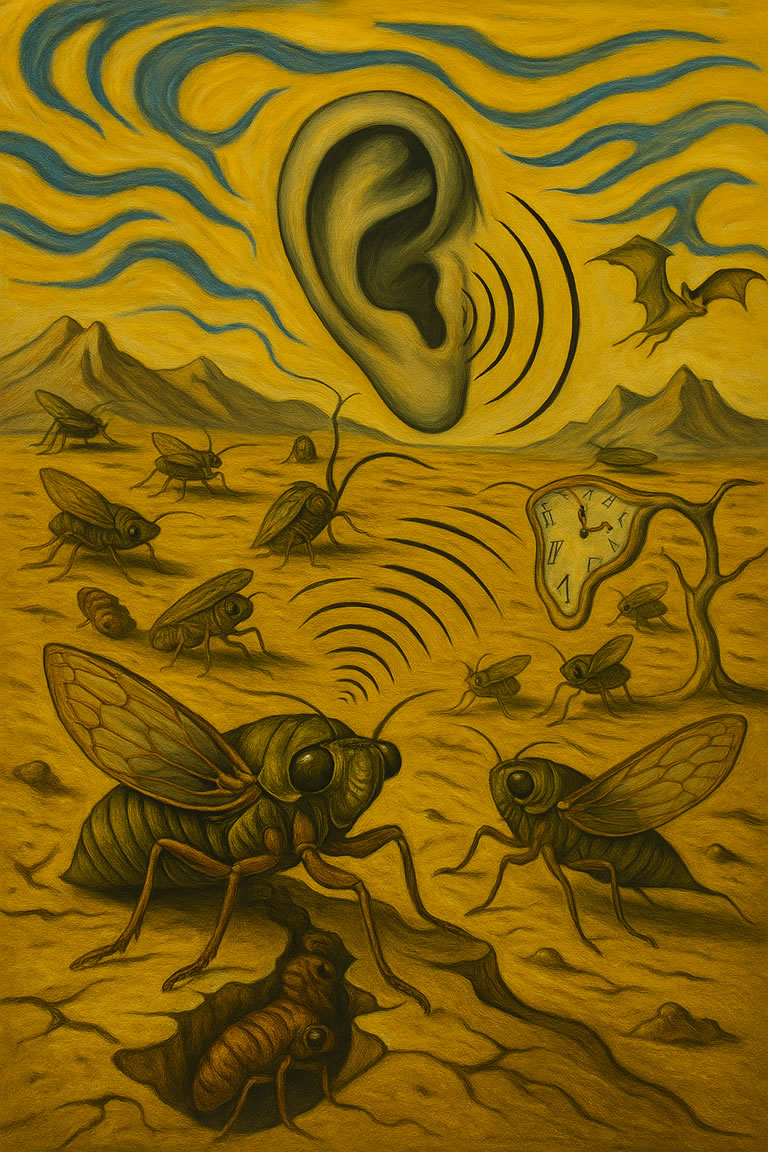
Not many insects can avoid the need to communicate to some degree, if only to come together for the purpose of mating. Many insects employ chemicals (called pheromones) that produce odors used as sexual attractants. Others use visual cues such as bright colors on the wings or flashing lights, in the case of fireflies, to get the attention of potential mates. Crickets have developed auditory signals to a high degree, the males producing distinct "calling", "courtship" and "staying together" songs which, respectively, attract females, induce them permit mating, and restrain them from mating again with other males before they have laid eggs. The calls are produced by rubbing together ridges on the wings called files and scrapers in a manner similar to that in which a bow produces sound from a violin. Jiminy Cricket might have been more entomologically correct if he had six legs, compound eyes and played a fiddle instead of crooning.
A.E. Dolbear, a professor of physics at Tufts College in Medford, Massachusetts asserted, in 1857, that there is a correlation between the field cricket chirping and the ambient temperature:
T= 50 + (N-40)/4
where T is the temperature, in degrees Fahrenheit and N is the number of chirps per minute.
|
|
Insect communication represents one of nature's most sophisticated and diverse information exchange systems, evolving over 400 million years to create a diverse symphony of signals that maintains the ecological balance of our planet.
For instance, only male cicadas produce their iconic buzzing noise using specialized structures called tymbals, located on their abdomen. The hollow abdomen acts as a resonating chamber, amplifying the sound to attract females. Female cicadas, on the other hand, remain silent and respond to males using subtle wing flick signals instead. Other insects have developed an extraordinary array of signaling methods. Chemical communication through pheromones stands as perhaps the most prevalent. These specialized molecules, released in minuscule quantities, can transmit messages across remarkable distances. A female moth's sex pheromone, for instance, may attract males from several kilometers away, creating invisible scent corridors that guide potential mates with astonishing precision. This chemical language extends beyond reproduction to include alarm signals, territorial markers, and complex social organizations within colonies. |
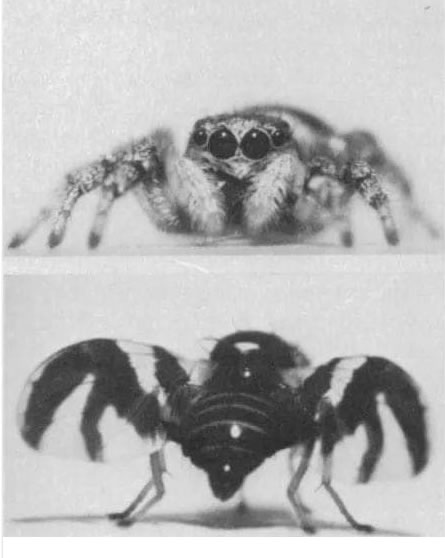
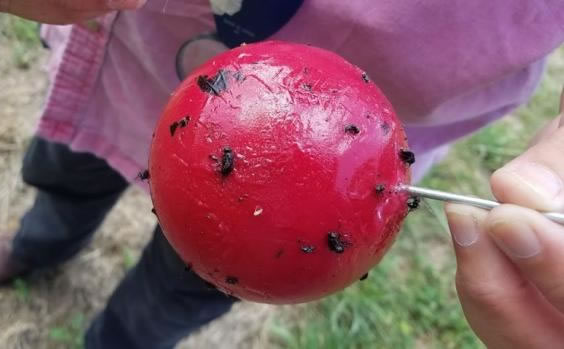
The visual realm offers another communication channel. Fireflies illuminate summer nights with their bioluminescent courtship displays, each species flashing in distinctive patterns that prevent cross-species mating confusion. Many insects harness reflected light through structural coloration and movement patterns. Among Tephritid fly species, such as the apple maggot, Rhagoletis pomonella, successful mating between males and females cannot be achieved without courtship behaviors including pheromone signaling, movement-based interactions on host fruit and intricate mating displays that involve visual cues (with wings whose markings mimic the appearance of jumping spiders!). This biological encryption ensures messages reach only their intended recipients.
|
|
|
|
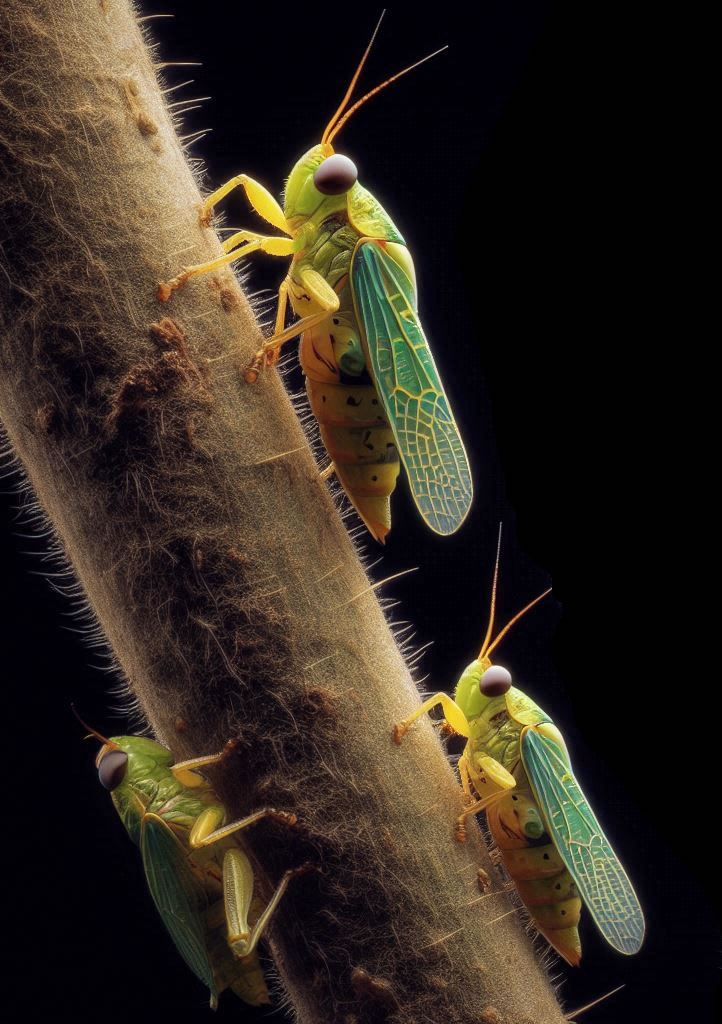
Vibrational communication represents a third major modality, with many insects perceiving their world primarily through substrate vibrations. Treehoppers, for example, transmit complex signals through plant stems by vibrating their abdomens against surfaces. These vibrations travel through the plant material, allowing insects to communicate across relatively long distances without alerting predators. Even more remarkably, different species sharing the same plant can utilize specific frequency bands to avoid cross-talk, creating what scientists describe as "frequency partitioning."
|
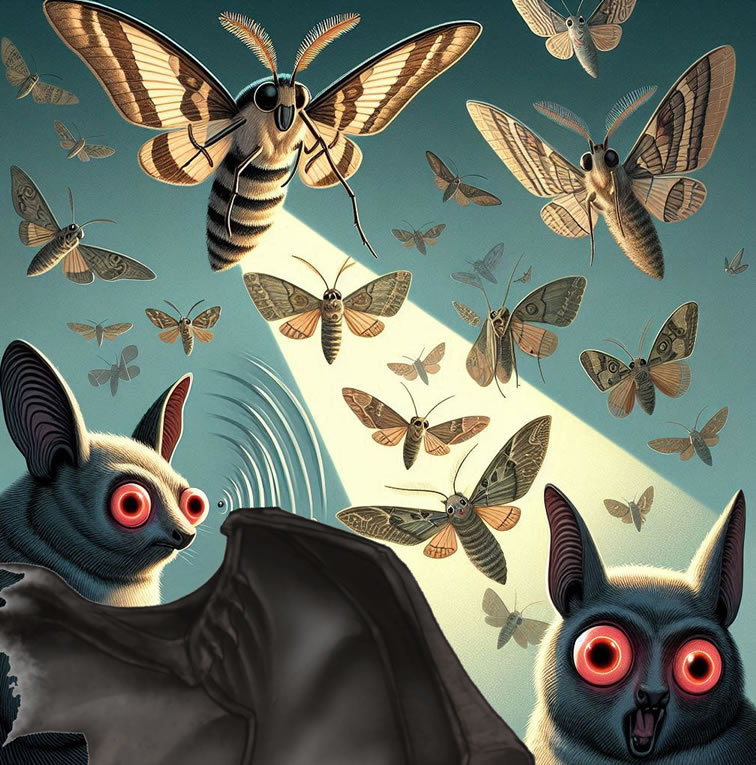
The evolutionary arms race between predator and prey has further refined insect communication. Many species have developed private channels that remain undetectable to enemies. Certain moths, for instance, can hear the ultrasonic calls of hunting bats and emit their own ultrasonic clicks that jam the predator's sonar system—essentially electronic warfare conducted by insects.
|
|
|
Human understanding of these communication systems has practical applications beyond scientific curiosity. Agricultural pest management increasingly relies on pheromone-based control methods rather than broad-spectrum insecticides. By deploying synthetic versions of insect sex pheromones, farmers can disrupt mating behaviors without harming beneficial species or introducing toxins into the environment.
|
As we continue deciphering the complex and ancient communication systems of insects, they remind us that information exchange doesn't require consciousness as humans understand it, yet can achieve remarkable sophistication through evolutionary processes. The insect conversations occurring in gardens, forests, and fields represent one of nature's greatest achievements—a reminder that even the smallest creatures contribute to the complex dialogue that sustains life on Earth.
|
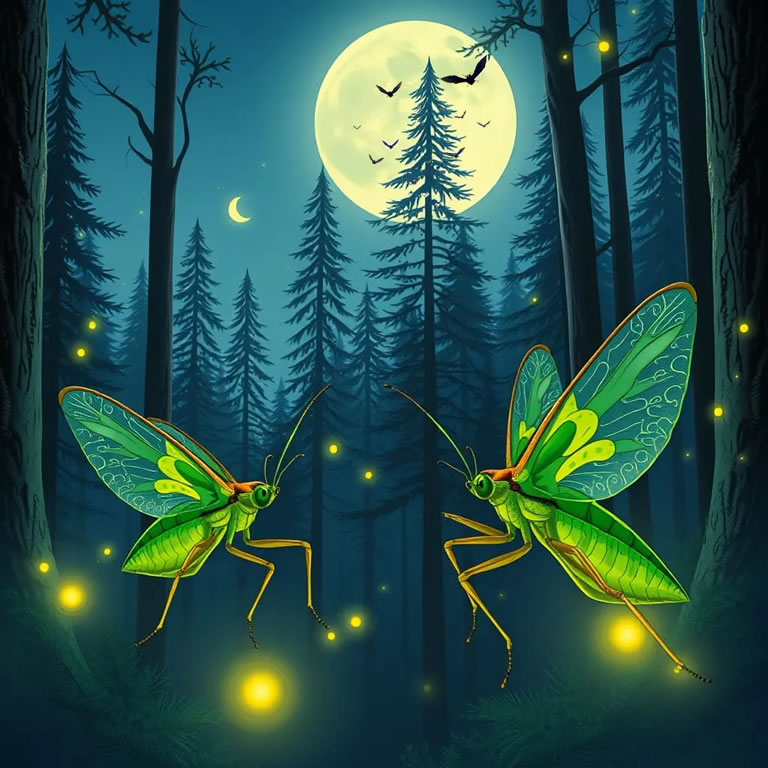 |
Some katydids (order: Orthoptera) use ultrasonic calls beyond human hearing range to attract mates while avoiding predatory bats. |
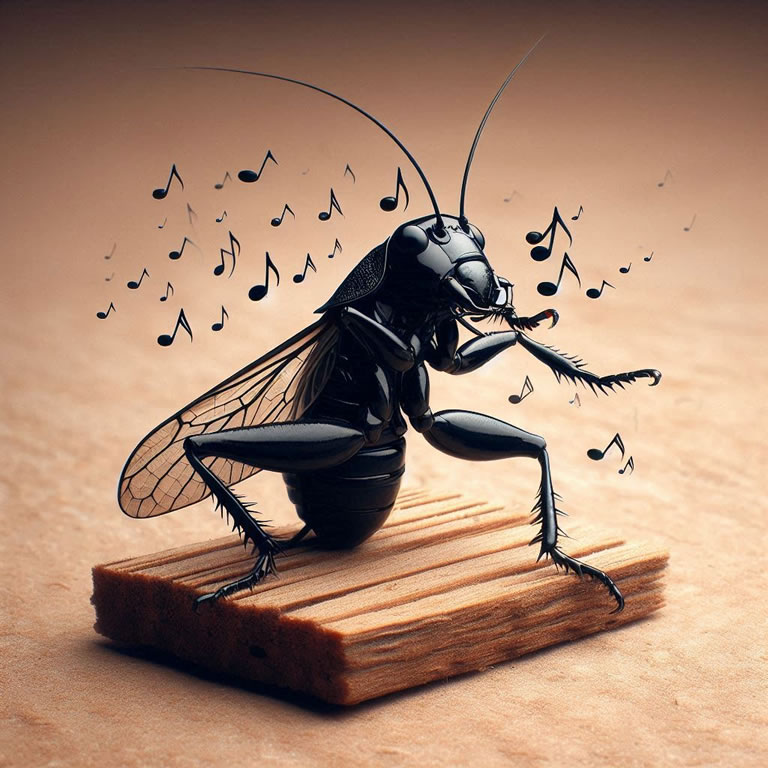
Male crickets (order: Orthoptera) produce their characteristic chirping sound by rubbing specialized structures on their wings together—a process called stridulation. Remarkably, their ears are located on their front legs, and they produce sounds at frequencies that exactly match their hearing sensitivity. |
|
|
|
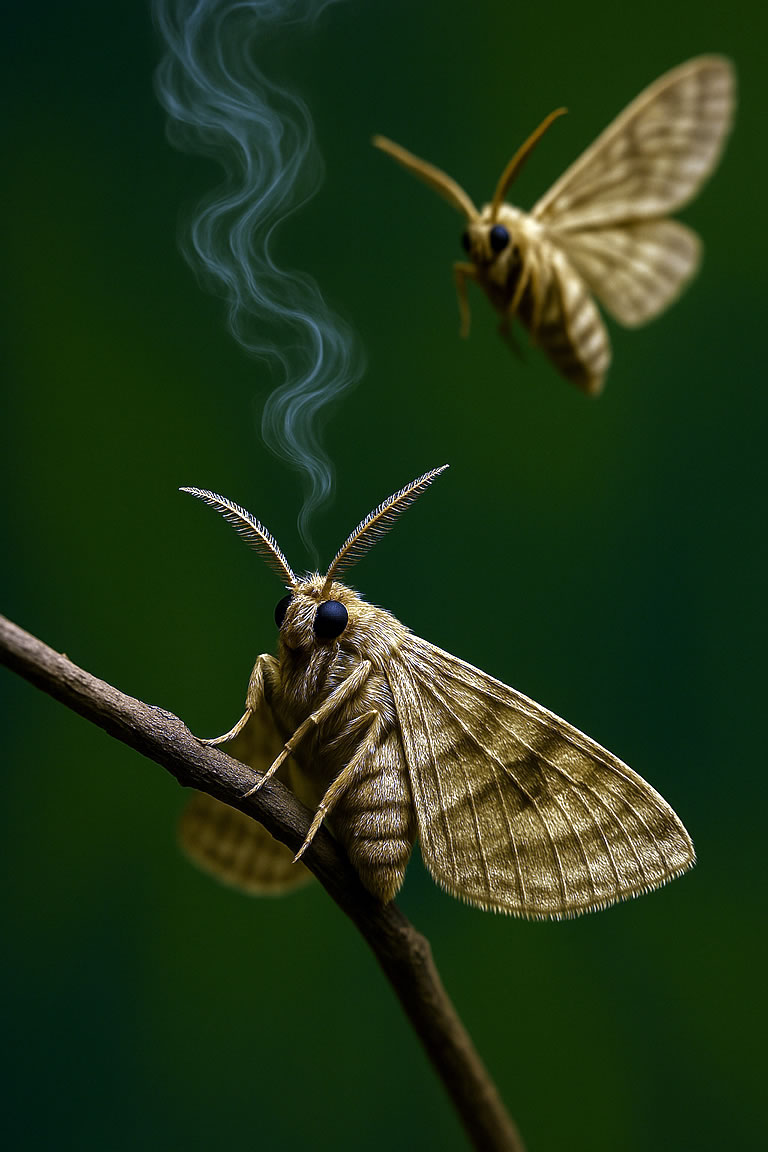
The Japanese oak silk moth (order: Lepidoptera) possesses the most sensitive chemical detectors known in the animal kingdom, with males able to detect as few as 40 molecules of the female's sex pheromone bombykol—equivalent to finding one grain of salt in an Olympic-sized swimming pool. |
Water striders (order: Hemiptera) communicate through ripples on the water's surface. Males create specific vibration patterns by tapping the water, which females can distinguish from random water movements. They essentially use the pond surface as a communication medium.
|
|
|
Cicadas (order: Hemiptera) coordinate mass emergences every 13 or 17 years, relying on synchronized acoustic signals to overwhelm predators. |
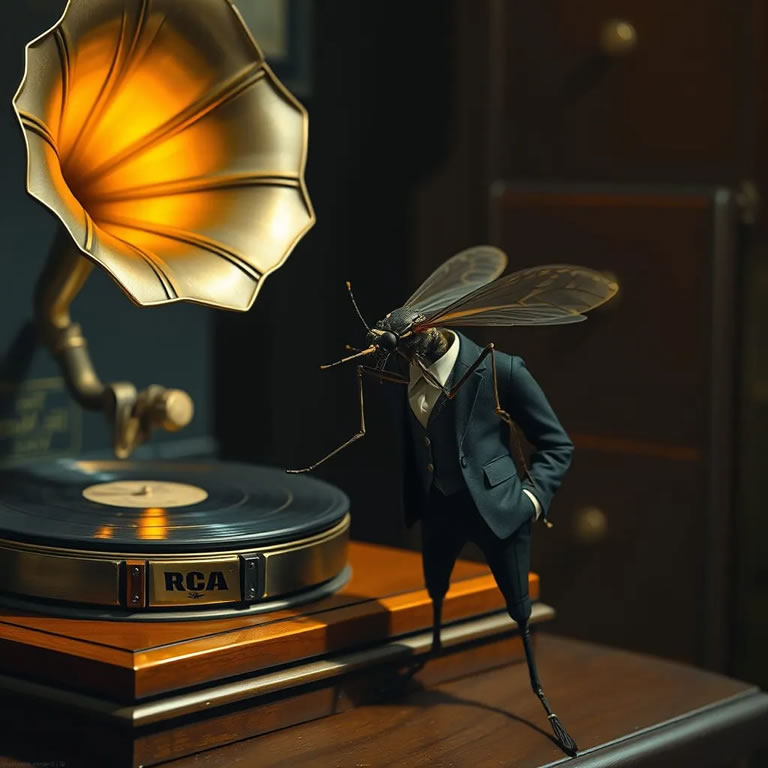
Male mosquitoes (order: Diptera) identify suitable mates by listening for specific wingbeat frequencies, tuning in to potential partners with surprising precision. |
|
|
Drosophila vinegar flies (order: Diptera) perform complex courtship dances combining visual, chemical, and acoustic elements. Males vibrate their wings to produce "love songs" with species-specific acoustic patterns that females can identify even in noisy environments. A female can distinguish between the songs of closely related species that differ in rhythm by just a few milliseconds. |
Some fireflies (order: Coleoptera) synchronize their flashes in massive group displays, creating mesmerizing light shows across tropical landscapes. |

|
|
Male death watch beetles (Xestobium rufovillosum, in the order: Coleoptera) communicate with potential mates by banging their heads against wooden surfaces at up to 11 Hz, creating a ticking sound that can be heard through walls. This behavior gave them their name, as people once associated the sound, in otherwise quiet hospice settings, with impending death. |
|
| |
|