|
|
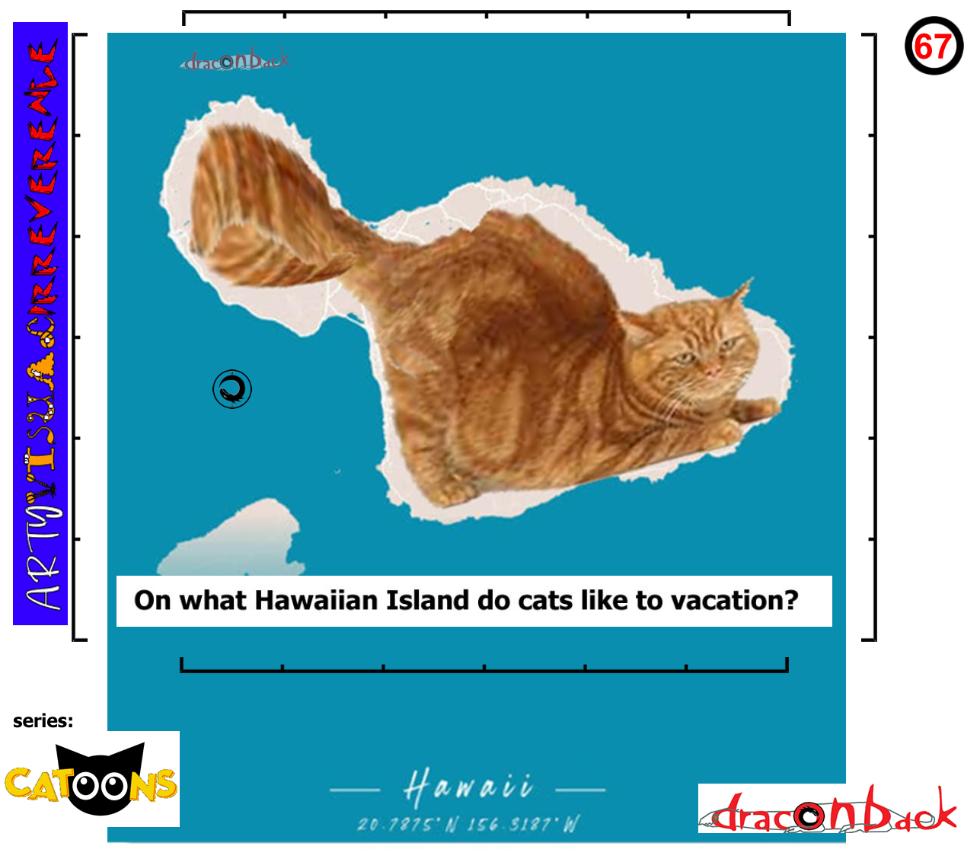
European sailing ships first introduced domestic cats, which controlled rodents during long ocean voyages, to Hawaii in the late 1700s-- feral cat populations were documented in remote Hawaiian wilderness areas as early as 1840. |
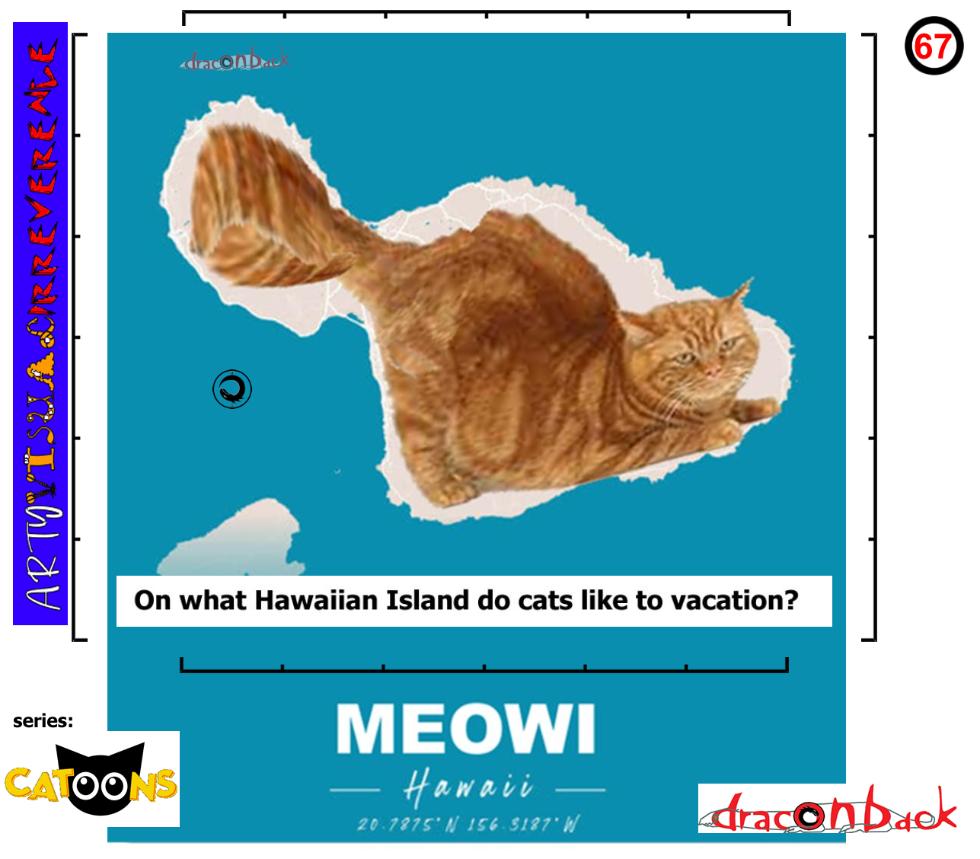 |
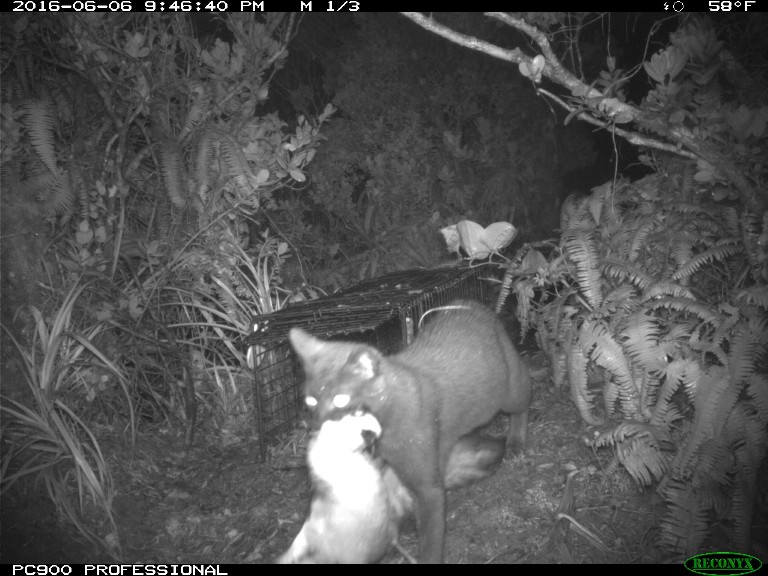
- Feral cats are now established on all eight main Hawaiian Islands, where they prey on native birds such as the Hawaiian stilt and Hawaiian coot, both federally listed endangered species. With no natural predators in Hawai‘i, feral cat populations have grown unchecked, creating ecological crises that have sparked heated debates between conservationists and animal welfare advocates over management strategies.
|
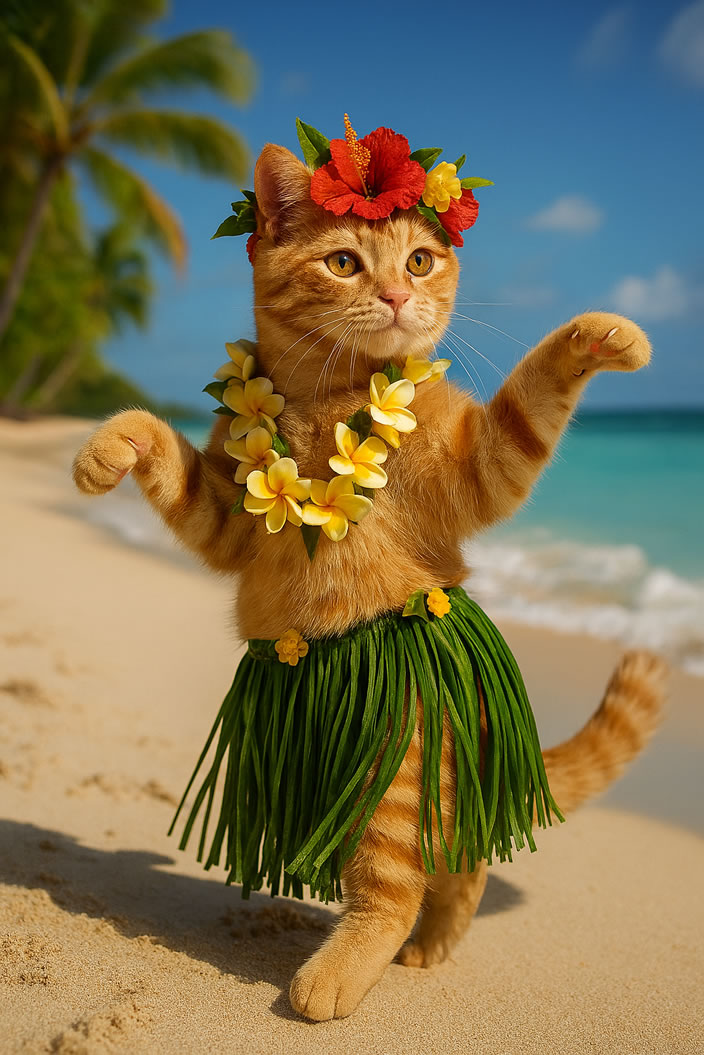
- After touring Honolulu in 1866, Mark Twain wrote memorably about the sheer abundance of felines he observed, describing seeing "individual cats, groups of cats, platoons of cats, companies of cats, regiments of cats, armies of cats, multitudes of cats, millions of cats, and all of them sleek, fat, lazy and sound asleep.” Cats doing the hula, I just discovered, is something of a meme... but, then again, cats doing anything is likely to have been or to become a meme at some point.
|
 |
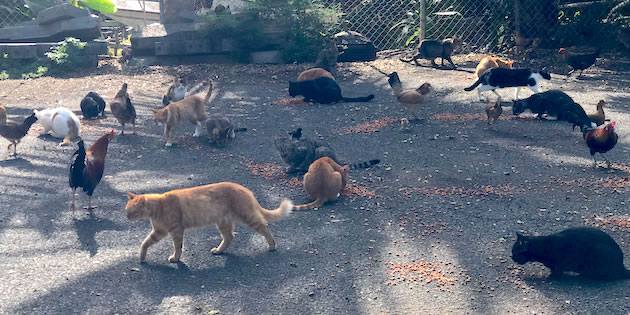 |
- An estimated 2 million feral cats currently roam the Hawaiian Islands, with approximately half living on the Big Island alone and over 300,000 on Oahu, thriving in an environment that historically lacked mammalian predators to control their populations.
|
- Hawai‘i is often called the “extinction capital of the world”: more than half of all endangered bird species in the U.S. are Hawaiian, and feral cats are a major predator contributing to these losses. Between 1870 and 1930, at least 30 species or subspecies of endemic Hawaiian forest birds either became extinct or were greatly reduced in number, with feral cats identified as one of the earliest causal factors by naturalists studying these population collapses. Globally, feral cats on islands have contributed to the extinction of 33 species and are recognized as the principal threat to 8 percent of critically endangered birds, mammals, and reptiles, earning them designation as one of the world's most harmful invasive species by the International Union for the Conservation of Nature.
|
 |
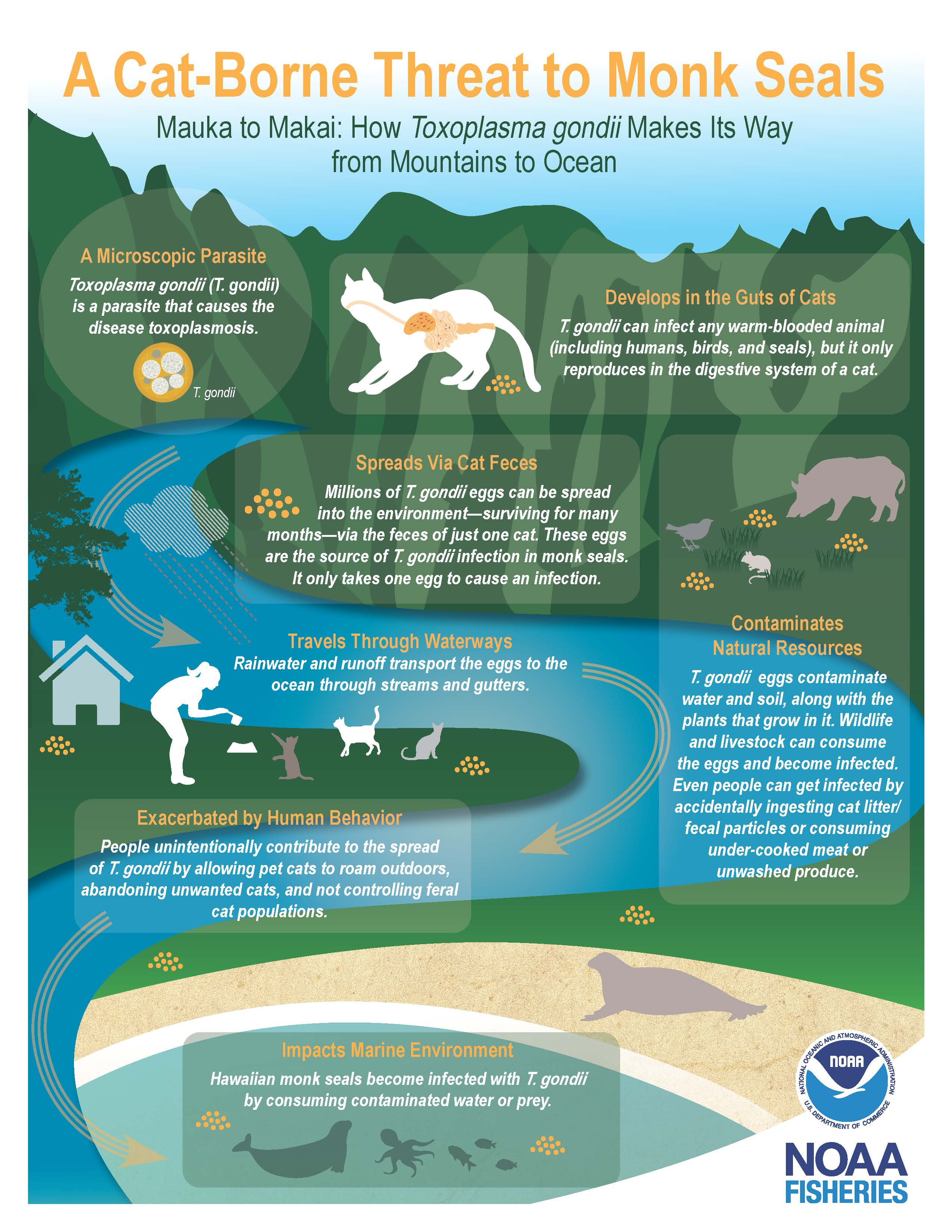 |
- Beyond predation, cats spread the parasite Toxoplasma gondii, which contaminates soil and water and has been linked to deaths of Hawaiian monk seals, spinner dolphins, and several bird species. A single feral cat can excrete hundreds of millions of infectious Toxoplasma gondii eggs into the environment through its feces, with this parasite identified as a serious threat to endangered species including the Hawaiian monk seal, nēnē, and ʻalalā, causing documented deaths through toxoplasmosis.
|
|
|