|
|
Historically significant beyond his musical contributions, Dylan was the first songwriter to win the Nobel Prize in Literature in 2016, with the Swedish Academy citing his creation of "new poetic expressions within the great American song tradition."
|
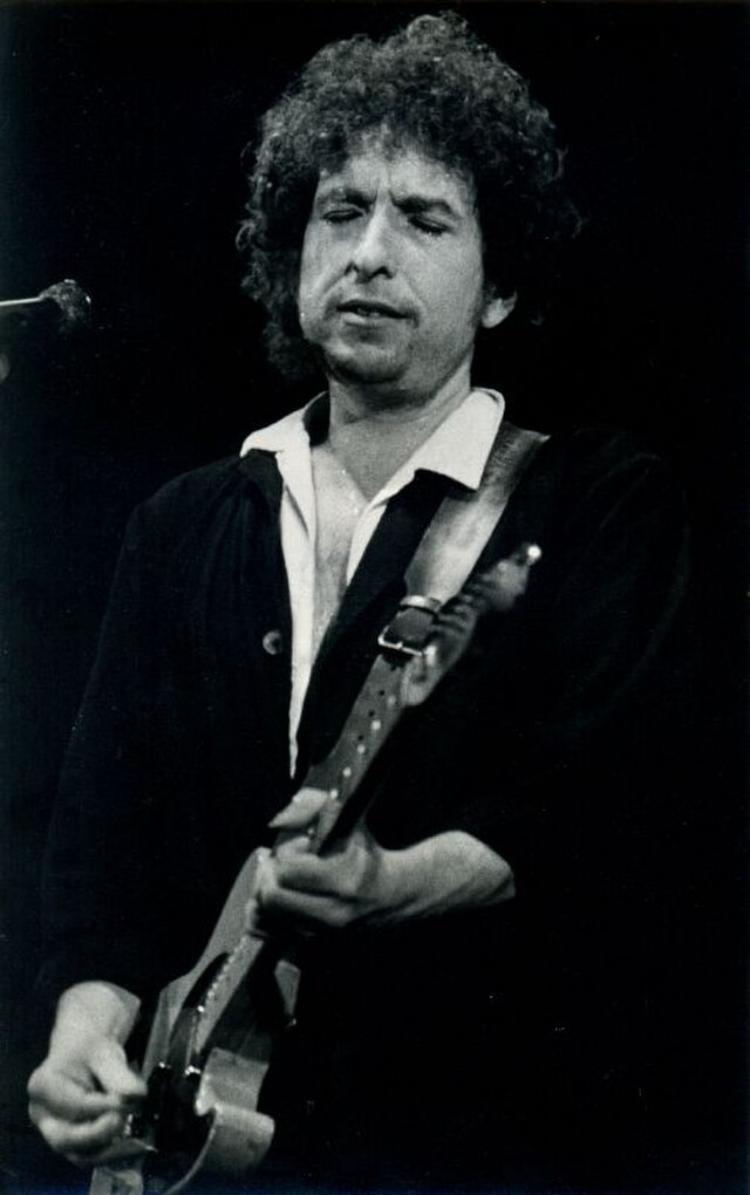 |
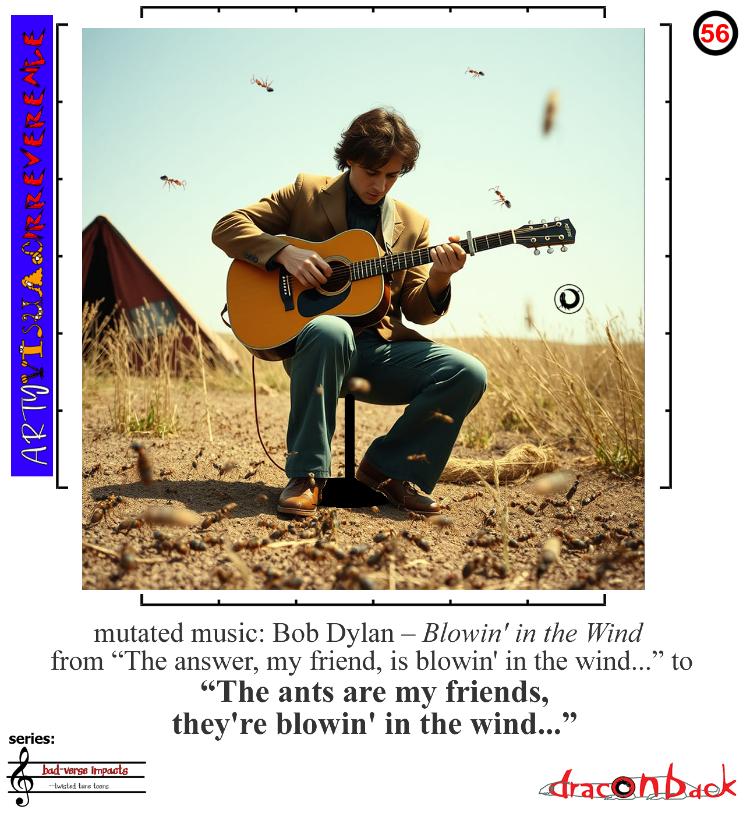
BOB DYLAN
- Dylan was born Robert Allen Zimmerman but legally changed his name in 1962, claiming it was inspired by Welsh poet Dylan Thomas, though he later admitted in interviews that he chose it simply because he liked the sound and wanted to reinvent himself completely when he moved to New York City.
- His distinctive nasal vocal style and harmonica playing were heavily influenced by Woody Guthrie, whom Dylan visited obsessively in the hospital during Guthrie's final illness, essentially apprenticing himself to the folk legend and adopting many of his musical and philosophical approaches.
- Despite being synonymous with acoustic folk music, Dylan shocked the folk community by "going electric" at the 1965 Newport Folk Festival, where he was actually booed by audience members who viewed his use of electric instruments as a betrayal of folk music's authenticity and political purity.
|
BLOWIN' IN THE WIND
- The song was written in just 10 minutes in 1962 at a Greenwich Village coffee house, with Dylan later describing it as coming to him almost fully formed, though its simple melody and rhetorical structure were influenced by the spiritual "No More Auction Block" and traditional folk ballad forms.
- Peter, Paul and Mary's 1963 cover version reached number two on the Billboard Hot 100 and sold over one million copies, making it far more commercially successful than Dylan's original recording and helping establish him as a serious songwriter before he achieved his own chart success.
- The song's series of rhetorical questions without explicit answers reflected Dylan's emerging philosophy that protest songs should provoke thought rather than provide simple solutions, marking his evolution from traditional folk messaging toward the more complex, ambiguous approach that would define his later work.
|
|
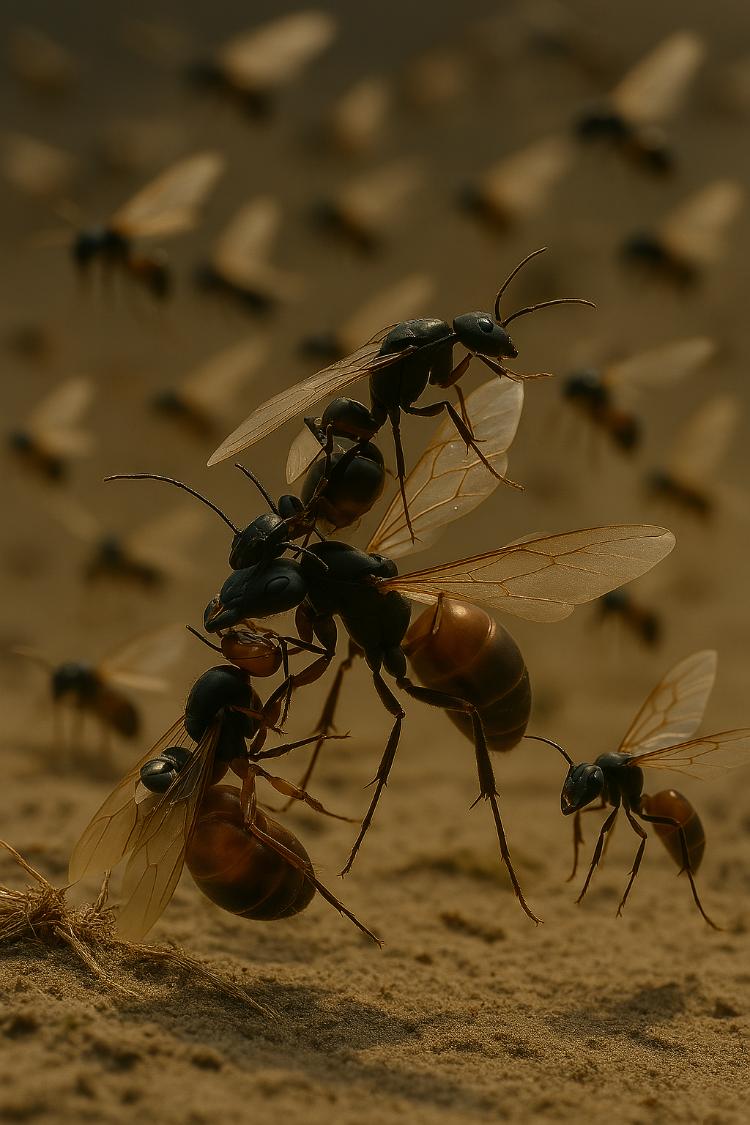 |
NUPTIAL FLIGHTS OF ANTS
- Nuptial flights are synchronized mass mating events where winged reproductive ants from multiple colonies emerge simultaneously, often triggered by specific weather conditions like the first warm rain after a dry period, creating swarms so dense they can be detected on weather radar systems.
- During these flights, virgin queens mate with multiple males in mid-air to ensure genetic diversity, with the males dying shortly after mating while the fertilized queens lose their wings and establish new colonies, carrying enough sperm to last their entire 15-30 year lifespan.
- The timing of nuptial flights is so precisely coordinated that some species across entire geographic regions will emerge on the same day despite being separated by hundreds of miles, suggesting sophisticated environmental cues and possibly pheromone communication networks that scientists are still working to understand fully.
- Many people spell and pronounce the above phenomenon as "nuptual flights"-- perhaps confounding the final syllables with those of the more common word "mutual". Stop it-- the word is "nuptial" pronounced nup-TEA-al! And, for God's sake, don't get me started on "lie-berry", "Feb-oo-wary" and "goo-dah cheese"! Sorry, sorry, I think my blood sugar is low... I should go have something to eat...
|
|
|