|
|
Unusually for a rock band of their era, Dire Straits became one of the first major acts to fully embrace the compact disc format, with their 1985 album "Brothers in Arms" becoming one of the best-selling CDs of all time and helping to establish the new medium's commercial viability.
|
 |
DIRE STRAITS
- The band's name came from a friend who jokingly said they were in "dire straits" financially, and Mark Knopfler initially thought it was too obvious a name for a struggling band, but it stuck and became one of rock's most memorable band names, perfectly capturing the working-class themes that would permeate much of their music.
- Mark Knopfler's distinctive guitar playing style, using fingerpicking rather than a traditional pick, was developed because he found picks too limiting for the complex melodic lines he wanted to create, resulting in a warmer, more nuanced tone that became instantly recognizable and influenced countless guitarists to abandon picks in favor of fingerstyle technique.
- Despite achieving massive commercial success with albums like "Brothers in Arms," Dire Straits was essentially Mark Knopfler's creative vehicle, and he dissolved the band in 1995 at the height of their popularity because he felt the pressures of stadium touring and commercial expectations were compromising his artistic vision and personal well-being.
|
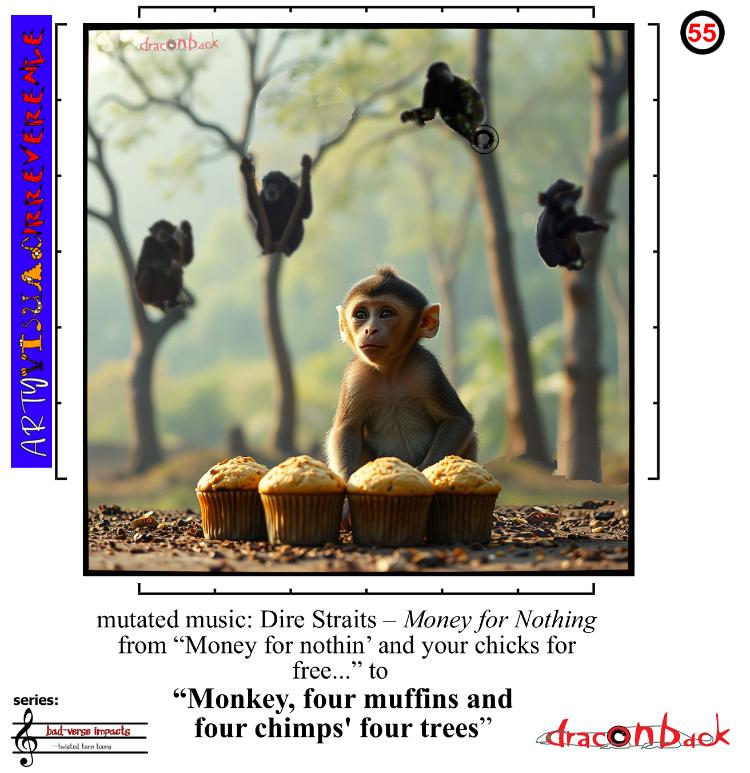
MONEY FOR NOTHING
- The song's lyrics were inspired by Mark Knopfler overhearing a worker in a New York appliance store complaining about rock stars on MTV, and Knopfler wrote the song from that person's perspective, including the controversial homophobic slur that reflected the speaker's attitude rather than Knopfler's own views, leading to decades of debate about artistic representation versus endorsement.
- The song featured one of the first computer-generated music videos, created by Ian Pearson and Gavin Blair using primitive 3D animation that was groundbreaking for 1985, with the blocky, colorful characters becoming iconic representations of the early MTV era and influencing the development of computer animation in music videos.
- Sting's distinctive backing vocals on "Money for Nothing" ("I want my MTV") were recorded as a favor to Mark Knopfler, but Sting negotiated a co-writing credit and royalties in exchange, making it one of the rare instances where a guest vocalist became a permanent part of a song's credits and earnings, demonstrating the business acumen that made Sting one of music's wealthiest artists.
|
|
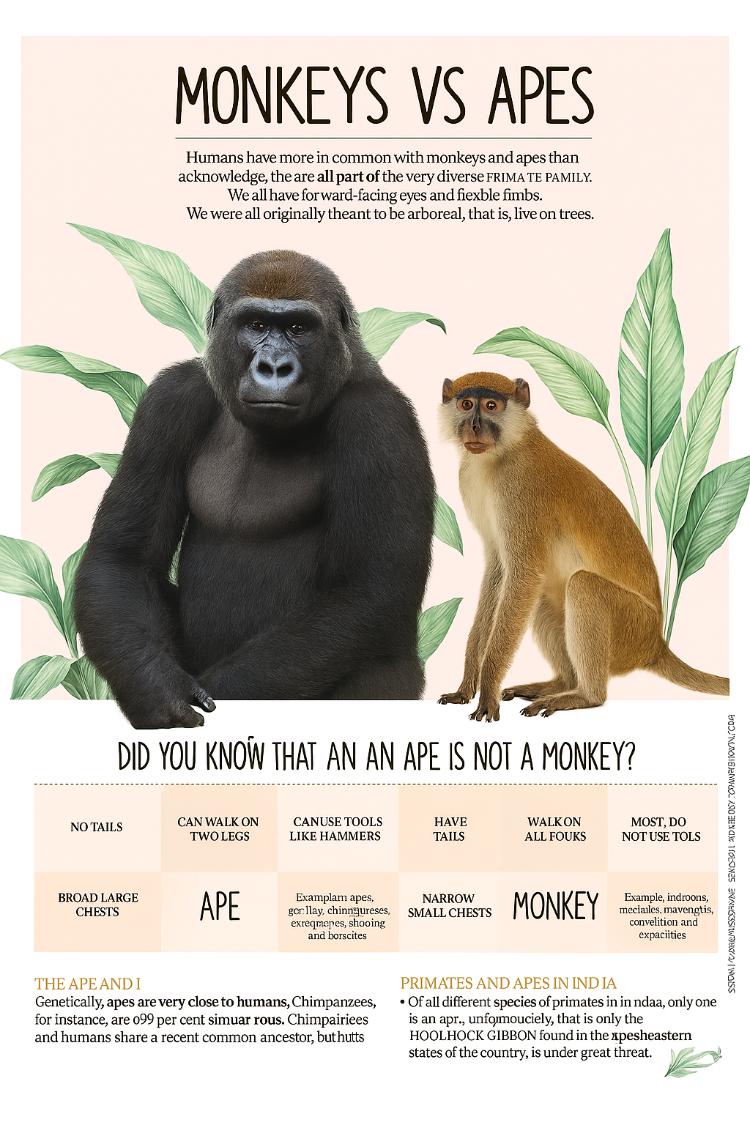 |
APES AND MONKEYS
- The fundamental distinction is that apes (including humans, chimpanzees, gorillas, orangutans, and gibbons) have no tails and possess larger brains relative to body size, while monkeys have tails and generally smaller brain-to-body ratios, though this simple rule breaks down with a few exceptions like the Barbary macaque, which is technically a monkey but has no visible tail.
- Apes have more flexible shoulder joints and longer arms relative to their bodies, adaptations for brachiation (swinging through trees), while monkeys typically move quadrupedally (on all fours) and have more limited shoulder mobility, reflecting different evolutionary paths that diverged approximately 25-30 million years ago.
- The dental formula differs significantly between apes and Old World monkeys—apes have the same tooth pattern as humans (2-1-2-3 in each quadrant), while New World monkeys have an extra premolar (2-1-3-3), and these dental differences are so consistent that paleontologists can identify fossil specimens as apes or monkeys based solely on tooth fragments.
|
OLD WORLD MONKEYS AND NEW WORLD MONKEYS
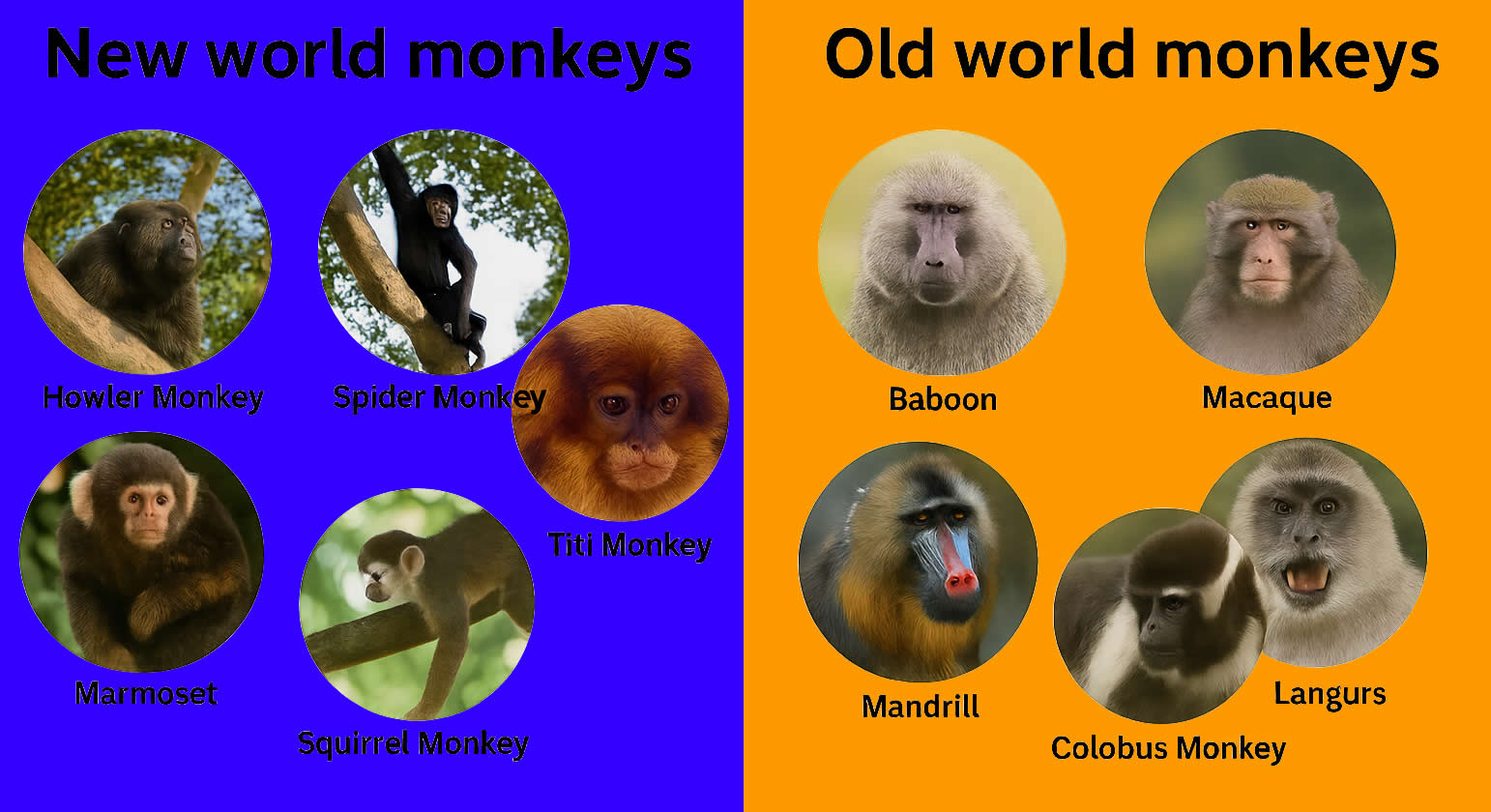
- Old World monkeys (found in Africa and Asia) have narrow, downward-pointing nostrils close together, while New World monkeys (found in Central and South America) have wide, sideways-pointing nostrils that are far apart, a difference that reflects their separate evolutionary histories after the continents drifted apart roughly 40 million years ago. New World monkeys include the only truly prehensile-tailed primates—species like spider monkeys and howler monkeys can use their tails as a "fifth hand" to grasp branches and manipulate objects, while Old World monkeys' tails, when present, are used only for balance and communication, lacking the muscular control and sensitivity of their New World counterparts.
- Old World monkeys have specialized cheek pouches for storing food while foraging, allowing them to quickly gather food in dangerous areas and chew it safely elsewhere, while New World monkeys lack these pouches but have evolved other adaptations like the ability to digest toxic leaves (in howler monkeys) or specialized teeth for gouging tree bark to access sap (in marmosets and tamarins).
|
|
|
|