|
|
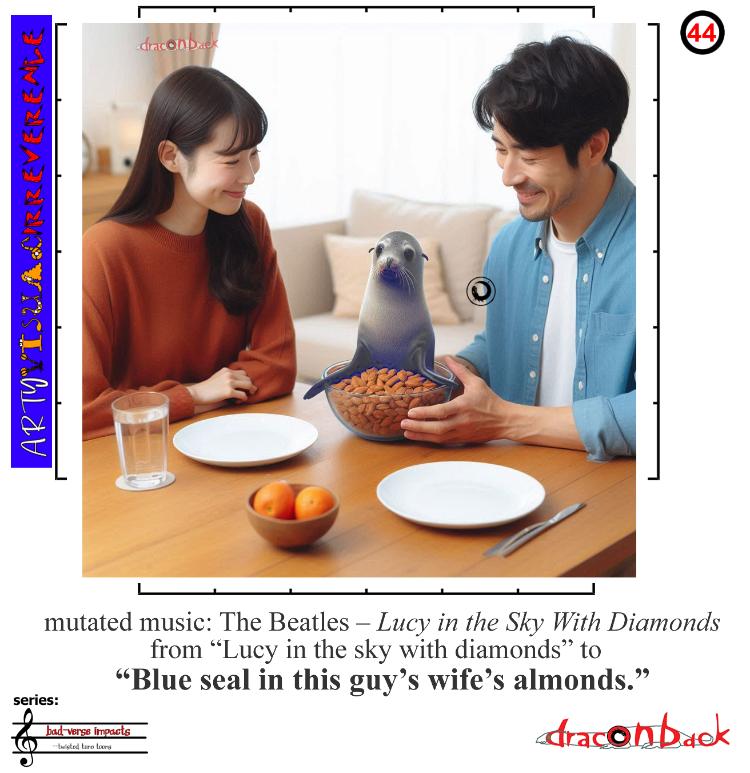
Beatles fans should read to the end of this rather lengthy post for a recipe for "Lucy in the Pie with Almonds".
|
|
THE BEATLES
- "Sgt. Pepper's Lonely Hearts Club Band", on which "Lucy in the Sky with Diamonds" was released, was the first Beatles album to feature printed lyrics on the album cover, a revolutionary decision that helped establish the practice of including lyric sheets with rock albums and demonstrated the band's recognition that their songs had evolved into serious artistic statements worthy of literary analysis.
- The album took over 700 hours to record across five months, an unprecedented amount of studio time for any artist in 1967, with the Beatles essentially treating Abbey Road Studios as their private laboratory and running up recording costs that would have bankrupted most record labels but were justified by the album's massive commercial and critical success.
- The famous album cover featuring dozens of cardboard cutouts of historical figures cost £2,868 to create (approximately $50,000 in today's money) and required legal permission from living celebrities, with Mae West initially refusing but eventually agreeing after receiving a personal letter from the band, while other figures like Gandhi were removed due to potential controversy.
|
LUCY IN THE SKY WITH DIAMONDS
- The famous Australopithecus afarensis fossil discovered in Ethiopia in 1974 was nicknamed "Lucy" because the research team was listening to "Lucy in the Sky with Diamonds" repeatedly on their tape player in camp the night after the discovery, creating an unexpected connection between Beatles psychedelia and one of paleoanthropology's most significant finds.
- “Lucy in the Sky with Diamonds” (note the potential link to LSD) wasn’t intended as a drug reference. The title came from a drawing by John Lennon’s son, Julian, of his classmate Lucy — floating in a sky full of diamonds.
- Paul McCartney wrote and sang the chorus sections while John Lennon wrote the verses, making it one of their most clearly delineated collaborative efforts, with McCartney's more melodic, poppy chorus contrasting sharply with Lennon's surreal, Lewis Carroll-inspired verses about "newspaper taxis" and "plasticine porters.
|
|
|
AUSTRALOPITHECUS AFARENSIS
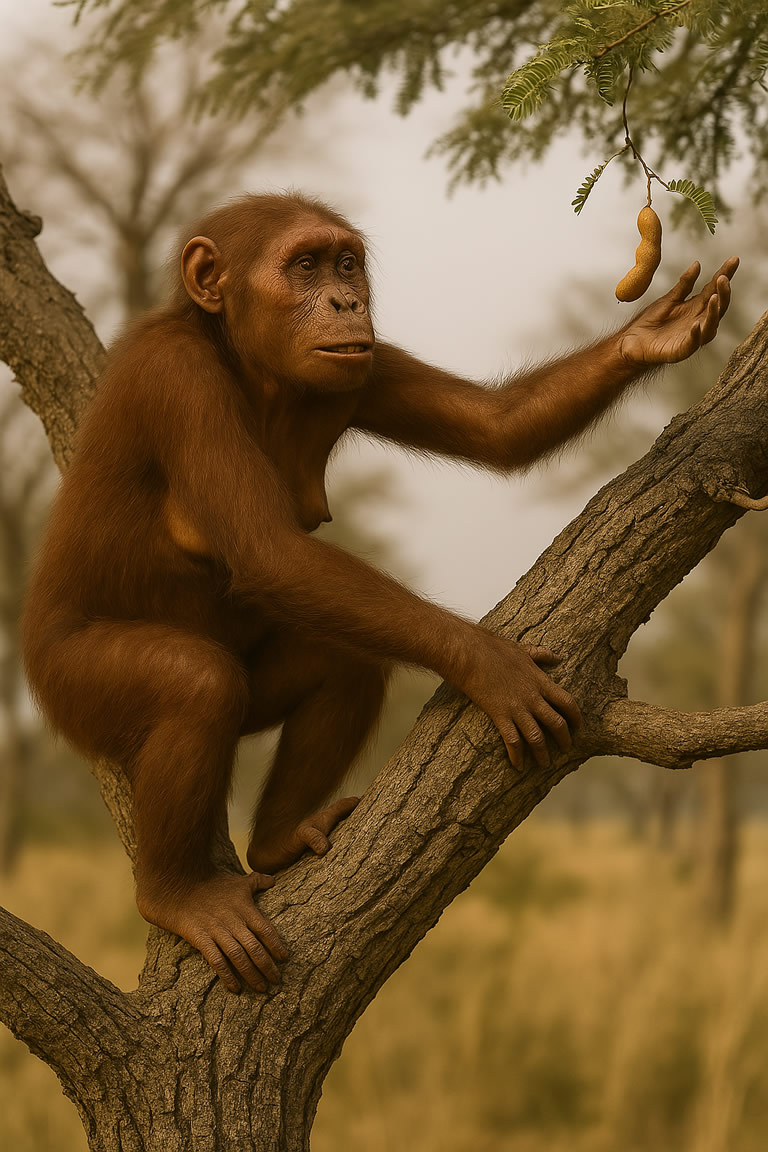
- Lucy's skeleton (specimen AL 288-1) revolutionized understanding of human evolution by providing evidence that bipedalism evolved before significant brain enlargement, as she walked upright approximately 3.2 million years ago while retaining an ape-sized brain.
- Despite being one of the most complete early human ancestor skeletons ever found at 40% intact, Lucy was likely much smaller than most people imagine, standing only about 3 feet 2 inches tall and weighing roughly 60 pounds, with a brain about one-third the size of a modern human brain, yet her pelvis structure definitively proved that early hominins walked upright millions of years before developing large brains.
- Lucy's species designation has been controversial since her discovery because she was initially classified as Australopithecus afarensis rather than A. gracile, and recent analysis suggests she may have spent significant time in trees despite being bipedal, as evidenced by her long, curved finger bones and powerful shoulder muscles that would have been ideal for climbing and swinging through branches.
- The circumstances of Lucy's death remain a paleontological mystery, but recent CT scan analysis of her bones revealed what appear to be fractures consistent with a fall from a great height, possibly from a tree, suggesting she may have died from injuries sustained during her arboreal activities.
|
SEALS
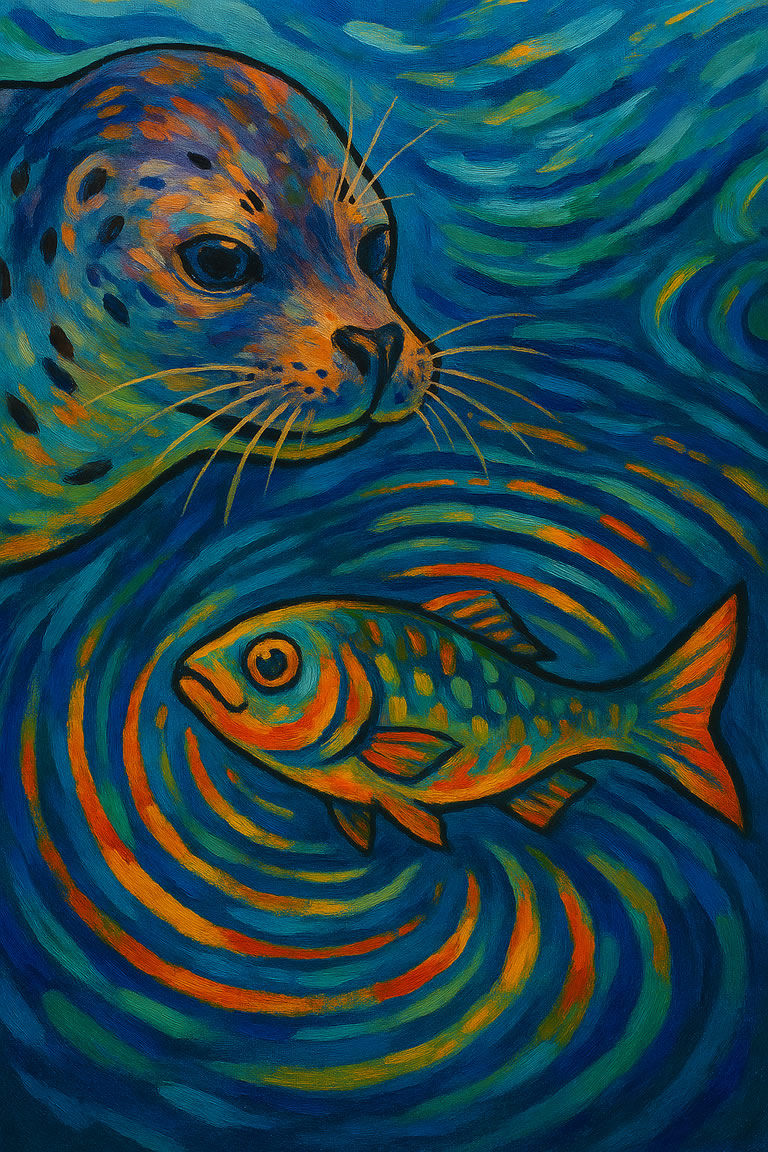
- Harbor seals have evolved blue-gray fur with dark spots for camouflage in ocean waters, but due to losing their blue-detecting cone cells during evolution, they cannot actually see the blue color of their own fur or the ocean around them, creating a paradox where their camouflage works for other animals' vision but not their own.
- Harbor seals have incredibly sensitive whiskers called vibrissae that can detect the wake turbulence left by a fish swimming through water up to 30 seconds after the fish has passed, making these whiskers so sensitive they can track prey in complete darkness or murky water with remarkable precision.
- Seals can sleep underwater by allowing only half of their brain to rest at a time while the other half remains alert to surface for breathing, a technique called "unihemispheric slow-wave sleep" that they share with dolphins, whales, and some birds, enabling them to remain vigilant for predators even while resting.
- Elephant seals can dive to depths exceeding 5,000 feet and hold their breath for up to two hours, achieving this through physiological adaptations including collapsible lungs, extra oxygen storage in their blood and muscles, and the ability to redirect blood flow away from non-essential organs during deep dives.
|
|
|
ALMONDS
- Blue Diamond Growers is a cooperative founded in 1910 by 230 California almond farmers who banded together to market their crops collectively, and today it represents over 3,000 almond growers across California, making it one of the largest agricultural cooperatives in the world.
- Almonds are not actually nuts but rather seeds from the fruit of the almond tree, which is closely related to peaches, cherries, and apricots— explaining why almond extract and cherry extract taste remarkably similar, as they share the same aromatic compound, benzaldehyde.
- California produces about 80% of the world's almonds, with the industry requiring approximately 1.1 gallons of water to grow a single almond, leading to significant environmental concerns during drought periods and making almond farming a major factor in California's water management policies.
- Wild almonds contain amygdalin, a compound that releases deadly hydrogen cyanide when digested, making them poisonous to humans—the sweet almonds we eat today are the result of a rare genetic mutation that early farmers selectively cultivated, essentially domesticating what was originally a toxic plant.
|
LUCY IN THE PIE WITH ALMONDS RECIPE
- Ingredients
- For the Pie Crust:
- 1¼ cups all-purpose flour
- ½ teaspoon salt
- ⅓ cup cold butter, cubed
- 3-4 tablespoons ice water
- For the Filling:
- 3 large eggs
- 1 cup light corn syrup
- ⅓ cup brown sugar, packed
- ⅓ cup melted butter
- 1 teaspoon vanilla extract
- ¼ teaspoon salt
- ¾ cup semi-sweet chocolate chips
- 1½ cups sliced almonds (substitute for pecans)
- ½ cup whole almonds for topping
- Instructions
- Prepare the Crust:
- Mix flour and salt in a bowl
- Cut in cold butter until mixture resembles coarse crumbs
- Gradually add ice water until dough forms
- Roll out and place in 9-inch pie pan
- Crimp edges and set aside
- Make the Filling:
- Preheat oven to 350°F (175°C)
- In a large bowl, whisk together eggs, corn syrup, brown sugar, melted butter, vanilla, and salt
- Stir in chocolate chips and sliced almonds
- Pour mixture into prepared pie crust
- Arrange whole almonds decoratively on top
- Bake:
- Bake for 50-60 minutes until center is set but still slightly jiggly
- Cool completely before serving (at least 2 hours)
|
|
|
|