|
|
_The band's name came from combining three sources: Tom Fogerty's friend Credence Nuball, an Olympia beer commercial featuring "clear water," and "revival" from a television commercial, though they later changed the spelling of "Credence" to "Creedence" for uniqueness.
|
|
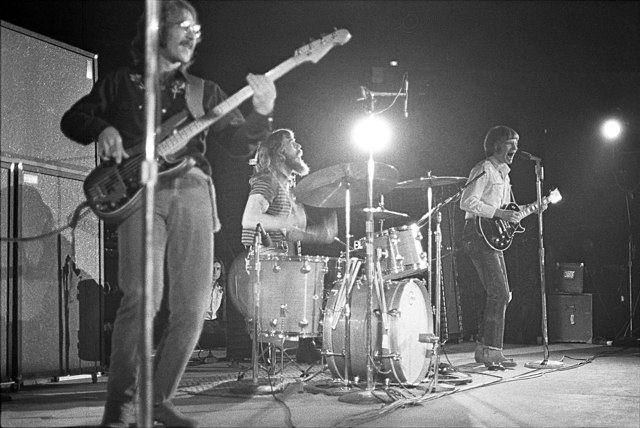
CREEDENCE CLEARWATER REVIVAL
- Despite their swamp rock sound that screamed Louisiana bayou, all four members were actually from the San Francisco Bay Area in California and had never lived in the American South, making their authentic Southern rock persona one of music's most successful geographical masquerades.
- The band was incredibly prolific during their brief peak, releasing seven albums in just four years (1968-1972) and placing more songs in the Billboard Top 10 than The Beatles during the same period.
- John Fogerty wrote, sang lead vocals, played lead guitar, and produced virtually all of CCR's music, creating one of the most extreme cases of creative control in rock history, which eventually led to intense legal battles when he was later sued by his own former record label for sounding "too much like himself" on his solo work.
|
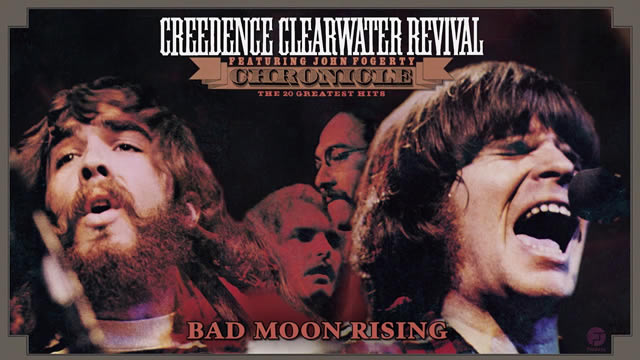
"BAD MOON RISING"
- CCR holds the distinction of being the only major rock band to have three different songs reach number two on the Billboard Hot 100 in a single year (1969) with "Bad Moon Rising", "Proud Mary", and "Green River", yet ironically never achieved a number one hit, making them one of the most successful bands never to top the American charts.
- John Fogerty wrote the song after watching the 1941 film "The Devil and Daniel Webster," and despite its ominous lyrics about earthquakes, lightning, and hurricanes, he intended it as an upbeat, almost optimistic song about surviving tough times.
- The song's famous opening guitar riff was achieved by Fogerty using a technique called "double tracking," where he played the same part twice and layered the recordings, creating the distinctive thick sound that became a hallmark of CCR's production style.
|
|
|
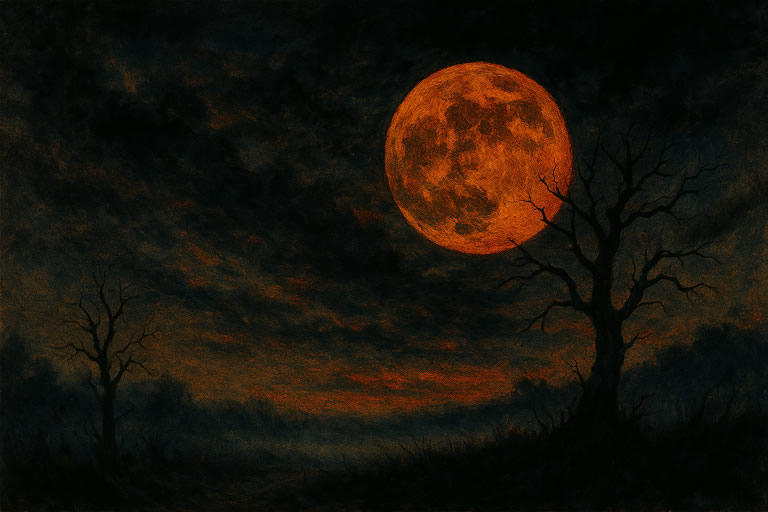
BAD MOONS
- In medieval Europe, a "blood moon" (total lunar eclipse appearing red) was considered an omen of plague, war, or the death of kings, leading to the postponement of battles and important political decisions based on lunar eclipse timing.
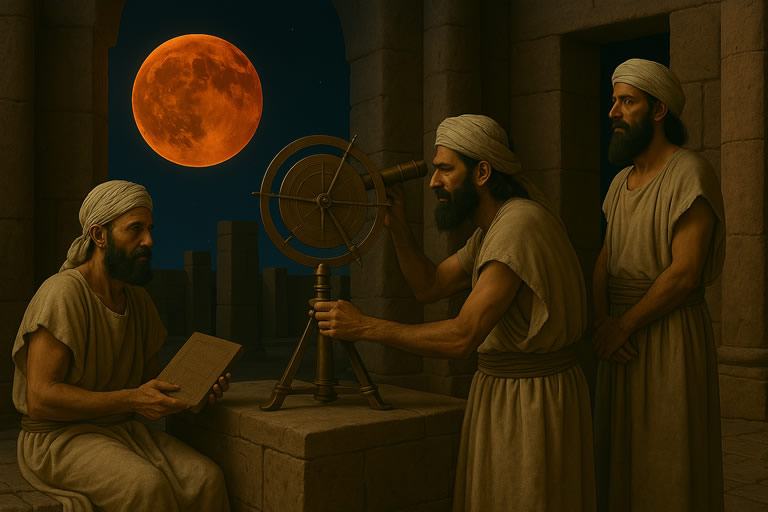
- The reddish color during a total lunar eclipse occurs because Earth's atmosphere acts like a lens, bending sunlight around our planet and filtering out blue wavelengths while allowing red wavelengths to reach the Moon's surface, essentially projecting all of Earth's sunrises and sunsets onto the lunar surface simultaneously.
|
- Ancient Babylonian astronomers could predict lunar eclipses with remarkable accuracy using the Saros cycle, an 18-year, 11-day, 8-hour period after which eclipses repeat in nearly identical patterns, allowing them to create eclipse calendars extending centuries into the future.
- Lunar eclipses can only occur during a full moon when the Earth passes between the Sun and Moon, but they don't happen every full moon because the Moon's orbit is tilted about 5 degrees relative to Earth's orbital plane around the Sun, creating the specific alignment requirements that made ancient peoples view them as supernatural events.
|
 |
| |
|
 |
-
The Moon's orbit is gradually expanding at about 3.8 centimeters per year due to tidal forces, meaning that in approximately 600 million years, the Moon will appear too small to completely cover the Sun, making total solar eclipses impossible and fundamentally changing how future civilizations might interpret "bad" lunar omens.
-
The term "blue moon" originally referred to the third full moon in a season with four full moons, but modern usage incorrectly defines it as the second full moon in a calendar month, a mistake that originated from a 1946 Sky & Telescope magazine article misinterpreting a 1937 Maine Farmers' Almanac.
|
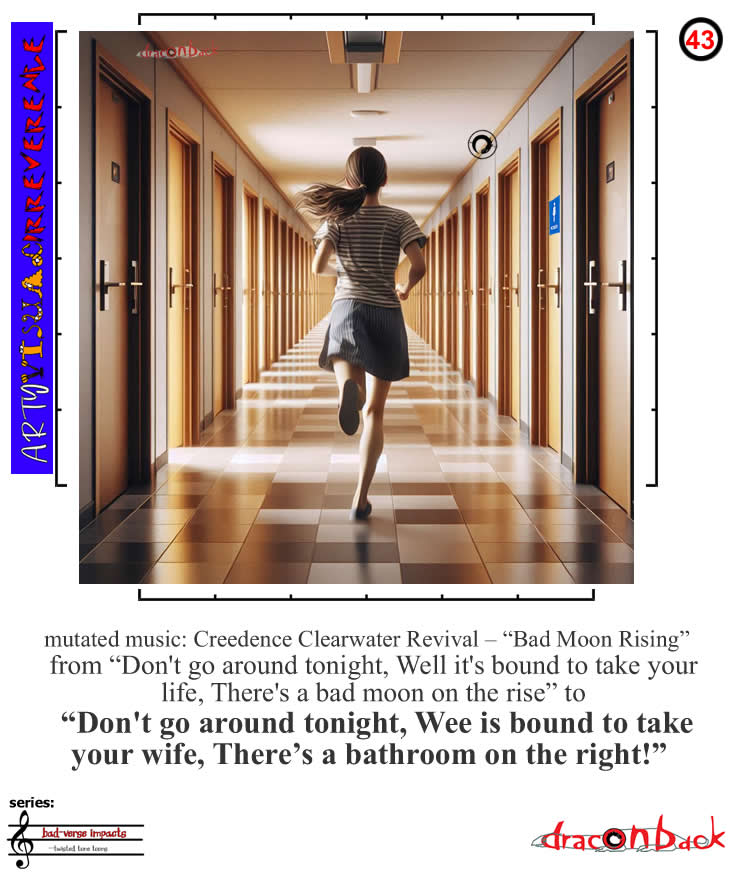
BATHROOMS
-
The Romans created some of the world's first public restrooms around 2,000 years ago, featuring long marble benches with multiple holes where people sat side by side without privacy partitions, using communal sponges on sticks soaked in salt water or vinegar instead of toilet paper, and these facilities often doubled as social gathering spaces where people conducted business and gossiped while relieving themselves.
-
Separate men's and women's public restrooms didn't become standard until the late 1800s during the Victorian era, when "separate spheres" ideology dictated that women needed protection in public spaces, but this separation was initially controversial because many business owners didn't want to spend money on duplicate facilities, and some early feminists argued that separate restrooms reinforced women's exclusion from public life rather than protecting them.
|
 |
|
- The distinctive gaps at the bottom and sides of American public restroom stall doors exist for multiple practical reasons: they allow for easier cleaning by custodial staff, provide ventilation to prevent odor buildup, enable emergency access if someone becomes ill or trapped inside, and reduce construction costs by requiring less precise measurements and materials, though many other countries manage public restrooms with floor-to-ceiling privacy barriers.
|
|
|