|
|
Taking the world by storm at just 20 years old, Celine Dion became the first Canadian artist to earn a gold record in France with her 1983 single “D’amour ou d’amitié”.
|
|
-
CELINE DION
Celine Dion's career began at age 12 when her mother sent a homemade demo tape to music manager René Angélil, who was so moved by her voice that he mortgaged his house to finance her first album, later becoming not only her manager but also her husband despite their 26-year age difference.
-
Dion is one of only a handful of artists to have recorded number-one hits in multiple languages, achieving chart success in French, English, Spanish, Italian, German, and Japanese, making her one of the most linguistically versatile performers in popular music history.
-
Her distinctive vibrato and five-octave vocal range are partially attributed to her unique physiology—she has unusually large lung capacity and vocal cords that are longer than average, giving her the ability to sustain notes and execute complex melismatic runs that have become her signature style.
|
-
MY HEART WILL GO ON
Despite becoming one of the best-selling singles of all time and winning an Academy Award, the song was recorded in just one take, with Dion delivering what became the final version on her first attempt, though she initially thought the song was "too cheesy" and didn't want to record it.
-
James Cameron initially didn't want any pop songs in "Titanic" and was resistant to including "My Heart Will Go On," but composer James Horner secretly recorded a demo with Celine Dion and played it for Cameron, who was so moved he immediately changed his mind and made it the film's centerpiece ballad.
-
The song's iconic opening features a tin whistle played by Irish musician Eric Rigler, whose Celtic influence was specifically chosen to evoke the Irish passengers on the Titanic, though the melody was written by James Horner as a deliberately simple, haunting theme that could carry emotional weight without complex orchestration.
|
|
 |
HEARTS GOING ON...
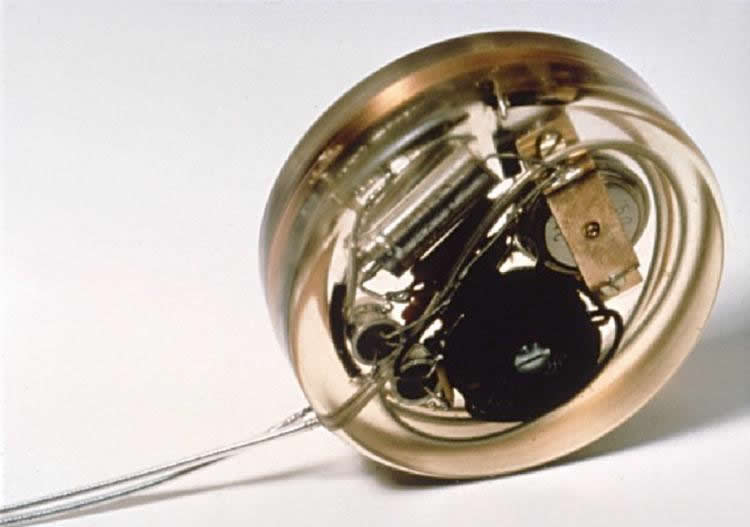
- The first wearable pacemaker was developed in 1958 by Swedish engineer Rune Elmqvist and surgeon Åke Senning, but it was so large it had to be worn externally like a backpack and was powered by rechargeable nickel-cadmium batteries that lasted only 3-4 hours between charges, requiring patients to remain constantly connected to power sources.
- The breakthrough to implantable pacemakers came from an unexpected source—Wilson Greatbatch was trying to build a heart rhythm recording device in 1958 when he accidentally grabbed the wrong resistor, creating a circuit that produced electrical pulses perfectly timed to mimic a human heartbeat, leading to his "happy accident" that revolutionized cardiac care.
- Modern pacemakers are so sophisticated they can be programmed and monitored remotely via wireless technology, automatically adjust pacing rates based on physical activity levels detected by built-in accelerometers, and some newer models are powered by the body's own kinetic energy, potentially eliminating the need for battery replacement surgeries.
|
- The first human heart transplant was performed by South African surgeon Christiaan Barnard in 1967, but the patient, Louis Washkansky, survived only 18 days due to pneumonia caused by immunosuppressive drugs—however, Barnard's second such patient lived for 19 months, proving the procedure's viability and launching the modern era of organ transplantation.
- The heart is unique among transplanted organs because it can function without direct nervous system connections to the brain, relying instead on its own internal pacemaker cells, though transplant recipients often report changes in personality, food preferences, or emotional responses that some attribute to "cellular memory," though this remains scientifically unproven.
- Modern heart transplant recipients have a median survival rate of about 12-13 years, but the procedure requires lifelong immunosuppression, and chronic rejection remains the leading cause of long-term failure, with the transplanted heart gradually developing coronary artery disease that's different from typical heart disease and often goes undetected until advanced stages.
|
|
|
-
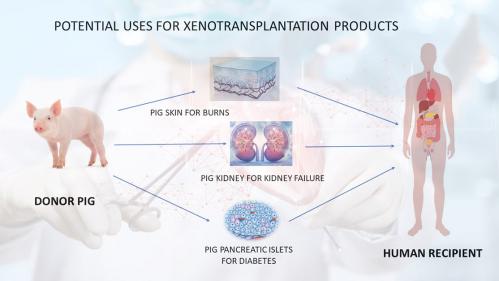
Xenotransplantation is the term for transplanting organs, tissues, or cells from one species into another. The prefix “xeno-” comes from the Greek word for “foreign” or “strange”.
-
The first xenotransplantation of a heart into a human happened in 1964, several years before the first successful human/human trasplant, at the University of Mississippi-- where surgeons implanted a chimpanzee heart into a 68-year-old man. The heart beat for about an hour, but unfortunately, the patient didn’t survive longer than that since the attempt was made long before there were tools to manage immune rejection.
-
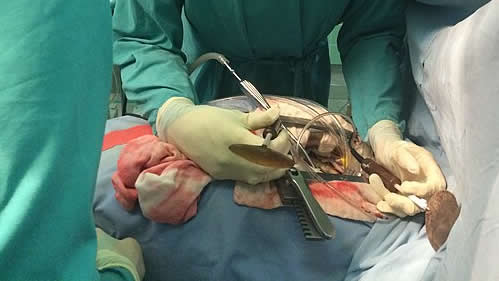
In 2022, the field took a giant leap when a genetically modified pig heart was transplanted into a human patient by surgeons at the University of Maryland which functioned for 60 days, marking the first time a pig heart had sustained a human life for that long.
|
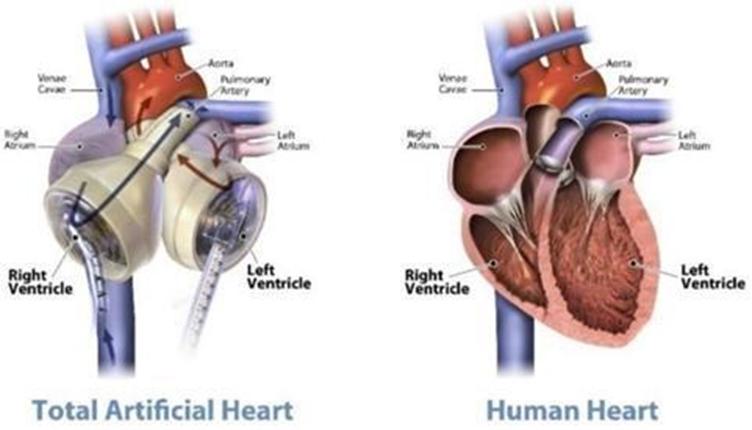
- The BiVACOR implantable mechanical heart received FDA authorization in November 2023 and has successfully completed its first human implantations in 2024, with a 57-year-old man receiving one at Baylor St. Luke's Medical Center in July 2024, followed by a 34-year-old man at Duke University Hospital. Such patients have lived for over 100 days before successfully receiving donor heart transplants.
- The BiVACOR uses magnetic levitation technology to keep its spinning pump floating without touching any surfaces, can deliver blood flow equivalent to what an adult man needs during exercise, and is small enough to fit in women and children.
|
|
|
|
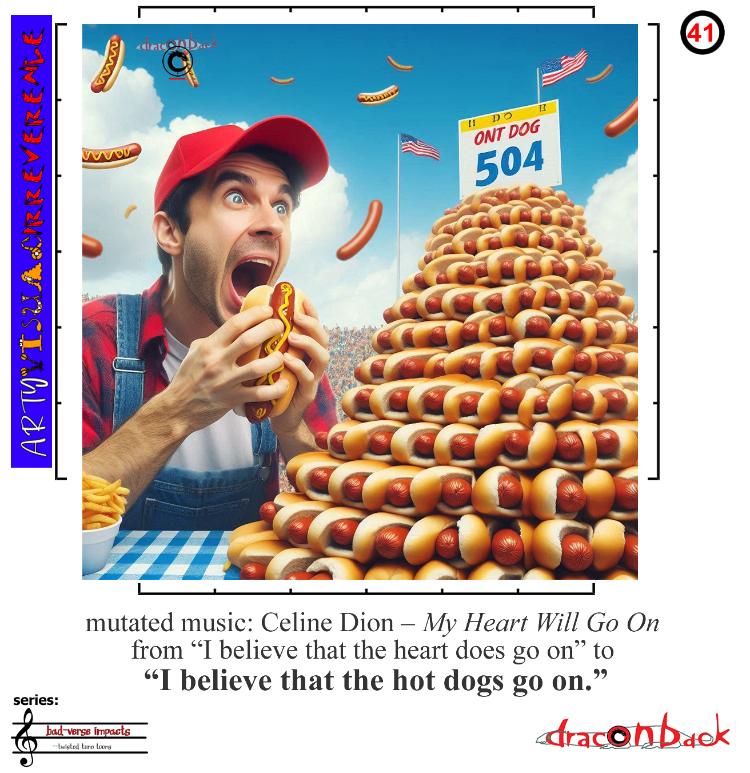
HOT DOGS
- The term "hot dog" allegedly came from German immigrant vendors who jokingly teased customers that their sausages were made from their dachshund dogs, though the famous cartoon supposedly coining the phrase has never been found by historians.
- The current world record for hot dog eating is held by Joey Chestnut at 73 hot dogs in 10 minutes, though Patrick Bertoletti won the 2024 Nathan's contest with 58 hot dogs after Chestnut was banned for a sponsorship conflict.
- Americans consume an estimated 7 billion hot dogs during peak season from Memorial Day to Labor Day, with consumers spending over $3 billion annually on hot dogs in U.S. supermarkets.
- The iconic pink color of many hot dogs comes from sodium nitrite, a preservative that not only prevents botulism but also reacts with the meat's proteins to create that distinctive hue - without it, cooked hot dogs would be an unappetizing grayish-brown color.
- Hot dogs are responsible for about 17 percent of all food-related choking deaths, making them one of the most dangerous foods from a safety perspective, which is why pediatricians often recommend cutting them lengthwise for young children rather than into round slices that can block airways.
|
|
|