|
|
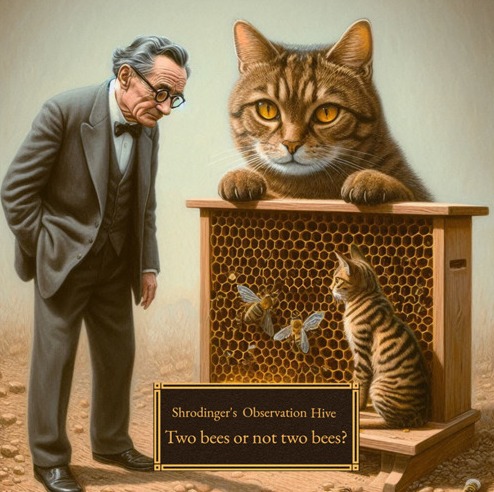
Erwin Schrödinger, in 1935, proposed a paradoxical thought experiment in which a cat placed in a sealed box with a radioactive substance could exist in a quantum superposition of being both alive and dead until the box is opened and observed, illustrating the strange implications of quantum mechanics when applied to the macroscopic world. The famous line from Hamlet "To be or not to be..." has always sounded to me like something related to the concept of Schrödinger's cat. Quantum field collapse (or wavefunction collapse) would occur when observation forces a quantum system from multiple superposed states into a single definite state— just as observing Schrödinger's cat would collapse its simultaneous alive-and-dead superposition into one definite outcome.
When asked how it felt about the whole experience the cat simply responded "Meh. Ow."
|
 |
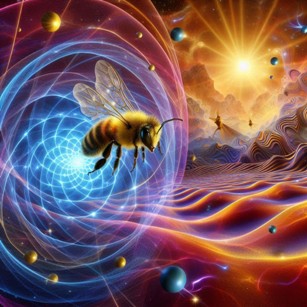 |
Some scientists believe that bees, particularly honeybees, may be sensitive to or interacting with quantum fields, possibly through their ability to navigate using the Earth's magnetic field. This idea suggests that bees might be utilizing quantum mechanical effects, like those involving quarks, to perceive and interact with their environment. For instance, mathematician Barbara Shipman has discovered a possible connection between honeybee communication and quantum physics. Shipman found that when projecting certain mathematical structures from a six-dimensional "flag manifold" onto two dimensions, the resulting patterns closely resembled the waggle dance honeybees use to communicate food locations. This mathematical framework unifies different variations of the bee dance under a single geometric structure. Shipman speculates that bees might be sensitive to quantum fields and possibly even able to perceive quarks in ways that inform their dance patterns. While her hypothesis is controversial and unproven, it represents an intriguing intersection of mathematics, biology, and quantum physics that could potentially transform our understanding of bee communication (... and don't worry, I don't understand it either) |
|
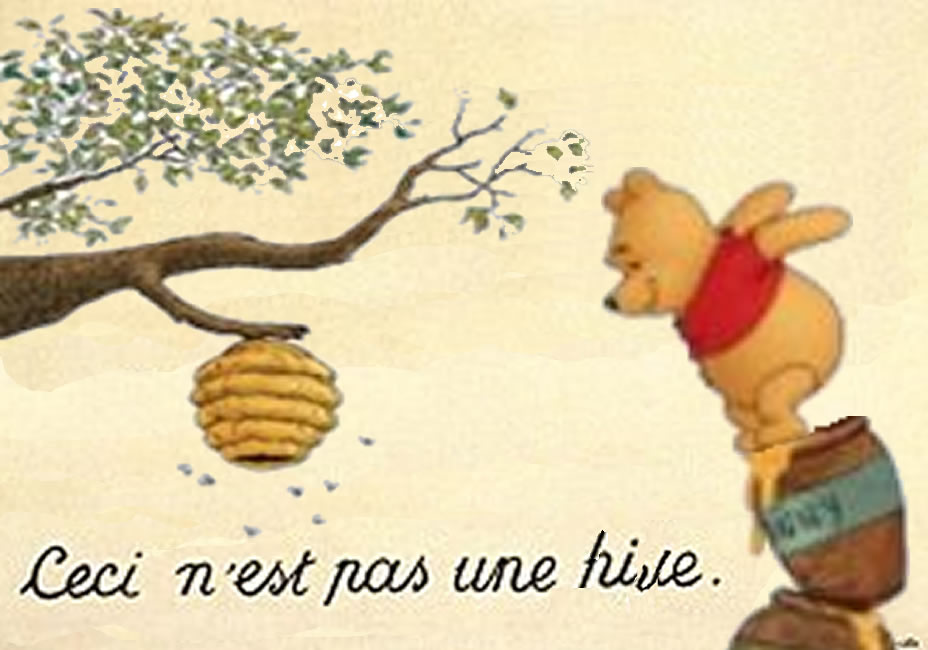 |
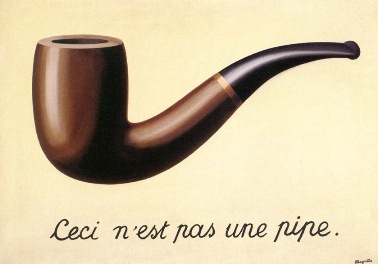
| Ceci n'est pas une pipe (This is not a pipe) or La Trahison des Images (The Treachery of Images) by René Magritte (1928-9) |
Similarly, the above is not a hive-- it's not even a picture of a hive... it's a cartoon wasp nest-- which wouldn't contain any honey! (Well, not if it corresponded to wasp nests in the real world... wasps don't make honey, they're predatory.) |
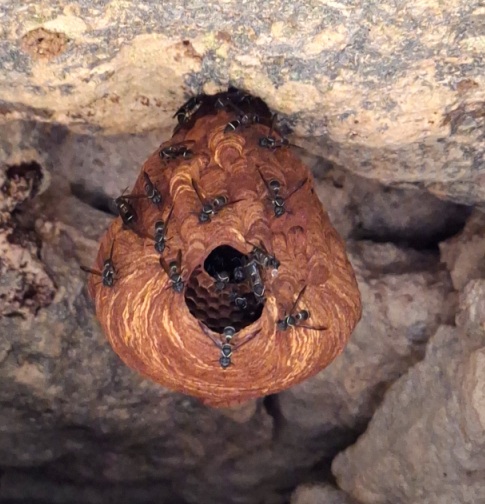 |
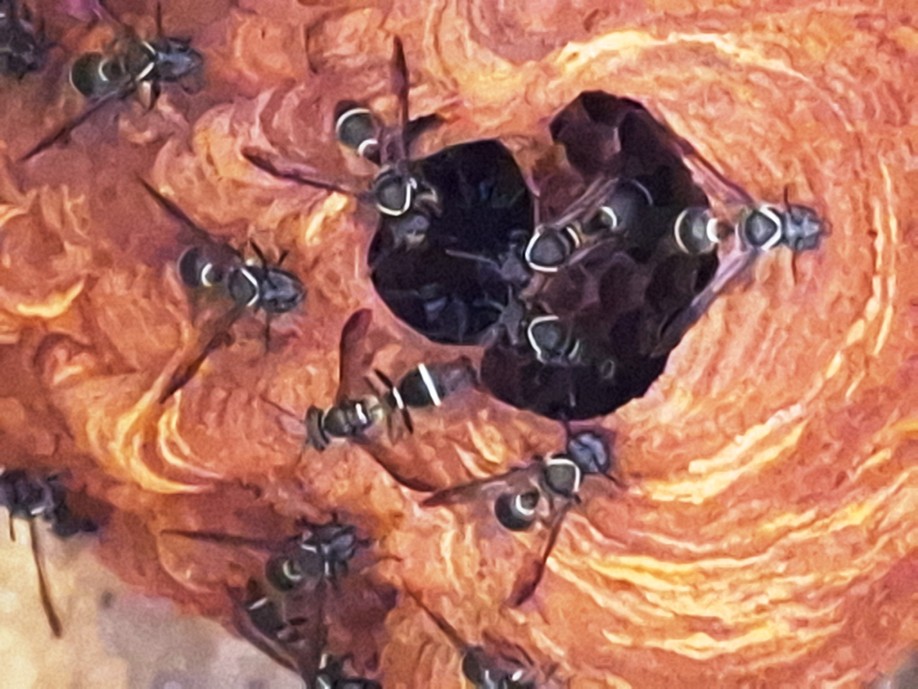
Generations of kids have been duped by Disney into thinking that honey comes from wasp nests. The paper envelope of wasp nests, like this one in the ruins of a Mayan temple in Belize, is created by wasps chewing wood fibers and mixing them with saliva to form a paper-like pulp. This natural paper-making process predates human paper production by millions of years-- and was probably what inspired the human innovation. |
The envelope of a wasp nest has remarkable insulating properties, helping to maintain a stable internal temperature. |
 |
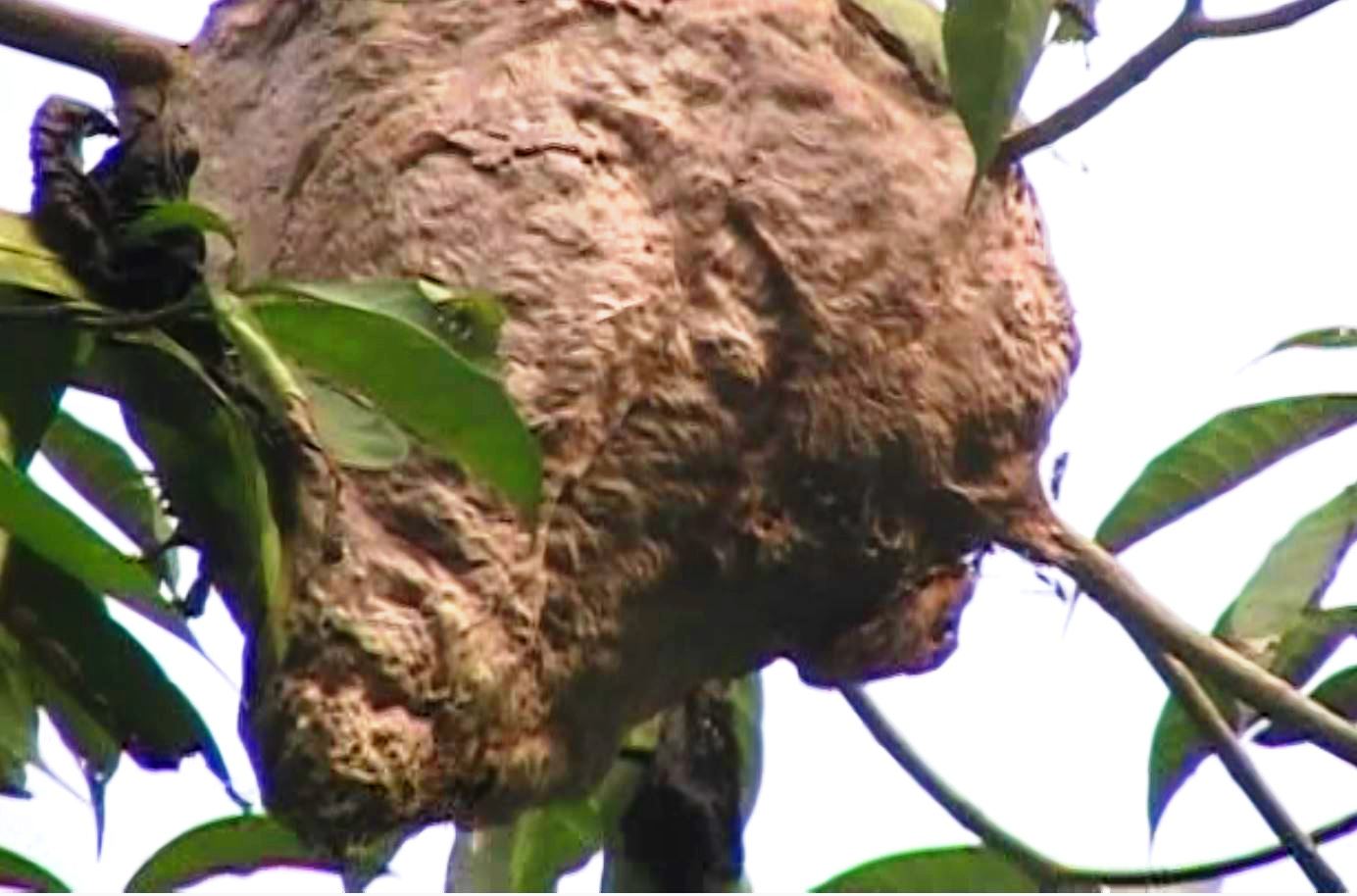 |
The paper envelope often contains multiple layers with air pockets between them, creating a structure similar to modern insulation techniques that efficiently regulates temperature and humidity. |
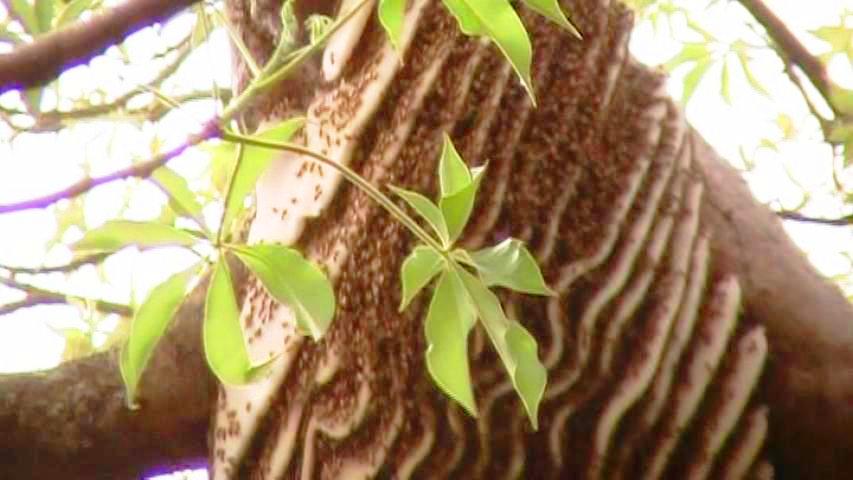
| Natural honey bee nests, like this one in Ghana, do not have the papery envelopes like those that social wasps construct. In colder climes honeybees usually restrict their nest construction to spaces within protected cavities. |
|
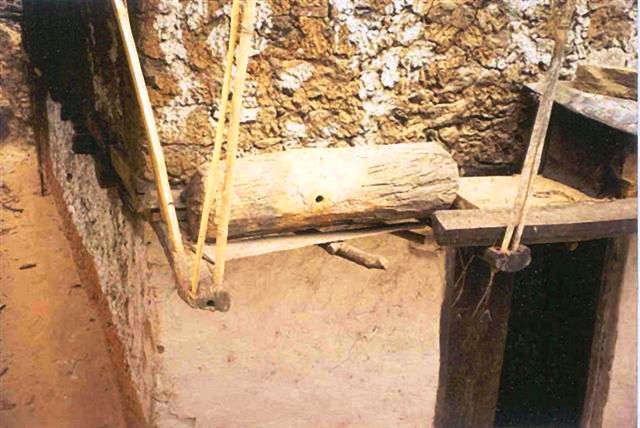 |
Technically a hive is a human-made enclosure made to contain a honey bee nest-- logs that have been hollowed out are a traditional hive design used all over the world (and obviously are modeled after natural tree hollows in which honeybees often nest). Sometimes log hives, or "gums," are simply hollow sections of trees with bee colonies already living inside them - beekeepers just cut the section containing the wild colony and transport it to their apiary, preserving the bees' existing home. Otherwise the hollowed logs are capped at each end and baited with lemongrass or beeswax to attract passing swarms in search of nesting site. |
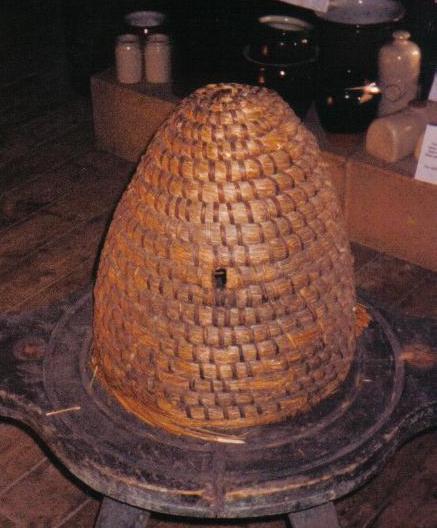
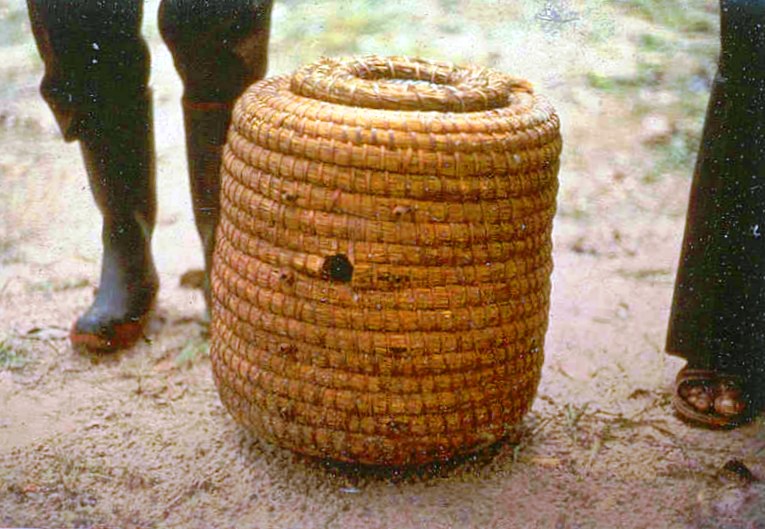
| Traditional skep hives made from material like coiled rope do resemble the cartoon depiction in Winnie the Pooh cartoons, but were not usually hung in trees. Medieval beekeepers would often coat the inside of straw skeps with a mixture of dung and clay to create a smooth interior surface that helped bees attach their combs more securely and provided better insulation. Usually the bees were killed by placing the skeps over a sulphurous fire before the combs were harvested for honey and wax-- a rather wasteful process that destroys the means of production. |
|
 |
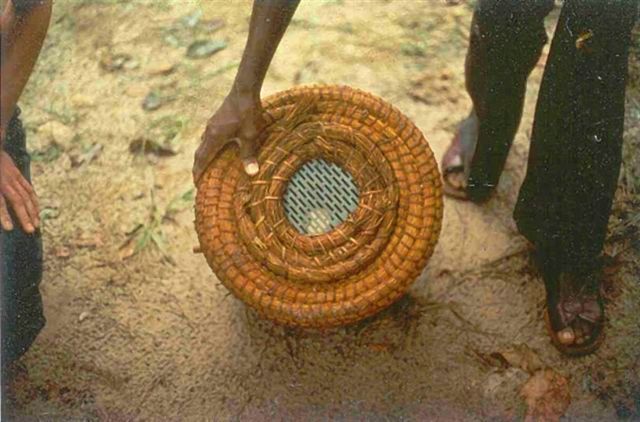
This improved skep system, in Mali, has two tiers, the bottom compartment contains the brood nest. |
| The top compartment prevents the queen from entering by using a queen excluder-- with openings too small for the queen to climb up through from the bottom compartment. The same can be accomplished with good management... but the queen excluder provides all the more assurance that the top box will contain only honeycombs. The bees can be driven out of the skep using smoke and/or drumming of the sides so that they can return to the brood nest and continue the life of the colony. |
 |
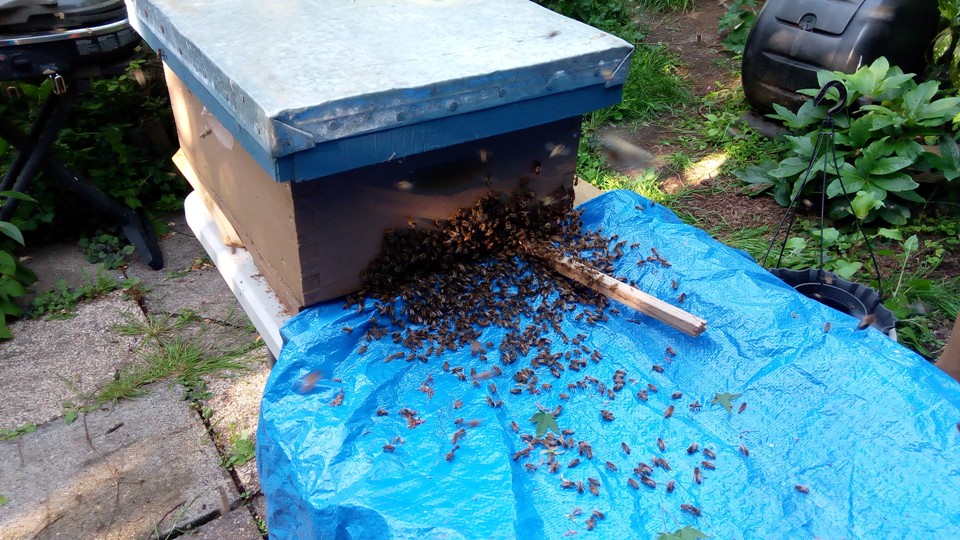 |
The Langstroth hive (into which a captured swarm is entering) is managed much in the same way as described above. The revolutionary principle of "bee space" (precisely 3/8 inch) discovered by Lorenzo Langstroth allowed for the development of removable frames that bees wouldn't attach with propolis or fill with comb, fundamentally transforming beekeeping from a destructive to a sustainable practice. |
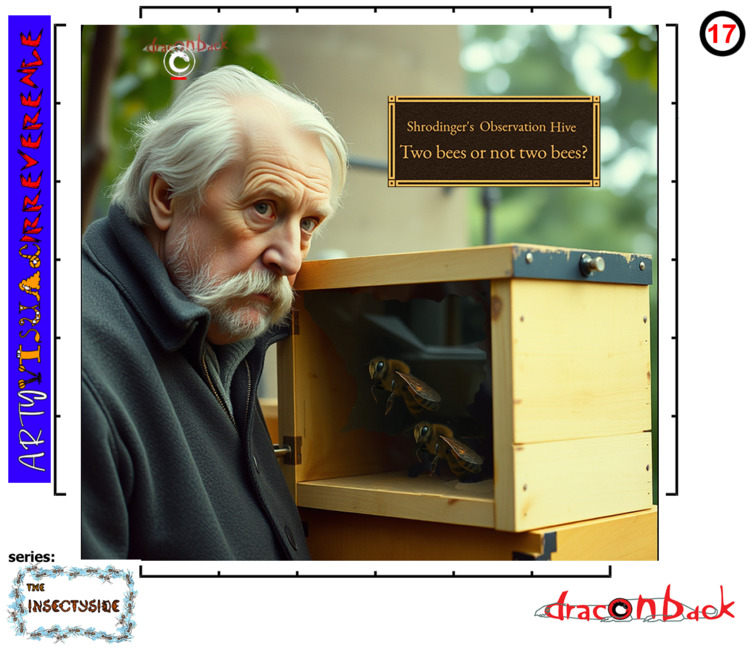
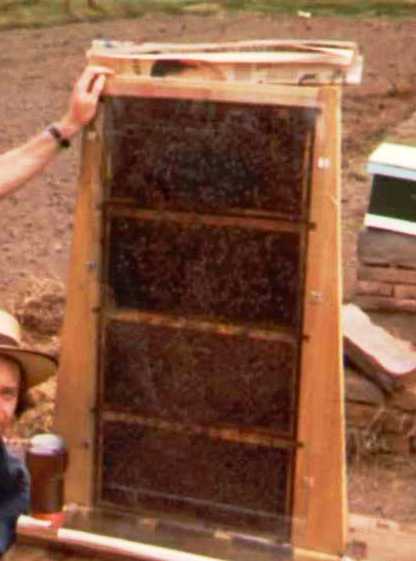
Observation hives are specially designed beehives with transparent walls, allowing people to watch the inner workings of a bee colony without disturbing the bees. They are covered when not being used to view colony activities and are usually used for educational or research purposes, allowing for the viewing of bee behavior, communication, and hive dynamics. Modern observation hives often incorporate infrared viewing options that allow scientists and beekeepers to monitor bee activity without disturbing the colony with visible light. |
|
|