|
|
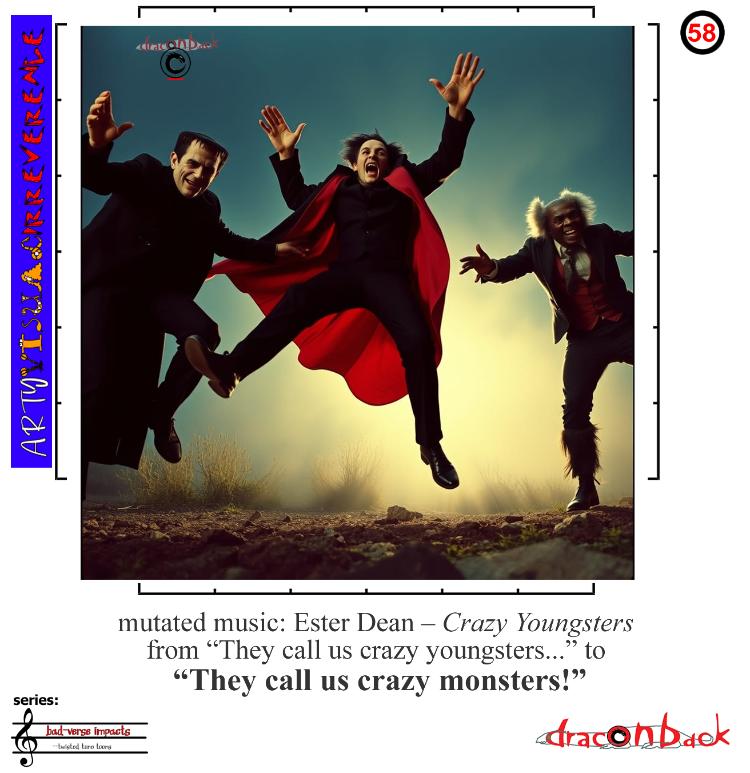
Ongoing legal complexity continues to surround the classic Universal monsters—such as Dracula, Frankenstein, and the Wolf Man—due to their origins in public domain literature.
|
 |
ESTER DEAN
- Ester Dean is one of the most successful behind-the-scenes songwriters in modern pop music, having written or co-written hits for Rihanna, Katy Perry, Beyoncé, and Kelly Clarkson, including Rihanna's "Rude Boy," "S&M," and "What's My Name," though she remains largely unknown to the general public despite her massive commercial impact.
- Her songwriting process is unusually collaborative and spontaneous - she's known for creating vocal melodies and hooks in real-time during studio sessions, often humming or singing nonsense syllables that later become actual lyrics, a technique that has become increasingly common in contemporary pop production.
- Beyond songwriting, Dean has expanded into film music and acting, contributing to soundtracks for the "Pitch Perfect" franchise where she also appeared as an actress, demonstrating the kind of multimedia career path that has become essential for music industry professionals in the streaming era.
|
CRAZY YOUNGSTERS
- Crazy Youngters is featured in the movie Pitch Perfect 2—in which Ester Dean performs it as Cynthia Rose, a character known for her bold personality and musical chops.
- The music video features Dean cruising through town on a double-decker bus, while her co-stars Anna Camp and Brittany Snow throw an impromptu dance party in a record store.
- The lyrics celebrate youthful defiance and freedom, with lines like “Don’t apologise, we’re mad and runnin’ free” capturing the film’s energetic spirit and the song’s anthem-like vibe.
|
|
 |
CLASSIC UNIVERSAL STUDIO MONSTERS
- Universal's monster movies of the 1930s and 1940s created the template for modern horror franchises by developing interconnected storylines and recurring characters, culminating in crossover films like "Frankenstein Meets the Wolf Man" (1943) and "House of Frankenstein" (1944) that predated the Marvel Cinematic Universe concept by decades.
- The iconic makeup designs by Jack Pierce became so definitive that they remain the standard visual representation of these monsters today - Karloff's flat-headed Frankenstein's monster, Lugosi's widow's peak Dracula, and Lon Chaney Jr.'s wolf man transformation sequence established looks that have been referenced and parodied countless times across all media.
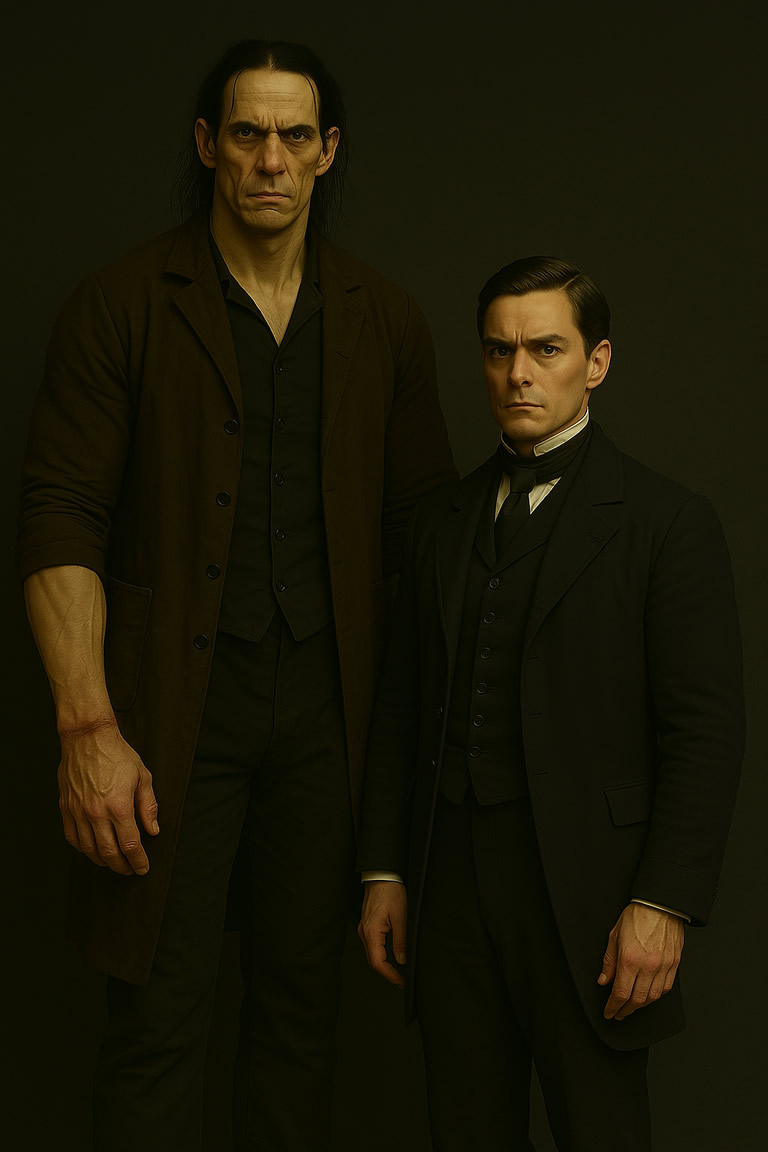
- In Mary Shelley's Frankenstein, the creature is described as having yellow skin that barely conceals the muscles and arteries beneath, flowing black hair, pearly white teeth, and watery yellow eyes that create a horrifying contrast with his gigantic eight-foot frame, which differs dramatically from Universal Studios' 1931 film adaptation that depicted the monster with Boris Karloff's iconic flat-topped head, neck bolts, and lumbering gait; Shelley's original creature possessed remarkable intelligence and eloquence, capable of philosophical discourse and literary analysis, unlike the largely mute and primitive monster of classic Hollywood films.
|
MORE ON FRANKENSTEIN...
- Everyone who cares about such things knows that the name of the original novel refers to Victor Frankenstein, the archtype of the "mad scientist" who creates an unnamed animated corpse referred to as "the Creature," "the monster," "the demon," "wretch," and other descriptive terms, but never by a proper name. This underlines one of the major themes of the novel-- which highlights Victor's miserable performance as parent to the life he creates. This was likely a sidewise swipe at Lord Byron who was notorious for being much more obsessed about the process of creating his children than in caring for them thereafter...
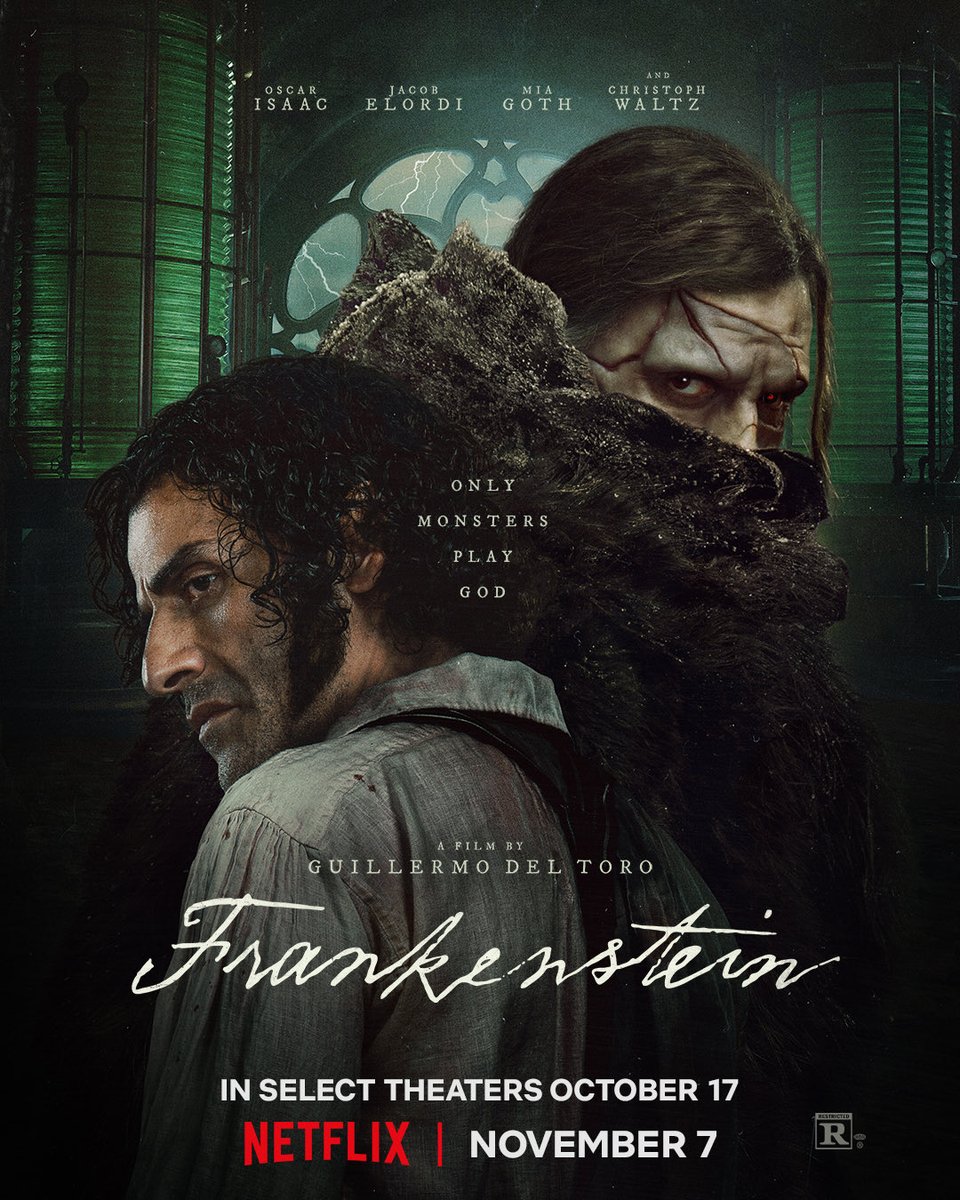
- As of October 2025, there are 423 known feature films that incorporate some version or interpretation of Frankenstein's monster. One of the most recent adaptations is Guillermo del Toro's 2025 version which was released near simultaneously in theatres and on Netflix. Del Toro's Frankenstein portrays Victor as embodying the reckless arrogance of modern tech entrepreneurs, creating without considering the consequences in a cautionary tale advising developers of A.I. to ensure they embue their creation with a compassionate moral compass. Del Toro explicitly drew parallels between Victor's blindness to the needs of his creation and the tech industry's rush to deploy AI without fully understanding its implications.
|
 #GuillermoDelToroFrankenstein |
| |
|
|
|