|
|
Hits like "Lose You to Love Me" marked major milestones in Selena Gomez' solo career, with that song becoming her first Billboard Hot 100 number-one single.
|
 |
SELENA GOMEZ
- Selena Gomez was named after Tejano singer Selena Quintanilla-Pérez and has acknowledged this connection throughout her career, even though she was only three years old when the original Selena was tragically murdered in 1995, making her one of the few major pop stars whose stage name honors another musician rather than being her birth name or a completely invented persona.
- Despite her massive social media following (she was the most-followed person on Instagram for several years), Gomez has been remarkably open about taking extended breaks from social platforms for mental health reasons, and has spoken candidly about her lupus diagnosis and its treatment, including undergoing a kidney transplant in 2017 donated by her friend Francia Raisa.
- Gomez's transition from Disney Channel star to serious artist included launching Rare Beauty, a cosmetics company that pledges to raise $100 million for mental health services, making her one of the few celebrity entrepreneurs to build philanthropy directly into her business model rather than treating it as a separate charitable activity.
|
GOOD FOR YOU
- The song marked a significant departure from Gomez's previous pop sound, incorporating a minimalist, R&B-influenced production style that featured prominent use of finger snaps and sparse instrumentation, reflecting her collaboration with producers Julia Michaels, Justin Tranter, and Sir Nolan, who were known for their work with more mature artists.
- "Good For You" was Gomez's first solo single to reach the top 5 on the Billboard Hot 100, peaking at number 5, and its success helped establish her credibility as an adult artist separate from both her Disney origins and her highly publicized relationship with Justin Bieber, which had dominated media coverage of her personal life.
- The song's music video was notable for its intimate, black-and-white aesthetic that emphasized Gomez's transition to a more sophisticated image, and was directed by Sophie Muller, who had previously worked with artists like Eurythmics and No Doubt, bringing an art-house sensibility to what could have been a typical pop video.
|

|
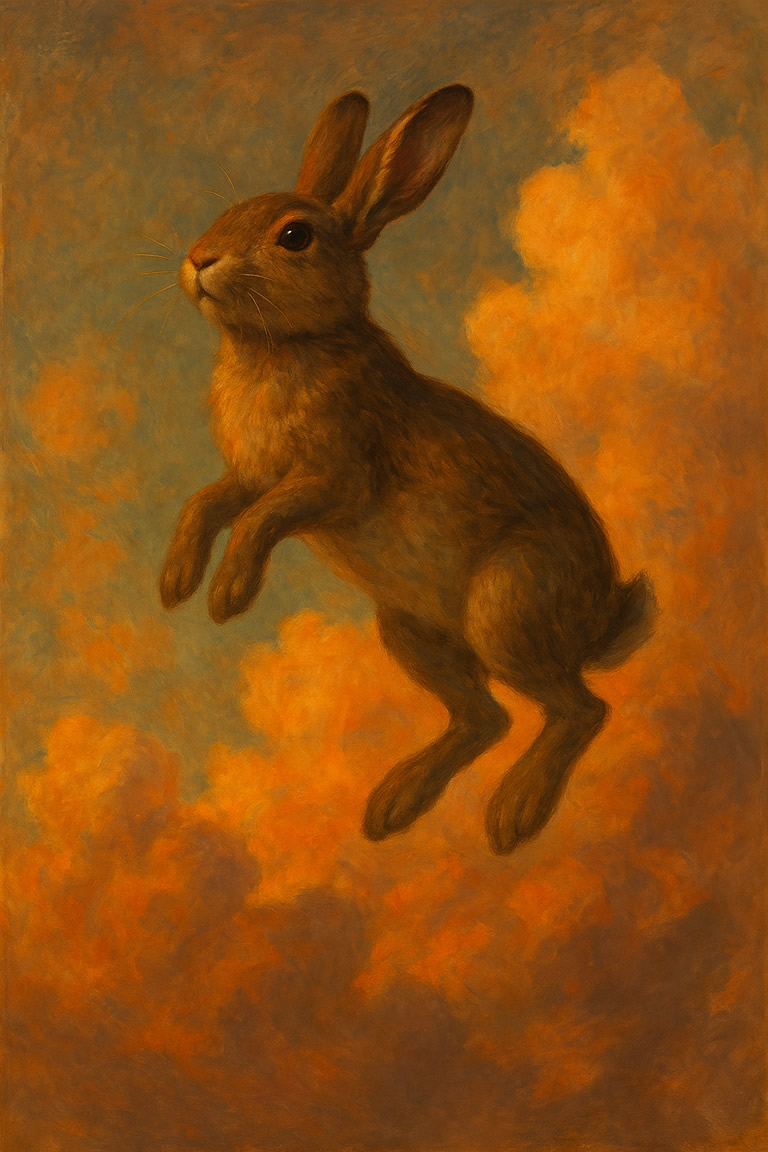 |
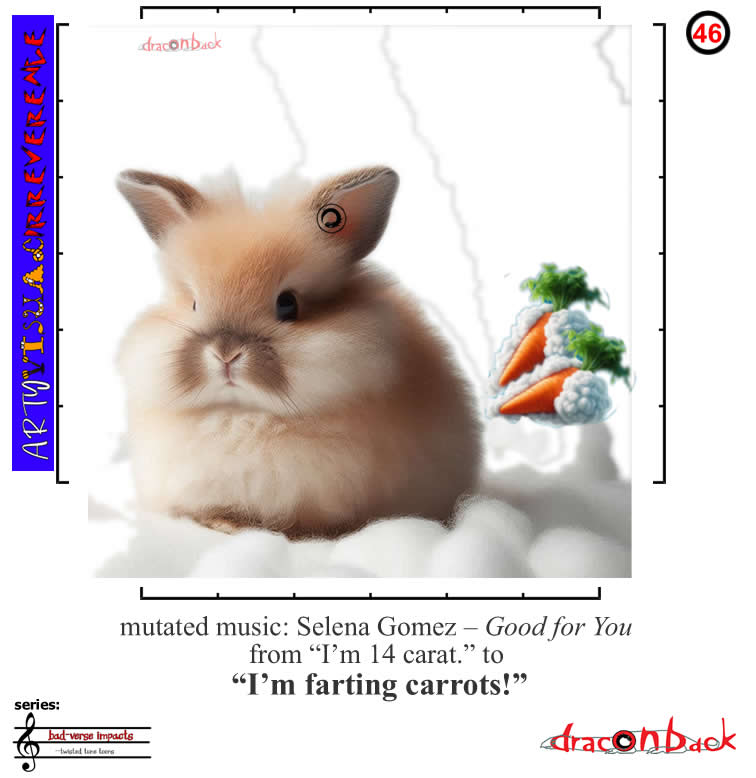
THE FLATULENCE OF RABBITS
- What's invisible and smells like carrots? "Rabbit farts", you say? Well, guess again, because rabbits are amongst the few animals that do not normally experience flatulence. Rabbits practice cecotrophy, meaning they produce two types of droppings—regular hard pellets and soft, nutrient-rich cecotropes that they immediately re-ingest to extract maximum nutrition from their food, making their digestive process so efficient that they rarely pass gas in the traditional sense, as most fermentation occurs in specialized chambers.
- When rabbits do experience gas buildup, it can be extremely dangerous and potentially fatal, as their digestive systems are not designed to expel gas efficiently like other mammals, leading to a condition called GI stasis where the digestive tract slows or stops completely, requiring immediate veterinary intervention.
- The rabbit digestive system produces methane and other gases through fermentation in the cecum (similar to a human appendix but much larger), but because rabbits are prey animals, evolution has favored digestive efficiency over gas release, as audible flatulence could attract predators—making silent digestion a survival adaptation that distinguishes them from most other herbivorous mammals.
|
THE PLAYBOY BUNNY LOGO
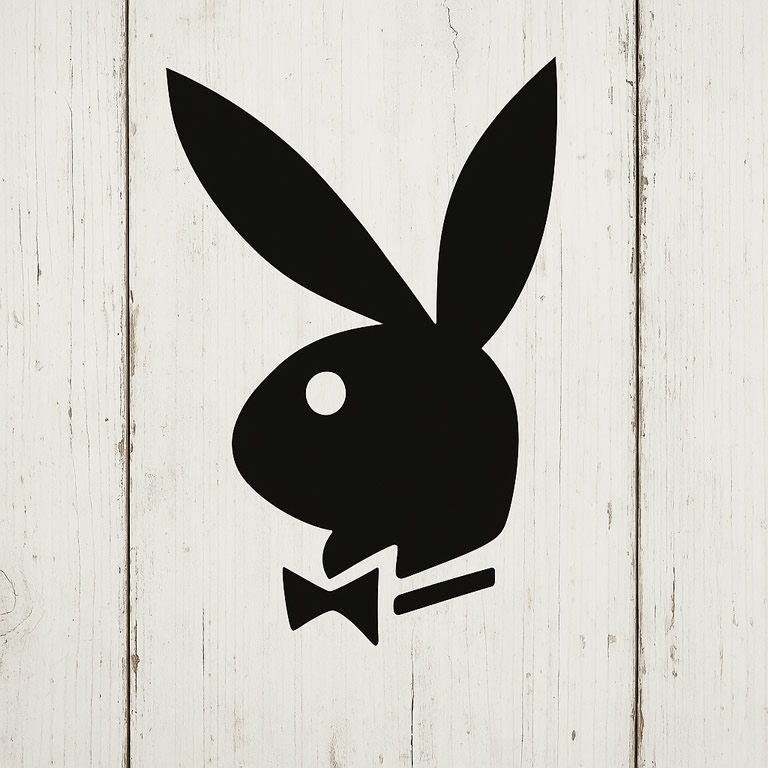
- The Playboy magazine cover is famous for its iconic bunny logo—but what many fans don’t know is that a small version of the bunny is hidden somewhere on nearly every cover. This tradition began in the 1950s as a playful challenge for readers, and it became a signature Easter egg of the brand.
- The hidden bunny might be tucked into a model’s clothing, disguised in jewelry, embedded in the background, or even worked into the typography.
- It’s not always easy to spot, and that’s the point—it adds a layer of interactivity and mystery to each issue.
- The original bunny logo itself was designed by Art Paul, Playboy’s first art director, in under ten minutes.
- It was meant to be elegant, cheeky, and instantly recognizable—a tuxedoed rabbit in profile that became one of the most enduring logos in publishing history.
- Guess what other media uses an embedded logo and other means to convey coded messaging...
|
|
|
|